




Categories
Early Signs of Pregnancy: When to Take a Test and See a Doctor
Jan 25, 2026
Sometimes the answer is straightforward. Sometimes it isn’t the right time. Either way, early pregnancy punishes delay. Not morally. Logistically. The longer you stay in guesswork, the fewer safe, calm choices you have.
So this blog stays practical:
- the early signs of pregnancy that commonly show up
- pregnancy test timing that makes the result trustworthy
- when to see a doctor—whether you want to continue the pregnancy or not
Early signs of pregnancy
Early symptoms matter mainly because they tell you when it makes sense to test. They do not confirm pregnancy on their own.Missed period
If your cycles are usually predictable, a missed period is the clearest everyday trigger to test.If your cycles are irregular, a missed period is less informative. In that case, you lean more on test timing and repeating the test.
Breast tenderness or changes
Soreness, swelling, heaviness, or nipple sensitivity can begin early. These changes also happen before periods, which is why they become meaningful only when paired with timing (period due/late).Nausea (with or without vomiting)
Nausea can start early. It can show up at any hour. It can also be absent.Fatigue
Unusual tiredness can be an early sign. It is also one of the most non-specific symptoms. Treat it as a reason to test, not a reason to conclude.Frequent urination
Some people notice they urinate more often early in pregnancy. If urination burns or hurts, think infection and seek care—don’t treat it as a “pregnancy sign.”Light spotting
Light spotting can occur around the time a period would normally arrive. Spotting also has many non-pregnancy causes. The correct next step is test, then watch for pain or heavier bleeding.Pregnancy test timing: when to test so the result matters
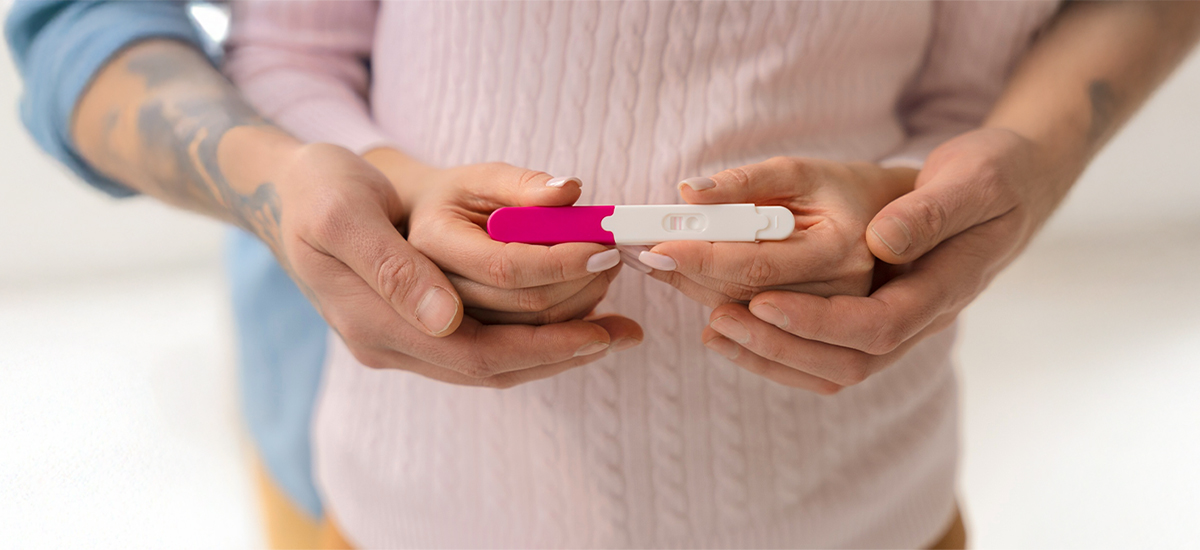
A home pregnancy test detects hCG, a hormone that rises after pregnancy begins. If you test too early, you can get a negative result even when you are pregnant.If you know when your period is due
Test on the day your period is due or after you miss it. This is when home urine tests are most likely to be reliable.If the test is negative but your period still doesn’t come, repeat the test in 48–72 hours.
If your cycles are irregular, or you don’t know your due date
Use the date of unprotected sex as your anchor. A single test taken “whenever” is often unhelpful. Repeat testing a few days apart is usually what turns uncertainty into an answer.Best time of day to test
If you’re testing early, use first-morning urine, which is usually more concentrated.After the test: what you do depends on what you want
A positive test is not a plan. It is information. What matters next is what you want to do with that information—and how quickly you act on it.1) If you want to continue the pregnancy
Book a doctor visit soon. Early care is not just paperwork. It is where you:- confirm the pregnancy and date it correctly
- review medications and health conditions that affect pregnancy
- start appropriate supplements (folic acid is commonly advised early)
2) If you are not sure yet
Don’t wait for the “perfect feeling.” Most people don’t get it. What helps is accurate facts:- how far along you are (counted from the first day of the last period)
- whether the pregnancy is in the uterus (important if you have pain/bleeding)
- what options are available at your gestational age
3) If you cannot continue the pregnancy right now
You still need medical care—early, not later.In India, termination of pregnancy is regulated under the Medical Termination of Pregnancy (MTP) law:
- Up to 20 weeks: termination may be done based on the opinion of one registered medical practitioner
- 20 to 24 weeks: requires the opinion of two registered medical practitioners for categories listed in the Rules (for example, minors, survivors of sexual assault/rape/incest, certain disabilities, specified fetal conditions, and other listed categories)
- Beyond 24 weeks: may be considered by a Medical Board in cases involving substantial fetal abnormalities
A 2022 Supreme Court judgment interpreted the rules to ensure unmarried/single women are not excluded from access under the law and rules up to 24 weeks in applicable circumstances. Two practical points matter here:
- Earlier presentation usually means simpler options.
- Do not self-medicate or rely on informal advice. You need confirmation of how many weeks, and you need ectopic pregnancy ruled out when symptoms suggest it.
When to see a doctor immediately
Certain symptoms are not “observe at home” symptoms in early pregnancy—whether you plan to continue the pregnancy or not.Seek urgent medical care if you have:
- severe lower abdominal/pelvic pain
- heavy bleeding
- dizziness, fainting, collapse
- shoulder-tip pain, especially with bleeding or one-sided pain
Conclusion
Early pregnancy is not a time to rely on symptoms and hope for certainty. Test at the right time. Then act based on what you want—continuing, ending, or taking time to decide—because timing affects safety and options.At BirthRight by Rainbow Hospitals, early pregnancy care is built around clear confirmation, respectful counseling, and medical safety—so you move from suspicion to a decision you can live with, without delay or guesswork.
FAQs
When is the best time to take a home pregnancy test?
On the day your period is due or after you miss it. If negative and your period still doesn’t come, repeat in 48–72 hours.Can I be pregnant and still test negative?
Yes—if you test too early. Repeat testing a few days later often resolves the uncertainty.I have symptoms but no missed period. Should I test now?
You can, but an early negative result may not mean much. If you want an answer you can act on, test on/after the due date and repeat if needed.If the test is positive, when should I see a doctor?
Soon—whether you want to continue the pregnancy, are unsure, or do not want to continue. The purpose is confirmation, dating, safety checks, and options.If it’s not the right time, can I still get confidential medical help?
Yes. The law includes privacy protections regarding disclosure of identity related to termination.Related BlogView More

Types of Anemia Explained Simply for Easy Understanding
Most people hear “anemia” and assume it means one thing: low blood. But anemia isn’t one condition. It’s a label for a problem with a common outcome—your body isn’t carrying enough oxygen the way it should. That can happen for very different reasons. And thatâ

Painful Ovulation Symptoms? When to Consult a Gynecologist
Ovulation pain sits in an awkward category. It can be normal. It can also be the first sign that something is wrong. The difference rarely comes from the pain alone. It comes from timing, intensity, and what else shows up with it. There’s a name for typical ovulation pain:
What Is IVF Pregnancy? Key Differences from Natural Pregnancy
An IVF pregnancy can feel like a contradiction. You’ve done something intensely medical—appointments, scans, lab reports, injections—yet what you want, more than anything, is something deeply human: a normal pregnancy. A quiet mind. A body you can trust again. So le

Menstrual Cycle Phases Explained: Know When to Seek Medical Advice
Many conversations about period health suffer from one basic error: symptoms are discussed without their timing. A cramp on Day 1 of bleeding, a mood crash five days before bleeding, and mid-cycle spotting are treated as variants of the same thing—“hormones,” “PMS,”