



Categories
Egg Freezing in India: What Career-Focused Women Really Need to Know
Sep 16, 2026
How Gen Z Women Are Thinking About Family Planning at Work
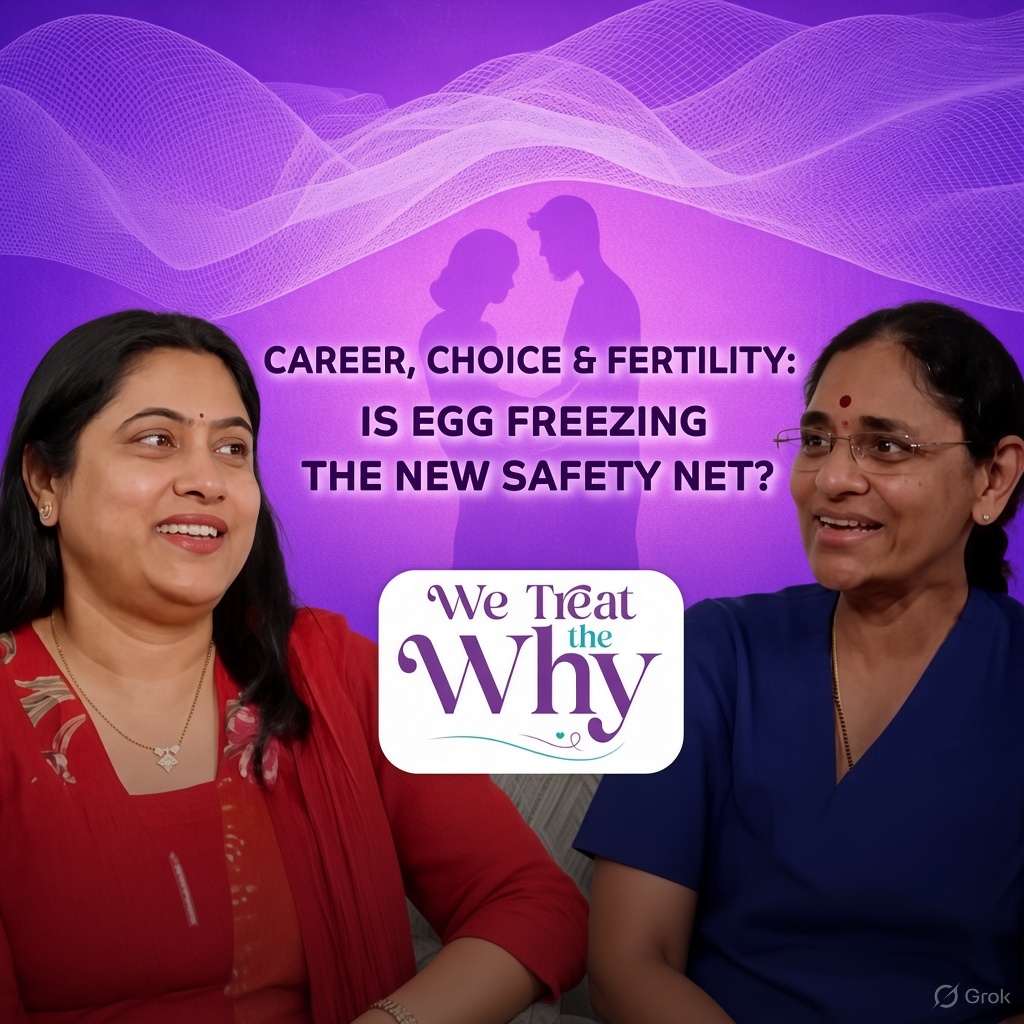
Ms. Aparna, drawing on nearly 20 years in HR, shared that the shift in how women approach family planning has become especially visible with Gen Z entering the workforce. Many young women, she noted, aren't necessarily delaying family planning for a specific reason — they're often simply unsure of the "right time," because career growth, leading teams, and stabilizing in an organization are taking top priority. Having a family, she said, is something fewer women in this generation are actively thinking about early on, compared to previous generations.Egg Reserve vs. Chronological Age — Why the Two Don't Always Match
The fertility specialist explained a concept that's central to this entire conversation: chronological age and ovarian age are not the same thing. A 35-year-old woman may have the ovarian age of a 25-year-old — and the reverse is just as true, where a 25-year-old may have the ovarian reserve of someone much older. Because of this, the specialist's core advice for anyone considering delaying pregnancy is simple: get a fertility consultation first, rather than guessing. Basic tests can determine whether fertility currently looks fine, or whether egg freezing is worth considering.What Organizations Can Do to Support Women
When asked what companies — especially those with a large female workforce — could do to help, the discussion turned to two gaps:- Financial support: Fertility treatment, including egg freezing, is expensive — the hormone injections carry a cost, and once eggs are stored, there's an ongoing annual storage fee. Some companies internationally offer insurance and financial aid for egg freezing; this kind of support isn't yet common in India.
- Leave and flexibility: The process itself requires roughly 10–12 days of engagement with the hospital for daily scans and injections, so predictable, supportive leave policies matter.
Does Freezing Your Eggs Really "Guarantee" a Baby Later? Busting the Myth
This is one of the most important points raised in the conversation. Social media and celebrity statements have created an impression that freezing your eggs means you're "safe for life" and can have a baby whenever you choose. The fertility specialist was direct about this: that's a myth. Egg health is an extension of overall health. Diet, 6–8 hours of sleep, moderate alcohol intake, and avoiding smoking and hard drugs all directly affect the quality of the eggs retrieved. If a woman is in good health at the time of freezing, there's a reasonable — not guaranteed — chance of success, comparable to a 60–70% chance of a successful pregnancy from an IVF treatment using those eggs. If the egg quality or number retrieved in one cycle isn't sufficient, a second round of egg freezing may be recommended. It also takes about 3 months for an egg to develop, so the specialist recommends focusing on general health for at least 3–6 months before undergoing the procedure.What's the Right Age to Freeze Your Eggs?
For Indian women, the specialist pointed to a fairly clear window:- Peak fertility: roughly ages 26–30
- Reasonably good egg quality: up to around 33–35
- Best window to consider freezing: below 30, or at least below 35
How Fertility Is Actually Assessed
Egg health can't be judged just by examining someone — it requires specific tests, typically done between day 2 and day 5 of the menstrual cycle:- AMH test: measures ovarian reserve
- Antral follicle count: an ultrasound-based count of the small follicles in the ovaries
- FSH test: combined with cycle regularity
Why Continuity of Care Matters
One practical point raised: once you start fertility testing or egg freezing with a particular doctor or hospital, it's best to continue there. India's ART (Assisted Reproductive Technology) regulatory board has put strict protocols in place around the movement of frozen eggs — between centers, or even across borders. Moving frozen eggs from one center to another is only possible in rare circumstances, typically requiring an affidavit or court order. This is one of the reasons choosing a well-established, trusted fertility center from the outset matters.Storage, Renewal, and the Legal Age Limit for IVF
Frozen eggs are stored in liquid nitrogen in a cryo tank, which is checked daily to confirm temperature and nitrogen levels remain within range. Storage itself is renewed annually, along with the associated fee. Eggs can technically be stored for 10–15 years or more, but there's a legal boundary worth knowing: IVF cannot be performed beyond age 45 in India. So while the eggs themselves can be preserved long-term, their eventual use is bound by this age limit.What Does the Egg Freezing Process Actually Involve?
For anyone wondering how disruptive this is to day-to-day work and life, here's the actual process as described:- Initial consultation and assessment
- Two hospital visits before the cycle begins: for bloodwork and one scan; a doctor may prescribe antibiotics, vitamins, or antioxidants during this phase
- Daily visits for about 10 days: starting on day 2 of the menstrual cycle, each involving a scan and an injection (roughly 1–2 hours) — manageable with half-day leave
- Retrieval day: performed under general anesthesia; the actual egg collection takes only 20–25 minutes, but the full hospital stay that day (including recovery time) runs about 6–8 hours
- Recovery: mild stomach discomfort is possible for 2–3 days; in total, about 3–4 days of leave is typically needed after retrieval before returning to completely normal activity
The Fertility Specialist's Honest Take — Is This the "Right" Way Forward?
Asked directly whether egg freezing should be encouraged, or whether the natural route is simply better, the specialist's answer was balanced: nature is always the best route, when possible. But given the real pressures young women are navigating today — career stability, competition, delayed marriage or family planning by circumstance rather than choice — a fertility consultation is a reasonable and responsible step if family planning in the early 30s isn't realistic. The clearest piece of advice from the conversation: don't make this decision based on what a peer or celebrity did on social media. Every woman's fertility is unique, and decisions should be based on an individual fertility assessment, guided by a specialist — not general trends.A Real Story That Sums Up Why Timing Matters
The specialist shared a case from a few years ago: a highly educated couple, married for 10 years, came in when the woman was already 38 — and by then, there were no eggs left to work with. When asked why they hadn't come in earlier, their answer was simply, "we didn't know." This is part of a broader pattern the specialist pointed to: fertility today may decline earlier than it did for previous generations, possibly linked to increased exposure to pesticides, pollution, and everyday plastics — including phthalates and microplastics released when food is heated in plastic containers. These substances can interfere with hormones like estrogen and progesterone, and research is still evolving on why both egg and sperm quality appear to be declining earlier, in India and globally.The Closing Message
Both speakers landed on the same note: career and family planning don't have to be mutually exclusive, and this isn't about pausing life — it's about planning it. Just as conversations around mental health have become more normal and less stigmatized, the conversation encouraged treating fertility planning the same way — something to discuss openly with family, employers, and a specialist, rather than something to feel anxious or secretive about.Frequently asked questions
Egg Freezing in India: What Career-Focused Women Really Need to Know?
No. Egg freezing improves your options, but success depends on egg health at the time of freezing, which is closely tied to overall health and lifestyle. A realistic estimate discussed is a 60–70% chance of successful pregnancy from healthy frozen eggs, not a guarantee.
What is the best age to freeze your eggs?
How is fertility actually tested before egg freezing?
Can frozen eggs be moved from one fertility center to another?
Is there an age limit for using frozen eggs for IVF in India?
How much time off work does egg freezing require?
Related BlogView More

PCOS to PMOS - A 2026 Women's Health Update You Need to Know
The condition traditionally known as Polycystic Ovary Syndrome (PCOS) has undergone a change in terminology. In May 2026, a global consensus involving endocrinologists, gynecologists, and patient representatives announced the name Polyend
Which Cycle Day Is a Frozen Embryo Transfer (FET)? A Complete Timeline Explained
Which Cycle Day Is a Frozen Embryo Transfer (FET)? A Complete Timeline Explained Which cycle day is a frozen embryo transfer done? It may sound like a question with one straightforward answer, especially when you are trying to understand what the days after your peri

How Autoimmune Diseases Affect Fertility: Causes, Risks, and Treatment Options
For some women, questions about fertility are what first bring an underlying autoimmune disease into focus. Perhaps periods have changed, conception is taking longer than expected, or pregnancy has brought new health concerns. Understandably, this can make the road ahea

Breast Pain Before Your Period: Causes, Symptoms and When to See a Doctor
A woman in her late 20s notices the same pattern most months. About a week before her period, her breasts begin to feel heavy, tender and uncomfortable. Sometimes one side hurts more, and the soreness extends towards her armpit. Even though it settles after her