




Categories
Inverted Nipple: When It’s Normal and When It Needs Evaluation
Jan 28, 2026
This blog explains when nipple inversion is normal, and when it’s a reason to see a doctor for breast health.
Understanding the Structural Variations of an Inverted Nipple
People use “inverted nipple” for two different situations. They look similar, but they don’t mean the same thing.1) Long-standing inversion
The nipple has been inward for as long as you can remember. It stays that way year after year.2) New retraction
The nipple used to point outward and now pulls inward. This is a change in direction, not just a different shape. If you remember only one line, remember this: stable is usually harmless; new is not something to ignore.When an Inverted Nipple Normal Size is Considered Safe
Nipple inversion is often normal when it has these features:- It’s old. You have had it for years.
- It’s stable. It looks the same over time.
- It’s quiet. No lump, no new pain, no skin change, no worrying discharge.
- It can evert. Cold, touch, or gentle stimulation makes it come out.
When Nipple Inversion Requires Medical Evaluation
Here are the patterns that change the meaning.1) It’s new
A nipple that turns inward after being outward deserves assessment. Even if there is no pain. Even if you feel fine. “New” is enough.2) It’s one-sided and new for you
Asymmetry is common in the human body. But a new one-sided change is different. Treat it as a reason to get checked.3) It comes with a lump or thickening
A lump plus nipple pull-in needs evaluation. Don’t try to guess what kind of lump it is.4) It comes with skin changes
See a doctor if you notice:- dimpling (skin looks puckered)
- new redness that persists
- scaling, crusting, or a persistent rash on the nipple/areola
- a new change in breast shape
5) It comes with suspicious discharge
Discharge has many causes. The red flags are discharge that is:- bloody
- clear and persistent from one nipple
- new, spontaneous, and one-sided (not squeezed out)
6) It comes with persistent pain, warmth, redness, or fever
This pattern suggests infection or inflammation. It needs treatment, not waiting. <Common Medical Causes of Nipple Retraction
Doctors think in causes, not labels. A nipple can invert or retract because of:- normal anatomy (long-standing inversion)
- scarring after breastfeeding, inflammation, trauma, or surgery
- changes in the milk ducts
- benign growths near ducts
- infection (including abscess)
- cancer (less common, but a key reason new retraction is investigated)
When to see a doctor
Use this rule:- Routine visit: inversion that is long-standing, unchanged, and symptom-free.
- Prompt visit: inversion that is new, one-sided, worsening, or comes with a lump, discharge, or skin change.
What to Expect During a Clinical Evaluation
A clinician will:- ask when you first noticed the change
- examine both breasts and nipples
- check the underarm area
- order imaging when needed (often ultrasound; sometimes mammography depending on age and findings)
- recommend further tests only if something looks suspicious
Conclusion
An inverted nipple is often just a stable anatomical variation. Its meaning changes when the nipple changes direction—especially when the change is new, one-sided, or accompanied by a lump, discharge, or skin change.At BirthRight by Rainbow Hospitals, breast health concerns like nipple inversion are assessed with careful examination and appropriate imaging, so you get a clear answer—and timely care when it matters.
Disclaimer:
The information contained in this article is intended for educational and informational purposes only and should not be used as a substitute for professional medical advice, diagnosis, or treatment. Always seek the advice of your physician, obstetrician, or other qualified healthcare provider with any questions you may have regarding a medical condition, travel safety guidelines, or prenatal care plan. Never disregard professional medical advice or delay in seeking it because of something you have read on this website. A nipple can point outward, sit flat, or turn inward. The inward form is called an inverted nipple. By itself, it is not a diagnosis. It is a shape. The question that matters is not “Is inversion bad?” The question is: Has anything changed? A nipple that has been inverted since puberty usually reflects normal anatomy. A nipple that recently started pulling inward needs evaluation, because new inversion can be a sign of an underlying breast change. This blog explains when nipple inversion is normal, and when it’s a reason to see a doctor for breast health.Frequently asked questions
Is an inverted nipple normal?
Can a nipple become inverted after pregnancy or breastfeeding?
Is new nipple inversion always cancer?
Should I try to pull it out at home?
When is it urgent?
Related BlogView More

How Painful Is Normal Delivery? Labour Pain, Stages & Pain Relief
Pregnancy and childbirth are different for every woman and every pregnancy. If you are pregnant and wondering how painful normal delivery is, you are not alone. Labour pain is a common concern among expecting mothers, particularly during a first pregnancy. Vaginal delive

Pregnancy Exercises for Normal Delivery: Safe Exercises for Every Trimester
Staying physically active during pregnancy can help improve muscle strength, flexibility, stamina and overall wellbeing as your body prepares for childbirth. plays a significant role in preparing the body for childbirth. For most women with a healthy, uncomplicated pregnancy,

Can a Varicocele Impact Your Fertility? Signs, Symptoms & Causes
For a man in his early 30s, a fertility workup may unexpectedly reveal a varicocele, even when he has never noticed pain or swelling. The immediate question is often, can varicocele cause infertility? Varicoceles are common findings during male fer
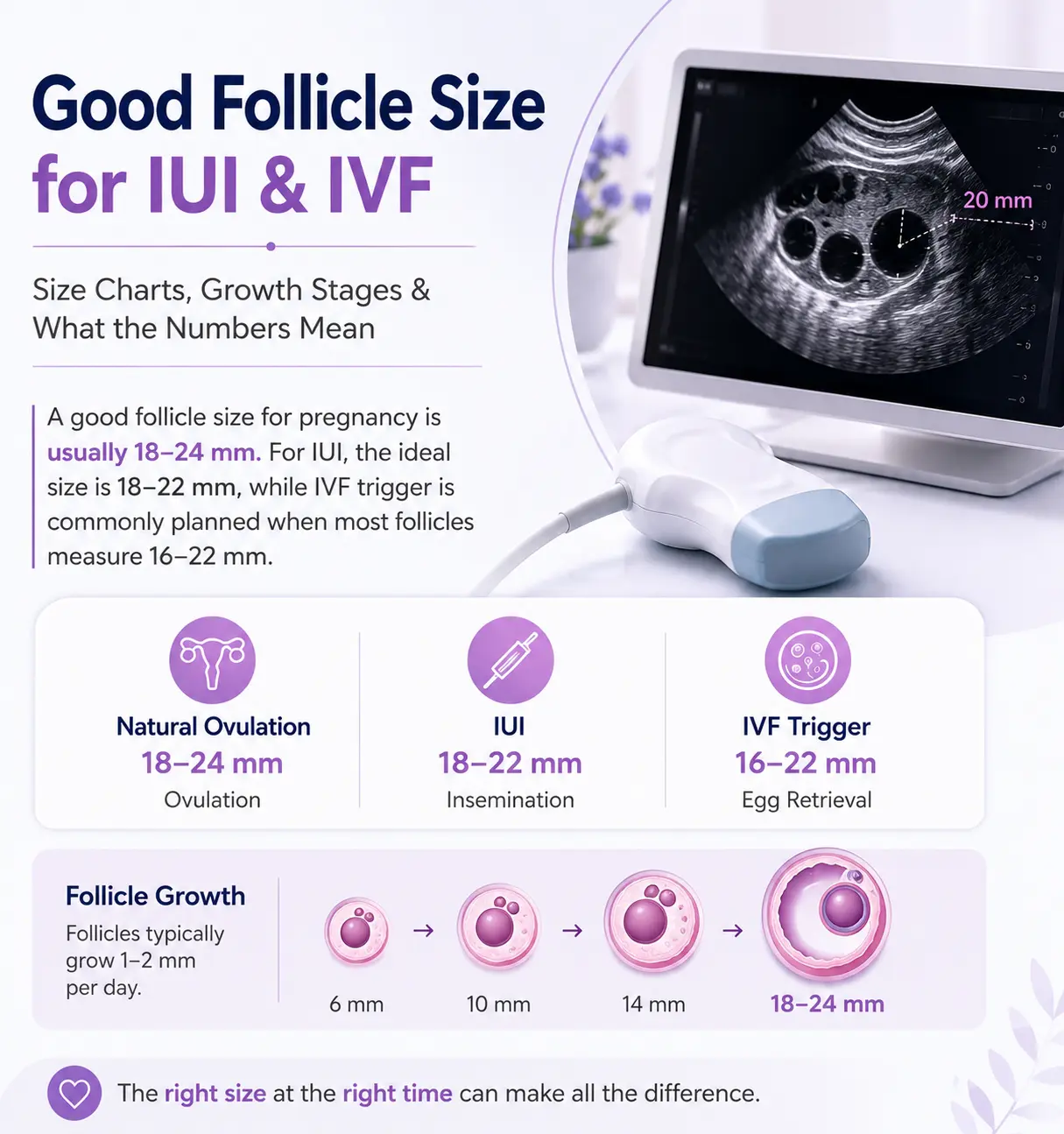
Good Follicle Size for IUI & IVF: Size Charts, Growth Stages & What the Numbers Mean
If you're trying to conceive naturally or undergoing IUI or IVF, you've likely wondered whether your follicle size is ideal. Follicle size isn't just a number on an ultrasound or on your report—it is one of the most trusted indicators fertility specialists use to as