



Categories
IVF Babies: Common Myths, Facts & Health Insights
Jul 16, 2026
Understanding IVF and How IVF Babies Are Conceived
In IVF, an egg and sperm are fertilised in a specialised laboratory before the embryo is transferred to the uterus. Once implantation occurs, the pregnancy progresses naturally, and the baby's growth and development follow the same process as any other pregnancy. At BirthRight Fertility by Rainbow Hospitals, fertility care is provided by a team of fertility specialists, embryologists, obstetricians & gynaecologists, fetal medicine experts, and neonatal specialists.Common Myths About IVF Babies
Many concerns about IVF babies' health are based on misconceptions. The table below explains some common myths and the facts behind them:| Myth | Fact |
| IVF babies are not natural. | The only difference is how fertilisation occurs. Development in the womb is the same. |
| IVF children have lower intelligence. | Research shows comparable cognitive and educational outcomes. |
| IVF babies are physically weaker. | Most IVF children enjoy similar health and development as their peers. |
| IVF always leads to twins. | Single embryo transfer is now commonly practised. |
| IVF children may struggle with fertility later in life. | Current evidence suggests that most individuals conceived through IVF have normal reproductive health and fertility potential |
Are IVF Babies as Healthy as Naturally Conceived Babies?
Parents often ask about the difference between a normal and IVF baby. Most IVF babies have similar physical, emotional, and developmental outcomes to naturally conceived children. Factors such as maternal age, overall health, genetics, and prenatal care often have a greater influence on a baby's wellbeing than the IVF procedure itself.Advances in IVF Technology and Child Health
IVF technology has advanced to include blastocyst culture, allowing embryos to be monitored for longer before transfer, helping specialists select embryos with strong developmental potential. Embryo vitrification, a rapid freezing technique, has improved embryo preservation and future treatment options.Other innovations include time-lapse embryo monitoring, which enables continuous observation of embryo development without disturbing laboratory conditions, and preimplantation genetic testing (PGT), which can help identify certain genetic conditions before embryo transfer. Together, these developments have enhanced treatment planning, supported healthier pregnancies, and further reduced concerns about the difference between normal and IVF baby outcomes.
When Should You Consult a Fertility Specialist?
Speaking with a fertility specialist can help answer questions and provide personalised guidance. Couples may consider consultation if they are facing difficulties conceiving, have experienced recurrent pregnancy loss, are concerned about genetic conditions, or wish to explore fertility preservation. When looking for the best IVF clinic in India, it is important to choose a centre with experienced fertility teams, advanced laboratory support, and comprehensive maternal care. Working with the best IVF specialist can help families feel informed and supported throughout their journey.Long-Term Studies on IVF Children
Over the past four decades, researchers have followed children conceived through IVF into adolescence and adulthood to better understand their long-term health. The findings have been reassuring. Most IVF children experience normal physical growth, cognitive development, emotional wellbeing, and academic achievement comparable to those conceived naturally.Some studies have observed a slightly higher likelihood of certain pregnancy-related complications, such as preterm birth or low birth weight. However, these outcomes are often linked to factors including parental age, multiple pregnancies, or underlying infertility rather than the IVF procedure itself. With the increasing use of single embryo transfer and ongoing advances in fertility care, many of these risks have been reduced.
Today, long-term evidence continues to support that most IVF-conceived individuals lead healthy lives, achieve normal developmental milestones, and have similar quality of life and reproductive health as their naturally conceived peers. Regular prenatal care, healthy lifestyle choices during pregnancy, and appropriate paediatric follow-up remain the key factors in supporting positive outcomes for every child, regardless of the method of conception.
Conclusion
Every family's path to parenthood is unique, and fertility treatment has helped millions achieve their dream of having a child. Scientific evidence continues to show that IVF babies' health outcomes are comparable to those of naturally conceived children. With compassionate support, advanced fertility care, and experienced specialists, BirthRight Fertility by Rainbow Hospitals helps families navigate their fertility journey with confidence and optimism.FAQs
Are IVF babies different from naturally conceived babies?
IVF babies are not fundamentally different from naturally conceived babies. The main difference lies in how fertilisation occurs. Once pregnancy begins, an IVF baby develops in the womb just like a naturally conceived baby, with similar growth patterns, developmental milestones, and overall health outcomes.Do IVF babies have a higher risk of birth defects?
Most IVF babies are born healthy. Some studies have reported a slightly increased risk of certain birth defects, although factors such as parental age, underlying fertility conditions, and overall pregnancy health may contribute to this risk.Can IVF children grow and develop normally?
Children conceived through IVF achieve physical, cognitive, emotional, and social developmental milestones similar to those of naturally conceived children. Most grow, learn, and participate in everyday activities just like their peers.Are IVF pregnancies considered high-risk?
IVF pregnancies may receive closer monitoring to support maternal and baby wellbeing. However, many IVF pregnancies progress smoothly and result in healthy deliveries. The level of monitoring depends on individual factors rather than IVF alone.Does IVF affect a child's intelligence or learning abilities?
IVF does not affect a child’s intelligence, learning ability, language development, or academic performance. Most children achieve educational and developmental milestones as expected.What factors influence the health of IVF babies?
Several factors contribute to the health of IVF babies, including maternal age, overall health, genetics, nutrition, prenatal care, and lifestyle habits during pregnancy. Regular medical check-ups and appropriate pregnancy care play an important role in supporting healthy outcomes.When should parents discuss IVF-related concerns with a healthcare specialist?
Parents can speak with a fertility specialist, obstetrician, paediatrician, or genetic counsellor at any stage of family planning, pregnancy, or parenthood. Early guidance can help address questions, provide reassurance, and support informed decision-making.Medical Disclaimer:
The information provided in this article is for general educational purposes only and should not be used as a substitute for professional medical advice, diagnosis, or treatment. Always consult a qualified healthcare professional for personalised guidance regarding your health.Related BlogView More
Genetic Risk of Cancer in Kids: How Family History Affects Cancer Risk
When cancer has affected a close family member, it is natural for parents to wonder what it could mean for their child’s future health. While most childhood cancers develop without a hereditary cause, some are linked to inherited genetic changes that can increase the like
Hypotonia in Babies or Floppy Infant Syndrome: Signs, Causes & Treatment
Every baby develops at their own pace, and it is natural for parents to notice differences in how their child moves, feeds, or responds to their surroundings. Some babies may feel unusually relaxed or floppy when held, which may be linked to hypoto
Paediatric ENT Care: Why Kids Need Specialised ENT Treatment
Ear, nose, and throat concerns are common in childhood. Whether it's recurring ear infections, constant nasal congestion, loud snoring, or hearing difficulties, these issues can affect a child's comfort, sleep, communication, and everyday activities. Sin
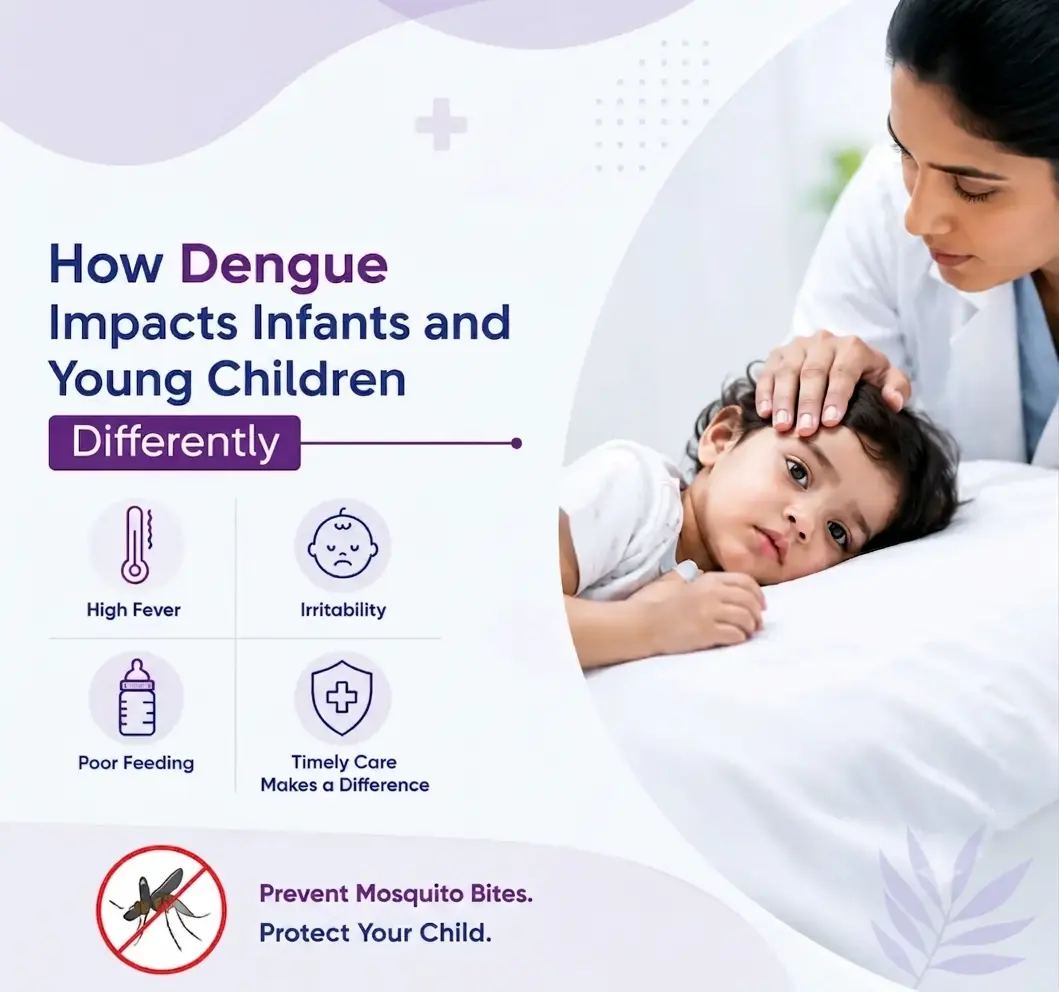
How Dengue Impacts Infants and Young Children Differently
Dengue is a common viral infection that affects thousands of families every year, particularly during the monsoon and post-monsoon months. While it can occur at any age, infants and young children often experience dengue differently from older children and adults. Since chi