




Categories
Stool Colour in Children: What's Normal, What's Not?
Oct 20, 2022
Normal and Diet-Related Variations
Stools which are pink, orange, or dark green in colour generally are normal or frequently due to excess consumption of a food product, food colour, or some prescribed medications. These changes are usually temporary and resolve on their own once the food or medication clears the child's digestive system.Critical Changes Requiring Medical Attention
Black or Bloody Stool
Black stool or stool with blood indicates bleeding from the stomach, intestine, or anus (an anal fissure being the commonest) and needs prompt medical or surgical evaluation.Pale or White Stool
Pale or white colour stools indicate the absence of the bile pigment bilirubin. This is seen in the early days of life and can be because of a liver infection or anomalies of the biliary system. Some babies are born with a blocked or incompletely developed biliary tree, which hampers the drainage of bile into the intestines. This is an essentially life-threatening condition if not treated on time, as the impaired drainage causes high-grade jaundice and liver failure. This pathology is called biliary atresia. It needs surgical reconstruction of the duct system in which a segment of the intestine is directly attached to the liver for adequate drainage of bile. Sometimes, pale colour stools are also seen in:- Choledochal cysts with cholangitis
- Stones blocking the biliary tree (secondary to metabolic conditions)
- Rarely, tumors or cancer of the hepatobiliary system
When to Seek Expert Care
All these conditions need expert surgical evaluation and intervention to alleviate the symptoms and avoid serious complications. If your infant displays persistently pale stools, it is vital to consult a specialist immediately. You can easily schedule a consultation with an experienced pediatric gastroenterologist at Rainbow Children's Hospital to ensure an accurate diagnosis and a timely, customized treatment plan. So, if you see any abnormality in your child’s poop colour, have a look at the poop colour chart and consult your doctor.Conclusion
Recognizing changes in the stool colour in children is an effective way for parents to keep track of their child's digestive health. While most temporary color shifts are completely harmless results of diet or vitamins, persistent pale, white, black, or bloody stools require timely medical validation. At Rainbow Children's Hospital, our dedicated department of pediatric gastroenterology and specialized pediatric surgery provides comprehensive, advanced diagnostic evaluation for all hepatobiliary and digestive conditions. Ensuring your child's well-being is our ultimate priority, giving you peace of mind at every stage of their growth.Frequently Asked Questions
Why does my child's poop colour change to green or orange?
Green, orange, or pink stool colour in children is most commonly caused by diet, such as eating green leafy vegetables, carrots, or foods with artificial coloring. It can also be caused by iron supplements or certain medicines. If the child is otherwise healthy and active, these changes are usually benign and temporary.When is white or pale stool an emergency in babies?
White, clay-coloured, or very pale stool indicates that bile from the liver is not reaching the intestines properly. If noticed in early infancy, this can be a sign of a serious, life-threatening condition called biliary atresia. If your baby passes pale stools, you should seek immediate evaluation from a pediatric surgeon or specialist.What causes black or bloody stool in children?
Dark red blood or black tarry stools can indicate bleeding from higher up in the digestive tract and require immediate medical assessment. Bright red blood on the surface of the stool is frequently caused by a small tear in the skin of the anus, known as an anal fissure, usually resulting from constipation.Disclaimer:
This content is intended for educational purposes only and should not be considered medical advice or emergency guidance. In case of a choking emergency, seek immediate medical attention or contact emergency medical services.Related BlogView More
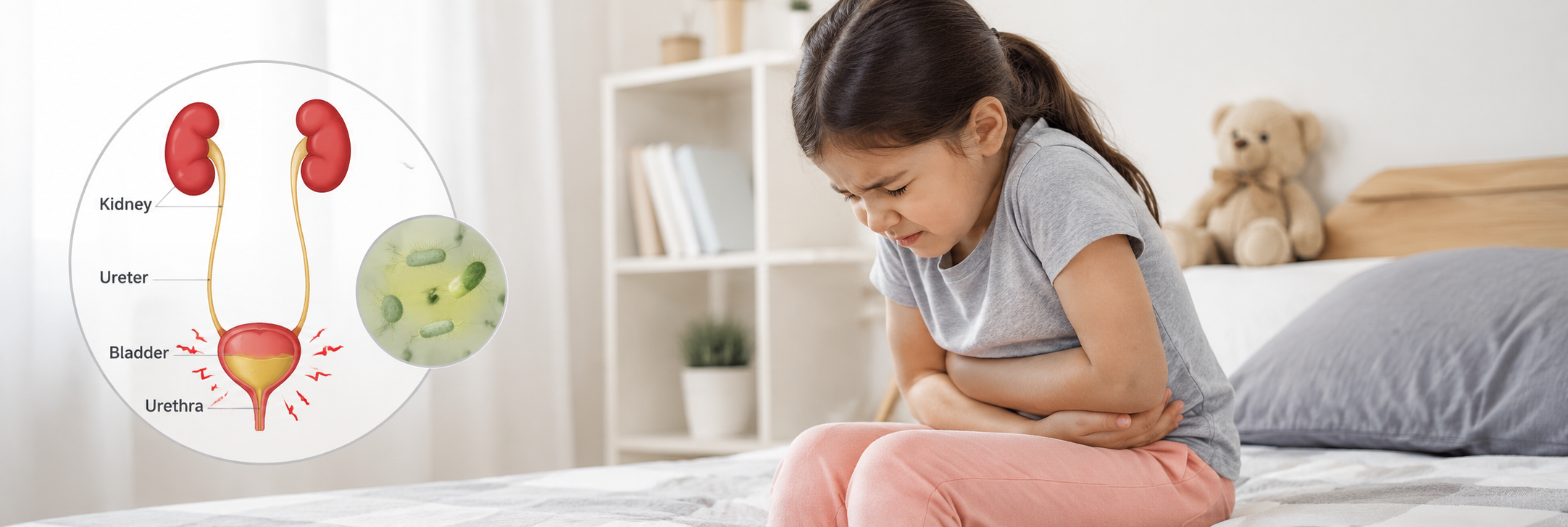
UTIs in Children: Symptoms, Causes, Treatment, and Prevention Guide
Urinary Tract Infections (UTIs) can be uncomfortable and distressing for children, especially when symptoms are difficult for them to explain. UTIs in children are relatively common and may affect the bladder, urethra, or kidneys. Early diagnosis and treatment are important

Vitamin D Deficiency in Kids: Signs, Risks, and Solutions
Vitamin D deficiency in kids is becoming increasingly common due to reduced outdoor activity, limited sun exposure, and dietary gaps in growing children. This essential nutrient plays a key role in bone strength, muscle development, and immunity. When levels are low, children

Otosclerosis in Kids: Causes, Symptoms and Treatment Explained
Otosclerosis is a condition that affects hearing due to abnormal bone growth in the middle ear. Although it is more commonly seen in adults, in rare cases it can also affect children, leading to gradual hearing difficulties. Early recognition of otosclerosis symptoms is important
Dehydration in Children: Symptoms, Stages, and Clinical Care
Dehydration in children can be worrying for parents, especially when symptoms appear suddenly during illness. It happens when a child loses more fluids than they take in, commonly due to fever, vomiting, or diarrhoea. Early signs may include thirst, dry mouth, reduced urine, and