




Antiphospholipid Syndrome (APLA / Hughes Syndrome)
Antiphospholipid syndrome (APS) or Hughes Syndrome is an autoimmune condition that makes the blood clot too easily. In pregnancy, clots can affect the placenta and lead to miscarriage, poor fetal growth or pre-eclampsia. Many people have no symptoms, so testing matters after unexplained clots or repeated pregnancy loss. With the right treatment and close monitoring, many women have healthy pregnancies.

Seamless support from diagnosis to post treatment care
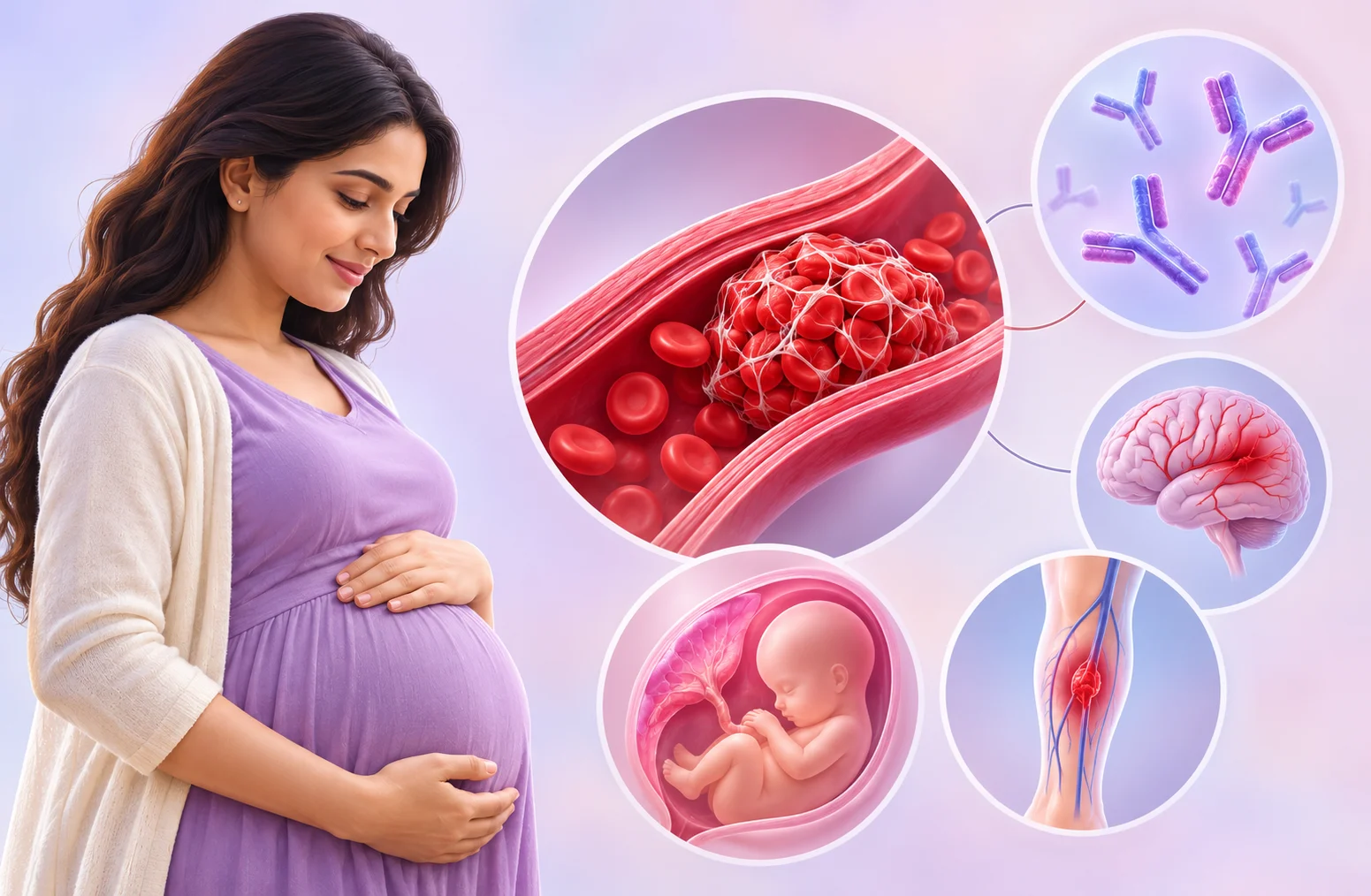
Overview
Antiphospholipid syndrome, also called APS or Hughes syndrome, is a condition that can increase the risk of blood clots and may also affect pregnancy. It may be investigated in people who have had unexplained blood clots or repeated pregnancy loss.
Understanding how antiphospholipid syndrome affects the body and how it is diagnosed can help you know what treatment and monitoring may be needed. With appropriate medical care, the condition can often be managed effectively. This page explains its symptoms, possible effects on pregnancy, diagnosis and available treatment options.
What is Antiphospholipid Syndrome (APLA / Hughes Syndrome)?
Antiphospholipid syndrome, often known as APLA syndrome, is an autoimmune condition. It is also known as Hughes syndrome, after the doctor who first described it. The syndrome causes the immune system to mistakenly make antibodies that make the blood more likely to clot. Because these clots can form in blood vessels anywhere in the body and can affect the placenta during pregnancy, the condition is one of the factors in recurrent pregnancy loss.
Antiphospholipid syndrome appears in two patterns. In some people it occurs on its own, known as primary APLA syndrome. In others, it develops alongside another autoimmune condition such as lupus, known as secondary APLA syndrome. If recurrent miscarriage is your main concern, our recurrent pregnancy loss page explains how APLA fits into the wider picture of investigation and care.
How Antiphospholipid Antibodies Affect the Body
Normally, your blood clots only when it needs to, such as when you cut yourself, and stays fluid the rest of the time. In antiphospholipid syndrome, the antiphospholipid antibodies upset this balance. They act on the surface of blood cells and vessel linings in a way that tips the body towards forming clots when it should not.
These clots can block veins and arteries. In pregnancy, they can affect the small blood vessels of the placenta, reducing the blood supply the baby depends on. This is why APLA syndrome is linked both to clots such as deep vein thrombosis and stroke, and to pregnancy complications including miscarriage and poor growth.
Causes of Antiphospholipid Syndrome
Antiphospholipid syndrome is an autoimmune condition, which means the immune system turns against the body’s own tissues. The exact cause is not fully understood, though several factors are thought to contribute. The main ones are below.
- An autoimmune tendency: sometimes alongside another condition such as lupus.
- Genetic factors: the condition can appear in families, although it is not inherited in a simple, direct way.
- Possible triggers: certain infections or medications may set off antibody production in someone already predisposed.
It is worth being clear that nothing you did caused antiphospholipid syndrome. It is a medical condition, and the focus of care is on managing it well. Assigning blame has no place in that.
Risk Factors of Antiphospholipid Syndrome
Certain factors can increase the likelihood of blood clots and other complications in people with antiphospholipid syndrome (APS). These include:
- Being female: APS is more commonly diagnosed in women, particularly during their reproductive years.
- Oestrogen exposure: Oestrogen-containing contraceptives and hormone replacement therapy (HRT) can increase the risk of blood clots.
- Pregnancy and the postpartum period: These periods are associated with an increased risk of thrombosis, particularly in women with APS.
- Surgery and prolonged immobility: Surgical procedures, hospitalisation, restricted movement and long-distance travel can increase the risk of clot formation.
- Lifestyle and cardiovascular factors: Smoking, high blood pressure (hypertension) and abnormal blood lipid levels (dyslipidaemia) can further increase cardiovascular and thrombotic risks.
- Associated autoimmune conditions: Systemic lupus erythematosus (SLE) and other autoimmune diseases are associated with APS.
- Certain infections and medications: Infections such as HIV, hepatitis C and syphilis, as well as some medications, may be associated with antiphospholipid antibody positivity. In some cases, the antibodies may be transient.
- High-risk antibody profile: People who test positive for all three major antiphospholipid antibodies (lupus anticoagulant, anticardiolipin antibodies and anti-beta-2 glycoprotein I antibodies) have a higher risk of thrombotic events.
There is also a rare and serious form called catastrophic antiphospholipid syndrome, sometimes written as catastrophic APLA syndrome, in which clots form suddenly in several organs at once. It is uncommon, though it is a medical emergency needing immediate hospital treatment. Most people with APLA syndrome never develop this form.
Symptoms of Antiphospholipid Syndrome
One challenging thing about antiphospholipid syndrome is that many people have no symptoms at all. Often the first sign is a clot or a pregnancy complication. When symptoms do appear, they tend to fall into two groups, as set out below.
General symptoms and signs
- Blood clots in the legs (deep vein thrombosis), causing pain, swelling or redness.
- Clots that travel to the lungs, or clots causing a stroke or mini-stroke, sometimes in a young, otherwise healthy person.
- A lacy, net-like purplish pattern on the skin, known as livedo reticularis.
- Recurrent headaches or migraines, and in some cases a low platelet count on a blood test.
Pregnancy-related symptoms and signs
- Recurrent miscarriage, particularly losses in the second trimester or later.
- A previous stillbirth, or a pregnancy affected by severe pre-eclampsia.
- A baby that grew slowly in the womb, or problems traced to the placenta.
If any of these sound familiar, especially repeated pregnancy loss, it is worth asking your doctor whether testing would be sensible. Identifying antiphospholipid syndrome is the first step to treating it. That single step changes the outlook considerably.
Complications of Untreated Antiphospholipid Syndrome
Left unrecognised and untreated, antiphospholipid syndrome can lead to complications from clotting. These affect both general health and pregnancy. The two groups below show what can happen without treatment.
General health complications
- Deep vein thrombosis and clots travelling to the lungs (pulmonary embolism).
- Stroke or mini-stroke, which can occur at a younger age than usual.
- Repeated clots despite an otherwise healthy lifestyle.
Pregnancy complications
- Recurrent miscarriage and late pregnancy loss.
- Pre-eclampsia, a serious rise in blood pressure during pregnancy.
- Restricted fetal growth and premature birth linked to placental problems.
These are listed to make the case for testing and treatment, which change the picture dramatically, as the prognosis section shows. Please read them as a reason to act early rather than a cause for alarm. With treatment, most of these complications can be prevented.
Diagnosis and Treatment Options for Antiphospholipid Syndrome
Diagnosing antiphospholipid syndrome (APS) involves reviewing your medical history, identifying any previous blood clots or pregnancy complications, and conducting blood tests to detect antiphospholipid antibodies. This blood panel is commonly called an APLA profile. It checks for three main antibodies: lupus anticoagulant (LA), anticardiolipin (aCL) and anti-beta-2 glycoprotein I (anti-β2GPI).
However, a single positive antibody test does not confirm antiphospholipid syndrome. These antibodies may appear temporarily, including after certain infections. Under the revised Sapporo/Sydney classification criteria, antibody positivity must generally be confirmed through two tests conducted at least 12 weeks apart, alongside a qualifying clinical event, such as a documented blood clot or specific pregnancy complications.
The 2023 American College of Rheumatology (ACR) and European Alliance of Associations for Rheumatology (EULAR) classification criteria provide a more detailed assessment. They use weighted clinical and laboratory domains, including vascular thrombosis, pregnancy complications, heart-valve involvement, blood abnormalities and antibody test results. These criteria are primarily intended to classify patients for research, while clinical diagnosis requires an individual medical assessment.
Understanding Antibody Test Results
The type and level of antiphospholipid antibodies can influence the risk of complications:
- Triple-positive antibody profile: When all three antibodies (lupus anticoagulant, anticardiolipin and anti-beta-2 glycoprotein I) are present, the risk of thrombotic complications is particularly high.
- Antibody levels: Under the 2023 ACR/EULAR classification criteria, moderate anticardiolipin and anti-beta-2 glycoprotein I antibody levels are 40–79 ELISA units, while high levels are 80 units or above. Values above the 99th percentile are also relevant under established classification criteria. Interpretation depends on the laboratory method used.
- Lupus anticoagulant testing: Blood-thinning medicines, including heparin, warfarin and direct oral anticoagulants (DOACs), can interfere with lupus anticoagulant test results and may cause misleading findings. Whenever possible, testing should be planned before anticoagulant treatment begins. However, prescribed anticoagulants should never be stopped or delayed without medical advice.
Who Should Be Tested for Antiphospholipid Syndrome?
A doctor may recommend antiphospholipid antibody testing if you have a history of certain blood-clotting events or pregnancy complications. Testing may be considered in situations such as:
- Three or more unexplained consecutive pregnancy losses before 10 weeks of pregnancy.
- One or more unexplained deaths of a morphologically normal foetus at or after 10 weeks of pregnancy.
- Delivery before 34 weeks because of severe pre-eclampsia, eclampsia or placental insufficiency, including significant foetal growth restriction (FGR).
- An unexplained episode of arterial, venous or small-vessel thrombosis.
Your doctor will assess your medical and pregnancy history to determine whether testing is appropriate. A positive result may need to be repeated after at least 12 weeks before persistent antibody positivity can be established.
Monitoring During Pregnancy
If you are pregnant with antiphospholipid syndrome, your pregnancy is treated as higher risk and watched closely. This monitoring is a safeguard and a normal part of care that helps catch problems early. The points below show what to expect.
- More frequent check-ups: regular obstetric visits, and blood pressure and urine checks to watch for pre-eclampsia.
- Growth scans: extra ultrasounds, particularly later in pregnancy, to check the baby is growing well and the placenta is working.
- Coordinated specialist care: your obstetric team works alongside specialists managing your medication and clotting risk.
- Planned, safe delivery: delivery at a centre with neonatal care available, so support is on hand if the baby needs it.
Seek urgent care between visits for warning signs such as sudden leg swelling and pain, chest pain or breathlessness, a severe headache or vision changes, or reduced movements of your baby. It also helps to know that blood-thinning treatment often continues after delivery, when clot risk is higher. Your team will guide you through this.
What Questions Should You Ask Your Doctor?
Coming to your appointment with a few questions ready helps you get the most from it. The prompts below are grouped by stage. Feel free to add your own.
Diagnosis and testing questions
- Which antibodies were tested, and were the results confirmed on a second occasion?
- Do I have primary APLA syndrome, or is it linked to another condition such as lupus?
- What do my results mean for my overall risk of clots?
Pregnancy planning and treatment questions
- If I want to conceive, when should treatment start, and what will it involve?
- How will my pregnancy be monitored, and how often?
- What symptoms should prompt me to contact you urgently?
Do not hesitate to ask your doctor to explain any term you do not understand. Clear answers help you make decisions with confidence. Writing them down can help you remember them later.
Prevention and Monitoring of Antiphospholipid Syndrome
Antiphospholipid syndrome cannot be prevented because it is autoimmune. However, you can reduce its complications considerably with sensible habits alongside medical treatment. The steps below support that.
- Attend regular check-ups, and in pregnancy follow the schedule of extra scans and reviews your team recommends.
- Take medication exactly as prescribed, and never stop blood thinners without medical advice.
- Avoid smoking, and discuss any medication containing oestrogen, such as some contraceptives, with your doctor, as these can add to clot risk.
- Stay active and maintain a healthy weight to support good circulation.
- Seek urgent care for signs of a clot, such as sudden leg swelling and pain, chest pain, breathlessness, or stroke symptoms.
These habits work best alongside your prescribed treatment, not in place of it. If you are ever unsure whether a symptom needs attention, it is always safer to ask. Your team would rather hear from you early.
Why Choose BirthRight by Rainbow Hospitals for Antiphospholipid Syndrome Care?
Antiphospholipid syndrome sits between obstetrics, haematology and immunology. A team that coordinates care is best, rather than treating each part in isolation. That coordinated approach is what BirthRight by Rainbow Hospitals provides, as shown below.
- High-risk pregnancy expertise: Experience managing pregnancies that need close monitoring and prompt treatment.
- Careful diagnosis: Antibody testing with proper confirmation, so the diagnosis is accurate before treatment begins.
- Coordinated specialist care: Obstetric and specialist teams working together on your medication and clotting risk.
- Neonatal support on hand: The reassurance of newborn care available at delivery, backed by Rainbow's paediatric strength.
BirthRight by Rainbow Hospitals brings three decades of expertise in women’s and newborn health, with high-risk obstetric and neonatal care under one roof. If you have had recurrent miscarriages or a clotting problem, or you have been told you may have antiphospholipid syndrome, our gynecologist can assess you thoroughly. A consultation is a good place to begin.

Find a Doctor and Book Appointment Online
Meet our specialist doctors who bring together clinical expertise, compassion, and personalised care to support your health and well-being. Choose from 1,300+ specialists across our network and book an appointment with BirthRight and Rainbow Children Hospitals, offering 24*7 support to you and your family.

Dr. Pranathi Reddy A
Clinical Director – Obstetrics & Gynecology.
English,Hindi,Telugu Banjara Hills

Dr. Gauri Vinayak Dhamangaonkar
Senior Consultant - Fetal Medicine
15 Years English,Hindi,Marathi,Telugu Kondapur OP, Banjara Hills

Dr. Shruthi Reddy Poddutoor
Consultant Obstetrician, Gynecologist & Laparoscopic Surgeon
English,Telugu Banjara Hills

Dr. Himabindu Veerla
Consultant Obstetrician, Gynecologist & Laparoscopic Surgeon
English,Telugu Banjara Hills

Dr. Bhargavi Reddy K
Consultant - Obstetrics and Gynecology
10 Years English,Hindi,Telugu Banjara Hills, Attapur Clinic

Dr. Annie Pranutha P
Consultant Obstetrics and Gynecology
9 Years English,Hindi,Telugu Banjara Hills, Attapur Clinic

Dr. Sasikala Kola
Consultant Obstetrician & Gynecologist
English,Hindi,Telugu Banjara Hills

Dr. Atigadda Vijaya
Consultant - Obstetrics & Gynecology
Hindi,Telugu Banjara Hills, Himayatnagar, Attapur Clinic

Dr. Nishanth Reddy Inavolu
Visiting Consultant Physician and Diabetologist & Internal Medicine
English,Hindi,Telugu Banjara Hills, Himayatnagar

Dr. Tulika Tayal
Consultant - Fetal Medicine
English,Telugu Banjara Hills

Dr. M Prathyusha Reddy
Consultant Obstetrics & Gynecology
English,Telugu Banjara Hills

Dr. Nithya Narasimha Murthy
Consultant -Psychiatrist
English,Hindi,Telugu Kondapur OP, Banjara Hills, Child Development Centre - Banjarahills Rd No 10

Dr. Brundavani
Consultant - Nutritionist
English,Hindi,Telugu Kondapur OP, Hydernagar, Banjara Hills, Child Development Centre - Banjarahills Rd No 10

Dr. Niveditha Chalmeda
Consultant
English,Telugu Banjara Hills

Dr. Kirti Reddy Patlolla
Consultant Obstetrics and Gynaecology
English,Telugu Banjara Hills, Attapur Clinic

Dr. Tuheena Sharma
Consultant - Perinatal Physiotherapy
10 Years English,Telugu Banjara Hills

Dr. Aditi Shah
Consultant - Fetal Medicine
English,Telugu Banjara Hills

Dr. Swathi Naga Tulasi Rayapureddy
Lactation Consultant
8 Years English,Telugu Banjara Hills

Dr. Swetha Reddy. S
CONSULTANT PERINATAL PSYCHIATRIST AND WOMEN MENTAL HEALTH SPECIALIST
13 Years English,Hindi,Telugu Banjara Hills

Dr. Addu Kiranmayi
Chief Clinical Nutritionist and Lifestyle Medicine Consultant
15 Years English,Hindi,Telugu Himayatnagar, Banjara Hills

Dr. Palle Nalini Kumari
Lactation Consultant
17+ Years English,Hindi,Telugu Banjara Hills
Dr. Nazia Tabassum
Consultant - Breast, Plastic & Reconstructive Surgeon
9 Years English,Hindi,Telugu,Urdu Banjara Hills

Dr. Sruthi Cheera
Consultant Breast Surgeon
5 Years English,Hindi,Kannada,Telugu Banjara Hills

Dr. Supriya Reddy
Lactation Consultant
5 Years English,Hindi,Telugu Banjara Hills

Dr. Niraj Krishnamurthy Yanamandra
Senior Consultant Obstetrician & Gynaecologist, Laparoscopy & Hysteroscopy Surgeon
English,Hindi,Marathi,Telugu Hydernagar, Banjara Hills, Financial District

Dr. B. Rao Bahadur
Consultant – Obstetrician & Gynecologist, Laparoscopic ,& Hysteroscopic Surgeon
22 Years English,Hindi,Konkani,Marathi,Telugu Banjara Hills, Kondapur OP

Dr. Sneha Kulkarni
Consultant - Child, Adolescent & Adult Psychiatrist
10 Years English,Hindi,Kannada,Telugu Secunderabad, Banjara Hills, Child Development Centre - Banjarahills Rd No 10

Dr. Lavanya Janagama
Consultant – Obstetrics & Gynecology
10+ Years English Banjara HillsLeading Hospitals for Women Care
Rainbow Children's Hospital stands as a testament to the hospital's continual pursuit of excellence and innovation, providing specialized care for women and children


















chennai
Blogs
Discover our most recent health articles provided by our reliable experts.




What Are People Saying About Us
Embark on a journey of inspiration and hope with our patient success stories, complemented by informative videos from our dedicated doctors.


Media
 Common Gynaecological Surgeries to Fix Female Reproductive Issues
 Healthy Woman - Healthy World
 Healthier Women For a Healthier Future...
 Rainbow Children’s Hospital & BirthRight by Rainbow Launch Video Consultation Facilities
 Dr.Pranthi Reddy
 What is the use of that?
 Can you try this time?
 Pregnant Women are Not Unfit
 Declining Age of Menarche - A Matter of Concern
 Important Facts about Cervical Cancer
 Be careful before preempting
 Flu every month!
 Menstrual cramps
 Premature delivery
 Whether laughing or coughing...why?
 Multi - Tasking may be Cool but it's not Healthy
 Pregnant and Worried about COVID-19? Here's Everything you Need to know
 Video Consultation in Pandamic Situation for Pregnancy Women's
 Women.. Various types of cysts
 Recurrent Pregnancy Loss in Women
 Early Onset of Puberty: Causes, Symptoms and Treatment Options
Common Gynaecological Surgeries to Fix Female Reproductive Issues
Healthy Woman - Healthy World
Healthier Women For a Healthier Future...
FAQs
Can I have antiphospholipid antibodies and never have any symptoms?
Can antiphospholipid syndrome be cured?
Will I need blood thinners for the rest of my life?
Can I have a healthy pregnancy if I have antiphospholipid syndrome?
Is antiphospholipid syndrome the same as having lupus?
Does antiphospholipid syndrome always cause miscarriage?
Is aspirin safe to take throughout pregnancy for APLA syndrome?
Can men be diagnosed with antiphospholipid syndrome?
How is catastrophic antiphospholipid syndrome different from regular APLA syndrome?
Can antiphospholipid syndrome be passed on to my children?
Quick Links
Free Calculators to Track and Predict your Pregnancy
Gynecologist in Other Locations
Women's Health Conditions We Treat
- Mastitis (Breast Infection)
- PCOS (Polycystic Ovary Syndrome)
- Uterine Fibroids (Leiomyomas)
- Recurrent Pregnancy Loss
- Blocked Fallopian Tubes (Fallopian Tube Obstruction)
- Gestational Diabetes in Pregnancy
- Incompetent Cervix (Cervical Insufficiency)
- COVID-19 in Pregnancy
- Cytomegalovirus (CMV) in Pregnancy
- HELLP Syndrome
- Luteal Phase Defect
- Vasa Previa
- Listeria in Pregnancy
- Placenta Previa
- Endometrial Polyps (Uterine Polyps)
- Congenital Heart Disease in Pregnancy
- Hyperemesis Gravidarum (Severe Morning Sickness)
- Preeclampsia (toxemia)
- Fetal Distress (Non-Reassuring Fetal Status)
- Postpartum Haemorrhage (PPH)
- Placental Abruption (Abruptio Placentae)
- Placenta Accreta
- Postpartum Depression (PPD)
- Rhesus (Rh) Incompatibility
- Syphilis in Women
- Thalassemia in Pregnancy
- Gestational Thrombocytopenia
- Diabetes in Pregnancy
- Uterine Rupture
- Migraine in Pregnancy
- Eclampsia
- Uterine Inversion (Inverted Uterus)
- Rubella in Pregnancy
- Pulmonary Hypertension in Pregnancy
- Hydrops Fetalis (Fetal Hydrops)
- Iron-Deficiency Anaemia in Pregnancy
- Hypothyroidism in Pregnancy
- Pregnancy Constipation
- Retained Placenta