




Breast Abscess
A breast abscess is a collection of pus in the breast caused by an infection, most often in breastfeeding women as a complication of mastitis, but also in women who are not breastfeeding. It causes a painful, warm, swollen lump and usually needs drainage as well as antibiotics.

Seamless support from diagnosis to post treatment care
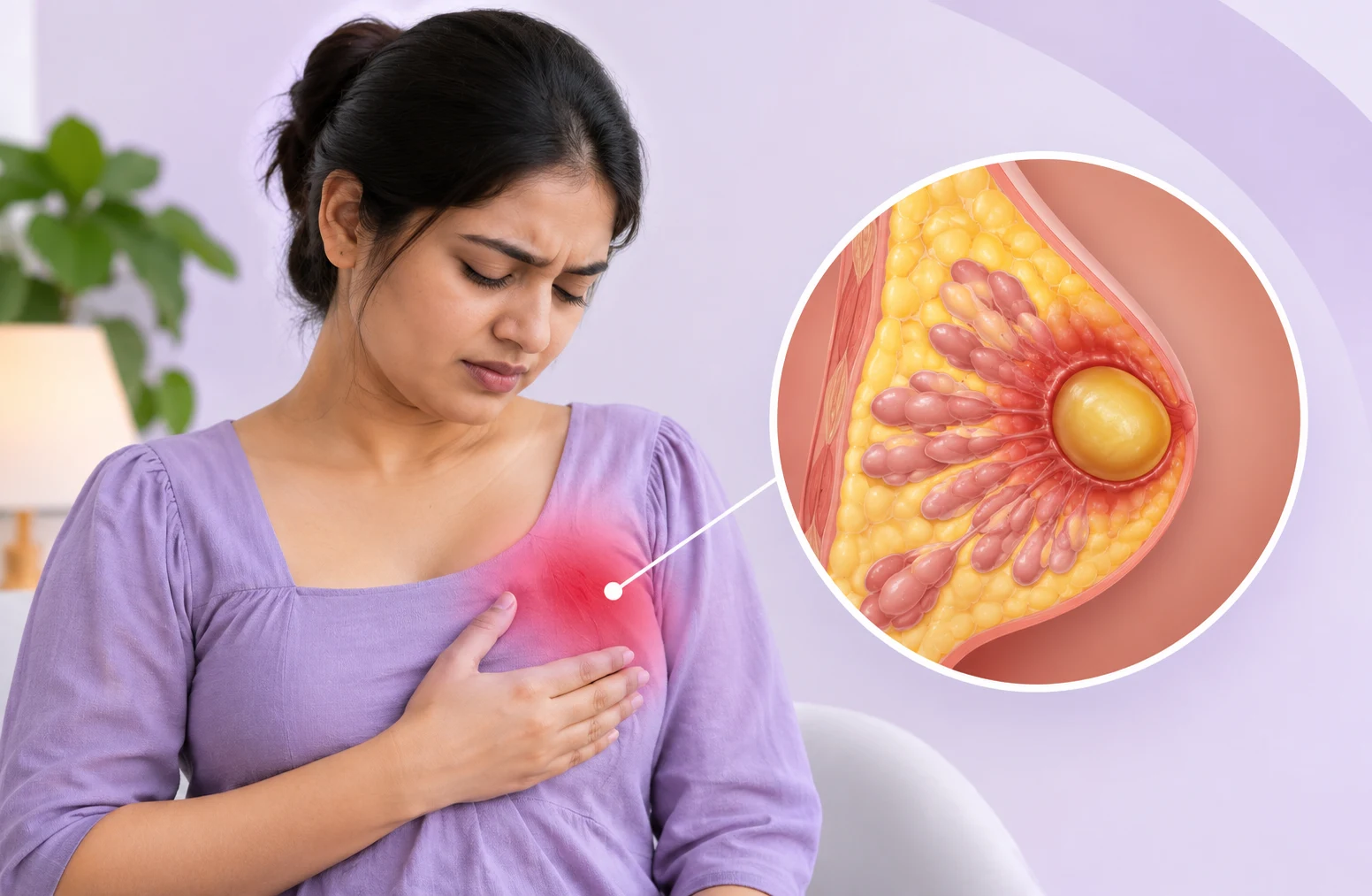
Overview
Breast discomfort can occur for different reasons, and it is not always easy to know which ones need medical attention. While some discomfort may have a simple explanation, persistent pain or swelling should not be ignored. Understanding the possible causes can help you recognise when to seek care and take the next steps towards recovery.
What is a Breast Abscess?
A breast abscess is a collection of pus that forms in the breast because of an infection. It can cause a painful, swollen lump, redness and warmth in the affected area. Although breast abscesses are more common during breastfeeding, they can also occur in women who are not breastfeeding.
Breast abscesses are generally classified into two types:
- Lactational abscess: This develops during breastfeeding, often as a complication of mastitis (inflammation of the breast tissue that may be caused by an infection).
- Non-lactational abscess: This develops outside breastfeeding and may be associated with factors such as smoking, diabetes or problems affecting the breast ducts.
A breast abscess can develop when mastitis does not improve with treatment or when the infection progresses. However, not every breast abscess follows a recognised episode of mastitis.
How a Breast Abscess Develops
A breast abscess develops when an infection causes pus to collect within the breast tissue, forming a pocket that the body may not be able to clear without treatment.
The process generally involves three stages:
- Infection begins: Bacteria enter the breast tissue, sometimes through damaged nipple skin or an infected breast duct.
- Inflammation develops: The affected area becomes inflamed, causing pain, redness, warmth and swelling. During breastfeeding, this may occur alongside mastitis (inflammation of the breast tissue).
- Pus collects: If the infection progresses, immune cells and bacteria accumulate, leading to a collection of pus that forms a breast abscess.
The type of bacteria involved can vary depending on whether the abscess develops during breastfeeding or independently of it. This distinction is important when selecting appropriate antibiotic treatment.
Causes and Risk Factors of Breast Abscess
Breast abscesses can develop during breastfeeding (lactational) or in women who are not breastfeeding (non-lactational). The factors contributing to infection differ between these types.
Lactational Causes and Risk Factors
Lactational breast abscesses commonly develop following mastitis. Factors that may contribute to breast inflammation, nipple damage or infection include:
- Breast engorgement: Excessive breast fullness can contribute to inflammation and feeding difficulties.
- Missed feeds or abrupt weaning: Sudden changes in feeding patterns can contribute to breast inflammation.
- Oversupply of breast milk: Producing more milk than the baby needs can contribute to breast fullness and inflammation.
- Breastfeeding difficulties: Poor latch or ineffective milk transfer may contribute to nipple trauma and breast inflammation.
- Cracked or sore nipples: Damaged nipple skin can provide an entry point for bacteria.
- Maternal fatigue: Exhaustion may indirectly contribute to breastfeeding difficulties and disrupted feeding routines.
Common bacteria: Staphylococcus aureus is the main bacterium associated with lactational breast abscesses. Methicillin-resistant Staphylococcus aureus (MRSA), which is resistant to several commonly used antibiotics, is also important, particularly in hospital-associated infections. Other bacteria, including Streptococcus species, may also be involved.
Non-Lactational Causes and Risk Factors
Non-lactational breast abscesses often involve infection or inflammation of the ducts beneath or around the nipple. Periductal mastitis (inflammation of the breast ducts) and mammary duct ectasia (widening of the breast ducts) are common underlying conditions.
Other contributing factors include:
- Smoking: Smoking can damage breast ducts and is strongly associated with periductal mastitis and recurrent abscesses.
- Inverted or retracted nipples: These may contribute to the accumulation of secretions and debris within the ducts.
- Nipple piercing: Piercing can introduce bacteria into the surrounding breast tissue.
- Diabetes or reduced immunity: These conditions can make it harder for the body to fight infections.
- Obesity: Higher body weight has been associated with an increased risk of non-lactational breast abscesses.
- Hormonal disturbances: Raised prolactin levels (hyperprolactinaemia) may be associated with certain non-lactational breast conditions.
- Previous breast surgery or implants: Surgical procedures or implant-related complications can sometimes contribute to breast infections.
Common bacteria: Non-lactational, particularly periareolar (around the nipple) and recurrent abscesses, may involve multiple types of bacteria. These can include Staphylococcus aureus, Streptococcus species and anaerobic bacteria (bacteria that grow without oxygen), such as Bacteroides species and anaerobic cocci.
Why Is Pus Culture Important?
When a breast abscess is drained, the pus should be sent for culture and sensitivity testing. This identifies the bacteria causing the infection and helps determine which antibiotics are likely to work.
This is particularly important because MRSA may require different antibiotic coverage, while non-lactational abscesses involving multiple bacteria may need antibiotics that also cover anaerobic organisms. Treatment can then be adjusted according to the test results.
Symptoms of Breast Abscess
A breast abscess can cause a painful lump and changes in the surrounding skin. Symptoms may develop over several days and can occur with or without an earlier episode of mastitis.
Common symptoms include:
- A painful, tender lump: The affected area may feel swollen and sore.
- Redness and warmth: The skin over the lump may appear red and feel warmer than the surrounding skin.
- Breast swelling: Part of the breast may become swollen or feel unusually firm.
- Fever or flu-like symptoms: You may have a high temperature, chills, or feel generally unwell.
- Nipple discharge: In some cases, fluid or pus may drain from the nipple.
- Pain during breastfeeding: Feeding or expressing milk may become uncomfortable.
Not everyone experiences all these symptoms. A breast abscess may sometimes cause a lump without a fever.
Seek prompt medical assessment if you notice a painful, warm or red breast lump, especially if you have a fever or feel unwell. Do not attempt to squeeze the lump or drain it yourself. Early assessment helps your doctor determine whether an abscess is present and whether drainage is needed.
Diagnosis and Conditions That Can Resemble a Breast Abscess
A breast abscess is usually diagnosed through a clinical examination and breast imaging. However, a lump that does not resolve or keeps returning may indicate another underlying condition that needs further investigation.
How Is a Breast Abscess Diagnosed?
Your doctor may recommend the following tests:
- Breast ultrasound: This is the first-choice imaging test to identify a pus-filled collection, assess its size and location, and distinguish an abscess from other breast conditions.
- Pus culture and sensitivity: Fluid collected during aspiration or drainage can be tested to identify the bacteria and select appropriate antibiotics. If tuberculosis is suspected, additional tests for tuberculosis bacteria may be required.
- Mammography: This may be recommended for non-lactational abscesses, particularly in women over 40, or when symptoms do not resolve, to investigate any underlying breast abnormality.
- Core needle biopsy: A small tissue sample may be collected for laboratory examination if a lump persists, imaging findings are suspicious or there are concerning skin or nipple changes.
Conditions That Can Resemble a Breast Abscess
A persistent or recurrent breast lump may sometimes be caused by:
- Inflammatory breast cancer: A rare, aggressive form of breast cancer that can cause breast redness, swelling, skin thickening and peau d'orange (skin that resembles an orange peel).
- Granulomatous mastitis: A rare inflammatory breast condition that can cause painful lumps, inflammation and abscess-like collections.
- Periductal mastitis and duct ectasia: Inflammation or widening of the ducts near the nipple can cause recurring infections, lumps and nipple discharge.
- Galactocele: A milk-filled cyst that can develop during breastfeeding or after weaning and may sometimes become infected.
- Tuberculous mastitis: A rare form of breast tuberculosis that can cause persistent lumps, abscesses, ulcers or draining sinuses. It is an important consideration in India, particularly when an abscess does not respond to routine treatment.
If a breast lump persists despite treatment, returns repeatedly or is accompanied by skin thickening, peau d'orange or nipple retraction, further imaging and a biopsy may be necessary to establish the correct diagnosis.
Complications of Breast Abscess
Most breast abscesses can be treated successfully, especially when identified early. If treatment is delayed, some may cause additional problems, including:
- Spreading infection: The infection may extend into the surrounding breast tissue and, in severe cases, spread beyond the breast.
- Spontaneous drainage: The abscess may burst and release pus through the skin, leaving an open or painful area that needs medical care.
- A draining channel (fistula): In some cases, an abnormal passage may form between the infected area and the skin, causing persistent drainage.
- Recurrence: The abscess may return, particularly if an underlying duct problem or other contributing factor remains.
These complications do not occur in every case. Appropriate treatment, including drainage when needed, antibiotics when indicated and follow-up care, helps reduce the risk of ongoing infection and recurrence.
Treatment Options for Breast Abscess
Treatment aims to drain the collected pus, control the infection and relieve pain. Your doctor may recommend an ultrasound scan to confirm the abscess and assess its size, location and structure.
Treatment depends on the abscess size, severity of infection, condition of the overlying skin and your overall health. Common options include:
- Ultrasound-guided needle aspiration: This is often the first treatment for uncomplicated lactational breast abscesses. The doctor uses a needle to remove the pus under ultrasound guidance. Aspiration may need to be repeated every 2–3 days if pus collects again or the abscess persists.
- Incision and drainage: A small cut is made to release the pus. This may be needed for larger abscesses (particularly those over 3 cm), multiple pus-filled compartments (multiloculated abscesses), damaged or thinning skin, or abscesses that do not improve with aspiration.
- Antibiotics: Common breastfeeding-compatible options include flucloxacillin, cloxacillin or cephalexin. Co-amoxiclav may be used when broader bacterial coverage is needed. If MRSA (methicillin-resistant Staphylococcus aureus) is suspected, clindamycin or co-trimoxazole may be considered, depending on culture results and individual circumstances. Treatment commonly lasts 10–14 days.
- Pain relief: Ibuprofen or paracetamol may help relieve pain and inflammation. Your doctor can recommend a suitable option.
- Breastfeeding support: Breastfeeding can generally continue if comfortable and medically appropriate. If needed, express milk gently without excessive pumping or trying to empty the breast completely.
When Is Hospital Treatment Necessary?
Hospital admission and intravenous (IV) antibiotics may be required if you develop sepsis (a serious response to infection), have a severe or spreading infection, or need surgical treatment and closer monitoring.
Follow-Up and Self-Care
Your doctor may recommend a follow-up examination or ultrasound to confirm that the abscess has resolved. A persistent lump, pain or swelling needs further assessment.
Apply a cold compress to help reduce swelling and discomfort. Avoid deep breast massage, excessive pumping and routine warm compresses, as these may aggravate inflammation. Brief warmth before feeding may be used if it makes milk release more comfortable.
Can You Continue Breastfeeding During Treatment?
In many cases, you can continue breastfeeding during treatment for a breast abscess. Continue breastfeeding or expressing milk as needed to feed your baby and maintain your milk supply. Avoid feeding or pumping more than usual just to empty the breast, as this may increase milk production and worsen swelling.
Follow your healthcare team's advice about feeding from the affected breast, particularly if you have an open wound or a drain. Keep your baby's mouth and the breast pump flange away from the wound and any pus or drainage. If direct feeding is too painful, ask your doctor or lactation specialist about expressing milk and other feeding options.
What Is the Prognosis (Outlook) for a Breast Abscess?
Most breast abscesses have a good outlook with timely drainage and appropriate antibiotics. Symptoms generally begin to improve within a few days of treatment, although complete healing may take 1–6 weeks, depending on the size of the abscess and the treatment required.
The risk of recurrence is generally lower with lactational breast abscesses than with non-lactational abscesses. Non-lactational abscesses, particularly those involving the ducts around the nipple, may recur and sometimes require surgery to remove the affected ducts.
Most women can breastfeed again or continue breastfeeding after treatment, depending on the location of the abscess and the procedure performed. Milk supply may temporarily decrease in the affected breast, but it often recovers. Extensive tissue damage or surgery involving the milk ducts may affect future breastfeeding ability.
If a breast lump, pain or discharge persists despite treatment, further examination and imaging may be needed to rule out an underlying breast condition.
What Questions Should I Ask My Doctor?
Knowing what to expect from treatment can help you feel more confident about your care. Consider asking your doctor the following questions.
Treatment and Drainage Questions
- Will I need needle aspiration or incision and drainage?
- Will I need antibiotics, and how long should I take them?
- What type of anaesthesia will be used, and what discomfort should I expect?
- How should I care for the treated area while it heals?
- Will the procedure leave a scar?
Breastfeeding and Follow-Up Questions
- Can I continue breastfeeding from the affected breast?
- If direct feeding is painful, how should I express milk?
- What signs suggest that the infection is not improving?
- When should I return for a follow-up appointment?
- Is there anything I can do to reduce the chance of another abscess?
Your doctor can tailor the advice to your symptoms, treatment and feeding needs. Seek reassessment if your pain, swelling, or fever worsens, or if your symptoms do not improve as expected.
Prevention & Lifestyle Tips for Breast Abscess
Taking care of your breasts, protecting your nipples from damage and seeking timely treatment for inflammation can help support breast health and lower the risk of a breast abscess, especially while breastfeeding.
- Support a comfortable latch: Ask a lactation specialist for help if your baby has difficulty attaching to the breast or feeding causes persistent nipple pain.
- Feed according to your baby's needs: Avoid unnecessarily restricting feeds or trying to empty the breast completely through extra pumping. If you are concerned about milk supply or breast fullness, seek individual advice.
- Avoid forceful breast massage: Deep massage and squeezing can injure breast tissue and worsen inflammation.
- Look after sore nipples: Seek advice if you develop cracks, persistent soreness or signs of infection.
- Choose comfortable clothing: Avoid bras or clothing that press painfully on your breasts.
- Seek care for possible mastitis: Contact a healthcare professional if you develop breast redness, increasing pain, swelling or fever.
- Consider stopping smoking: If you smoke, seeking support to quit may reduce the risk of non-lactational breast infections.
These measures can help support breast health, but they cannot guarantee that an abscess will not develop. If you notice a new breast lump or symptoms of infection, seek medical assessment rather than trying to manage the problem at home.
Why Choose BirthRight by Rainbow Hospitals for Breast Abscess Care?
At BirthRight by Rainbow Hospitals, we understand that a breast abscess can be particularly challenging for breastfeeding mothers. Timely medical assessment, appropriate treatment and feeding guidance can help women recover while addressing their individual needs.
- Expert women's healthcare: Our obstetrics and gynaecology teams can guide women experiencing breast-related concerns towards appropriate assessment and treatment.
- Individualised treatment planning: We help patients understand their condition and discuss suitable treatment options based on their clinical needs.
- Breastfeeding support: We recognise the importance of breastfeeding support during recovery and encourage women to seek guidance on feeding and milk expression when needed.
- Ongoing care and guidance: We emphasise appropriate follow-up to assess recovery and identify any symptoms that may require further medical attention.

Find a Doctor and Book Appointment Online
Meet our specialist doctors who bring together clinical expertise, compassion, and personalised care to support your health and well-being. Choose from 1,300+ specialists across our network and book an appointment with BirthRight and Rainbow Children Hospitals, offering 24*7 support to you and your family.

Dr. Pranathi Reddy A
Clinical Director – Obstetrics & Gynecology.
English,Hindi,Telugu Banjara Hills

Dr. Gauri Vinayak Dhamangaonkar
Senior Consultant - Fetal Medicine
15 Years English,Hindi,Marathi,Telugu Kondapur OP, Banjara Hills

Dr. Shruthi Reddy Poddutoor
Consultant Obstetrician, Gynecologist & Laparoscopic Surgeon
English,Telugu Banjara Hills

Dr. Himabindu Veerla
Consultant Obstetrician, Gynecologist & Laparoscopic Surgeon
English,Telugu Banjara Hills

Dr. Bhargavi Reddy K
Consultant - Obstetrics and Gynecology
10 Years English,Hindi,Telugu Banjara Hills, Attapur Clinic

Dr. Annie Pranutha P
Consultant Obstetrics and Gynecology
9 Years English,Hindi,Telugu Banjara Hills, Attapur Clinic

Dr. Sasikala Kola
Consultant Obstetrician & Gynecologist
English,Hindi,Telugu Banjara Hills

Dr. Atigadda Vijaya
Consultant - Obstetrics & Gynecology
Hindi,Telugu Banjara Hills, Himayatnagar, Attapur Clinic

Dr. Nishanth Reddy Inavolu
Visiting Consultant Physician and Diabetologist & Internal Medicine
English,Hindi,Telugu Banjara Hills, Himayatnagar

Dr. Tulika Tayal
Consultant - Fetal Medicine
English,Telugu Banjara Hills

Dr. M Prathyusha Reddy
Consultant Obstetrics & Gynecology
English,Telugu Banjara Hills

Dr. Nithya Narasimha Murthy
Consultant -Psychiatrist
English,Hindi,Telugu Kondapur OP, Banjara Hills, Child Development Centre - Banjarahills Rd No 10

Dr. Brundavani
Consultant - Nutritionist
English,Hindi,Telugu Kondapur OP, Hydernagar, Banjara Hills, Child Development Centre - Banjarahills Rd No 10

Dr. Niveditha Chalmeda
Consultant
English,Telugu Banjara Hills

Dr. Kirti Reddy Patlolla
Consultant Obstetrics and Gynaecology
English,Telugu Banjara Hills, Attapur Clinic

Dr. Tuheena Sharma
Consultant - Perinatal Physiotherapy
10 Years English,Telugu Banjara Hills

Dr. Aditi Shah
Consultant - Fetal Medicine
English,Telugu Banjara Hills

Dr. Swathi Naga Tulasi Rayapureddy
Lactation Consultant
8 Years English,Telugu Banjara Hills

Dr. Swetha Reddy. S
CONSULTANT PERINATAL PSYCHIATRIST AND WOMEN MENTAL HEALTH SPECIALIST
13 Years English,Hindi,Telugu Banjara Hills

Dr. Addu Kiranmayi
Chief Clinical Nutritionist and Lifestyle Medicine Consultant
15 Years English,Hindi,Telugu Himayatnagar, Banjara Hills

Dr. Palle Nalini Kumari
Lactation Consultant
17+ Years English,Hindi,Telugu Banjara Hills

Dr. Nazia Tabassum
Consultant - Breast, Plastic & Reconstructive Surgeon
9 Years English,Hindi,Telugu,Urdu Banjara Hills

Dr. Sruthi Cheera
Consultant Breast Surgeon
5 Years English,Hindi,Kannada,Telugu Banjara Hills

Dr. Supriya Reddy
Lactation Consultant
5 Years English,Hindi,Telugu Banjara Hills

Dr. Niraj Krishnamurthy Yanamandra
Senior Consultant Obstetrician & Gynaecologist, Laparoscopy & Hysteroscopy Surgeon
English,Hindi,Marathi,Telugu Hydernagar, Banjara Hills, Financial District

Dr. B. Rao Bahadur
Consultant – Obstetrician & Gynecologist, Laparoscopic ,& Hysteroscopic Surgeon
22 Years English,Hindi,Konkani,Marathi,Telugu Banjara Hills, Kondapur OP

Dr. Sneha Kulkarni
Consultant - Child, Adolescent & Adult Psychiatrist
10 Years English,Hindi,Kannada,Telugu Secunderabad, Banjara Hills, Child Development Centre - Banjarahills Rd No 10

Dr. Lavanya Janagama
Consultant – Obstetrics & Gynecology
10+ Years English Banjara HillsLeading Hospitals for Women Care
Rainbow Children's Hospital stands as a testament to the hospital's continual pursuit of excellence and innovation, providing specialized care for women and children


















chennai
Blogs
Discover our most recent health articles provided by our reliable experts.




What Are People Saying About Us
Embark on a journey of inspiration and hope with our patient success stories, complemented by informative videos from our dedicated doctors.


Media
 Common Gynaecological Surgeries to Fix Female Reproductive Issues
 Healthy Woman - Healthy World
 Healthier Women For a Healthier Future...
 Rainbow Children’s Hospital & BirthRight by Rainbow Launch Video Consultation Facilities
 Dr.Pranthi Reddy
 What is the use of that?
 Can you try this time?
 Pregnant Women are Not Unfit
 Declining Age of Menarche - A Matter of Concern
 Important Facts about Cervical Cancer
 Be careful before preempting
 Flu every month!
 Menstrual cramps
 Premature delivery
 Whether laughing or coughing...why?
 Multi - Tasking may be Cool but it's not Healthy
 Pregnant and Worried about COVID-19? Here's Everything you Need to know
 Video Consultation in Pandamic Situation for Pregnancy Women's
 Women.. Various types of cysts
 Recurrent Pregnancy Loss in Women
 Early Onset of Puberty: Causes, Symptoms and Treatment Options
Common Gynaecological Surgeries to Fix Female Reproductive Issues
Healthy Woman - Healthy World
Healthier Women For a Healthier Future...
FAQs
Does a breast abscess mean I have breast cancer?
Can a breast abscess happen if I am not breastfeeding, and is it more serious?
Is a breast abscess the same as mastitis?
How long does it take to recover after breast abscess drainage?
Will draining a breast abscess leave a scar?
Can a breast abscess come back after treatment?
Is it safe for my baby to drink milk from a breast with an abscess?
Can I treat a breast abscess at home with warm compresses or antibiotics alone?
How can I tell a blocked milk duct apart from a breast abscess at home?
Is breast abscess drainage painful, and is it done under anaesthesia?
How soon should I see a doctor about a painful breast lump?
Quick Links
Free Calculators to Track and Predict your Pregnancy
Women's Health Conditions We Treat
- Mastitis (Breast Infection)
- PCOS (Polycystic Ovary Syndrome)
- Uterine Fibroids (Leiomyomas)
- Recurrent Pregnancy Loss
- Blocked Fallopian Tubes (Fallopian Tube Obstruction)
- Gestational Diabetes in Pregnancy
- Incompetent Cervix (Cervical Insufficiency)
- COVID-19 in Pregnancy
- Cytomegalovirus (CMV) in Pregnancy
- HELLP Syndrome
- Luteal Phase Defect
- Vasa Previa
- Listeria in Pregnancy
- Placenta Previa
- Endometrial Polyps (Uterine Polyps)
- Congenital Heart Disease in Pregnancy
- Hyperemesis Gravidarum (Severe Morning Sickness)
- Preeclampsia (toxemia)
- Fetal Distress (Non-Reassuring Fetal Status)
- Postpartum Haemorrhage (PPH)
- Placental Abruption (Abruptio Placentae)
- Placenta Accreta
- Postpartum Depression (PPD)
- Rhesus (Rh) Incompatibility
- Syphilis in Women
- Thalassemia in Pregnancy
- Gestational Thrombocytopenia
- Diabetes in Pregnancy
- Uterine Rupture
- Migraine in Pregnancy
- Eclampsia
- Uterine Inversion (Inverted Uterus)
- Rubella in Pregnancy
- Pulmonary Hypertension in Pregnancy
- Hydrops Fetalis (Fetal Hydrops)
- Iron-Deficiency Anaemia in Pregnancy
- Hypothyroidism in Pregnancy
- Pregnancy Constipation
- Retained Placenta
- Antiphospholipid Syndrome (APS)
- Subchorionic Hemorrhage
- Asthma in Pregnancy
- Amniotic Fluid Embolism (AFE)
- Placenta Increta
- Fetal Macrosomia
- Gestational Trophoblastic Disease (GTD)
- Postpartum Psychosis
- Chronic Hypertension in Pregnancy
- Gestational Hypertension