




Congenital Heart Disease in Pregnancy: Risks, Monitoring and Care
Finding out that you are pregnant can bring extra questions when you have a heart condition from birth. You may wonder whether pregnancy will put too much strain on your heart, whether your medicines are safe to take, or whether your heart condition could affect your baby.
These concerns are understandable, but having a congenital heart condition does not mean that pregnancy is not possible. With the right care and planning, many women can have a safe pregnancy and delivery. Knowing what to discuss before and during pregnancy, how your heart may be monitored and which symptoms need prompt attention can help you feel more prepared.
What is Congenital Heart Disease in Pregnancy?
Congenital heart disease is a heart problem that a person is born with. It develops when the heart or the blood vessels connected to it do not form normally before birth. Some congenital heart conditions are mild and may cause few or no symptoms, while others can affect how the heart works and may need treatment or surgery. When a woman with congenital heart disease becomes pregnant, her heart needs to cope with the normal changes that happen during pregnancy. How well it does so depends on the type and severity of the heart condition.
How Pregnancy Affects a Heart with a Congenital Defect?
During pregnancy, the body makes more blood to support the growing baby, so the heart has to pump more blood and work harder. The heart rate also increases, placing extra demands on the heart throughout pregnancy and around the time of delivery. Most healthy hearts can manage these changes, but a heart affected by a congenital condition may have less ability to cope with the additional workload.
The level of risk varies from woman to woman. Some women with mild or successfully repaired heart conditions have few problems during pregnancy, while others may face a higher risk of complications, particularly with conditions such as severe valve problems or high blood pressure in the lungs. This is why an assessment of the heart before and during pregnancy is important to understand the individual risks and plan the right care.
Causes and Common Types of Congenital Heart Disease in Pregnancy
Congenital heart disease develops before birth when the heart or nearby blood vessels do not form normally. Women with these conditions may need specialised monitoring during pregnancy. Some congenital heart conditions that may be seen in women during pregnancy include:
- Atrial septal defect (ASD): A hole between the upper chambers of the heart. Smaller defects may cause few or no symptoms and can sometimes go unnoticed until adulthood.
- Ventricular septal defect (VSD): A hole between the lower chambers of the heart. Some close on their own during childhood, while others may need treatment or repair.
- Repaired tetralogy of Fallot: A more complex heart condition involving several abnormalities. It is usually repaired during childhood, but ongoing follow-up may be needed in adulthood.
- Bicuspid aortic valve: A condition in which the aortic valve has two flaps instead of the usual three. It can affect how blood flows out of the heart and may cause the valve to become narrowed or leaky over time.
- Coarctation of the aorta: A narrowing of the main artery that carries blood from the heart to the body. It is often treated during childhood but may still require monitoring later in life and definitely when one wants to plan pregnancy.
Risk Factors of Congenital Heart Disease in Pregnancy
Pregnancy in women with congenital heart disease carries different levels of risk depending on the heart condition. Some factors point to a need for closer care. The main risk factors are below.
- The severity of the defect: More complex or severe defects carry more risk than mild ones.
- The type of past repair: How and when a defect was repaired affects how the heart copes.
- Valve problems: Narrowed or leaky valves add to the strain of pregnancy.
- High pressure in the lungs: Pulmonary hypertension is a higher-risk condition in pregnancy.
- A history of arrhythmia or heart failure: Past heart rhythm problems or heart failure call for careful monitoring.
- Genetic conditions: Conditions such as Marfan syndrome add specific risks and a higher chance of passing the condition on to the fetus.
Having a risk factor does not mean pregnancy is unsafe. It depends on how closely you are monitored.
Symptoms and Warning Signs of Congenital Heart Disease in Pregnancy
Pregnancy can cause some normal changes that may feel similar to heart problems, such as mild breathlessness, a faster heartbeat and mild swelling in the ankles. The challenge is to differentiate these expected changes from symptoms of congenital heart disease that need medical attention. The warning signs to take seriously are below:
- Worsening chest pain: New or worsening chest pain should always be checked.
- Breathlessness with exertion: Becoming breathless with activity that did not trouble you before.
- An irregular or racing heartbeat: A noticeable change in your heart rhythm or a racing heart.
- Waking at night breathless: Waking from sleep short of breath is an important warning sign known as paroxysmal nocturnal dyspnoea (PND).
- Fainting or severe dizziness: Passing out or feeling faint needs urgent assessment.
Complications of Congenital Heart Disease in Pregnancy
With good care, most women with congenital heart disease have healthy pregnancies, but the condition can raise the chance of certain problems. Knowing these explains why monitoring is so thorough. The main complications are below.
- Heart rhythm problems: Arrhythmias can appear or worsen during pregnancy.
- Heart failure: In higher-risk conditions, the heart may struggle to meet demand.
- Blood clots and stroke: Some heart conditions raise the risk of clots, which need careful management.
- Preterm birth: The baby may need to be delivered early in some cases.
- Slower growth: Reduced blood flow can affect the baby’s growth.
- A heart defect in the baby: There is a higher chance the baby also has a congenital heart condition.
Treatment and Management Options for Congenital Heart Disease in Pregnancy
Managing congenital heart disease in pregnancy is about planning ahead preconceptionally and careful monitoring by a combined heart and pregnancy team. Ideally, this starts before pregnancy, with an assessment of your heart and your medicines by the cardiologist. The main parts of care are below.
- A pre-pregnancy heart assessment: A cardiology review before conceiving checks how your heart is likely to cope.
- A medicine review: Some heart medicines are not safe in pregnancy and are changed to safer options beforehand.
- A combined care team: A cardiologist and obstetrician plan and monitor your pregnancy together.
- Extra heart and growth checks: More frequent heart assessments and scans track you and your baby.
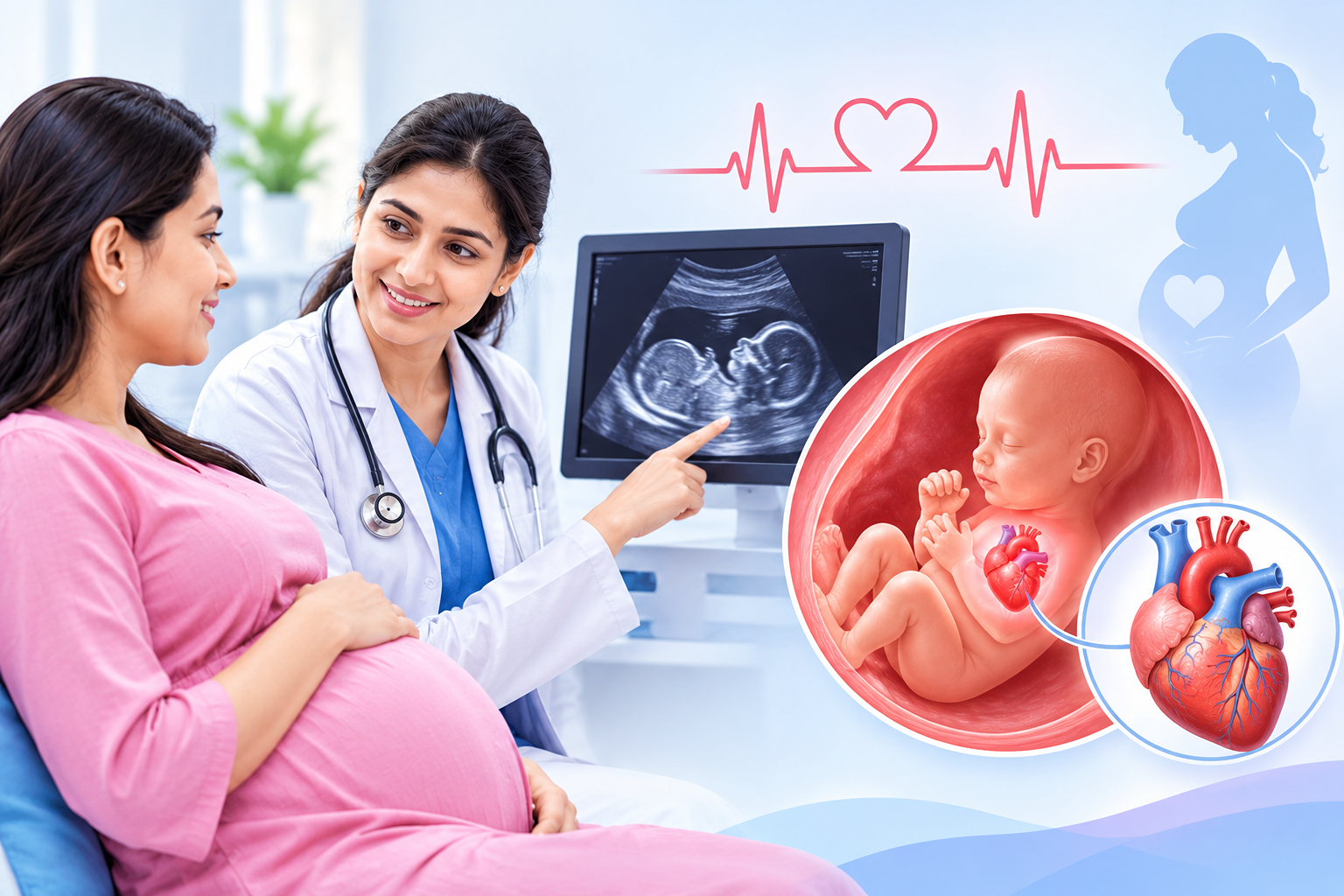
- A fetal heart scan: A detailed scan of the baby’s heart checks for any congenital heart condition.
- A clear delivery plan: Your team plans the timing and method of delivery to suit your heart.
What is the Prognosis (Outlook) for Congenital Heart Disease in Pregnancy?
The outlook for most women with congenital heart disease is encouraging. With planned, specialist-led care, the great majority go through pregnancy safely and deliver healthy babies. The key is careful assessment and monitoring by a team experienced in heart conditions and pregnancy.
Risk depends on the specific heart condition, which is why an honest, individual assessment matters so much. For a small number of higher-risk conditions, your team will talk through the risks openly with you. For most women, congenital heart disease is a manageable part of a healthy pregnancy.
What Questions Should I Ask My Doctor?
Going into your appointment with a few questions ready helps you understand your own situation. The prompts below are a useful starting point.
- How is my particular heart condition likely to cope with pregnancy?
- Which of my medicines are safe to continue, and which need to be changed?
- How often will my heart be monitored during pregnancy?
- What is the chance my baby could have a heart condition?
- What warning signs mean I should contact you straight away?
- How will my delivery be planned based on my heart condition?
Writing your questions down means you are less likely to forget them on the day. A clear conversation helps you plan the pregnancy with confidence. Your team will guide you at every stage.
Prevention and Preconception Tips for Congenital Heart Disease in Pregnancy
Congenital heart disease cannot be prevented, as it is present from birth, but planning ahead makes pregnancy much safer. Ideally, you do most of this before you conceive. The steps below help.
- Have a pre-pregnancy heart check: A cardiology assessment before pregnancy shows how your heart is likely to cope.
- Ask about genetic counselling: Counselling explains what are the chances of passing on a heart condition to your baby.
- Review your medicines early: Switching to pregnancy-safe heart medicines before conceiving protects the baby.
- Know your condition and repair: Gathering your records helps your team plan the right care.
- Plan your pregnancy timing: For some conditions, treating or stabilising the heart first makes pregnancy safer.
If one parent has a congenital heart condition, the chance a baby also has a heart defect rises to around 3 to 5 percent, and for some single-gene conditions such as Marfan syndrome it can be as high as 50 percent. This is why genetic counselling is offered, so you have clear information. A fetal heart scan in pregnancy then checks your baby’s heart.
Why Choose BirthRight by Rainbow Hospitals for Congenital Heart Disease in Pregnancy Care?
BirthRight by Rainbow Hospitals offers coordinated pregnancy, heart, and newborn care for women with congenital heart disease. Key strengths include:
- Multidisciplinary care: Obstetricians, cardiologists, anaesthesiologist, Physician and newborn care specialists work together to plan and manage your care.
- Pre-pregnancy assessment: The team can evaluate heart health before conception to help plan pregnancy care more appropriately.
- Specialist pregnancy monitoring: Women with higher-risk heart conditions receive closer monitoring throughout pregnancy.
- Planned delivery care: The care team coordinates the timing and approach to delivery based on the mother’s heart condition and pregnancy needs.
- Neonatal support: Well-equipped neonatal care is available for babies who may need additional support after birth, including those born with a heart condition.
- Three decades of expertise: Rainbow Hospitals brings extensive experience in women’s and children’s healthcare to complex pregnancy management.
- Coordinated care under one roof: Heart care, maternity services, delivery planning, and newborn support are available within the same care network.