




Cytomegalovirus (CMV) in Pregnancy: Symptoms, Risks and Prevention
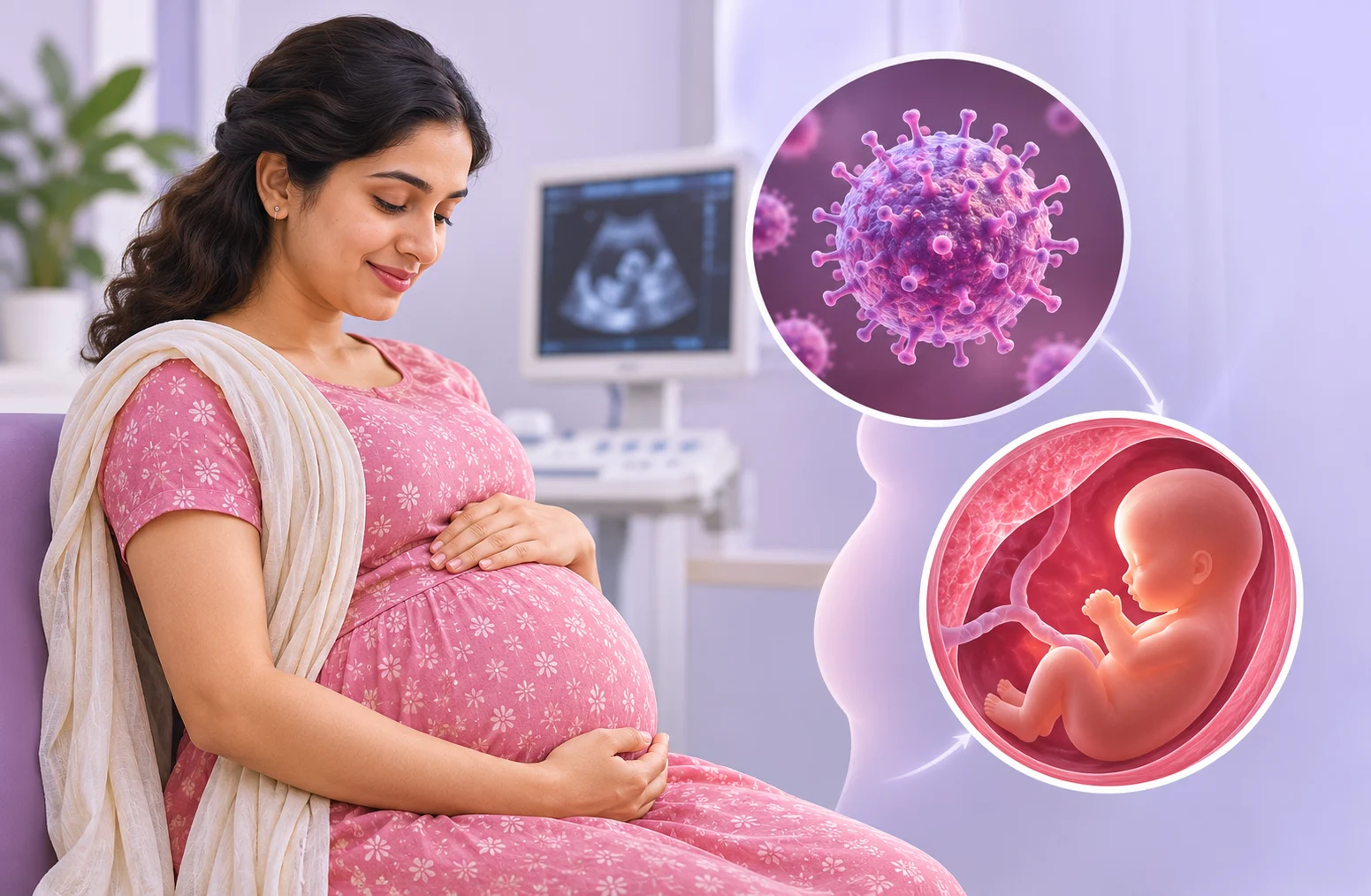
Cytomegalovirus, or CMV, often causes few or no noticeable symptoms, so some women first hear about it during pregnancy testing or a discussion with their doctor. During pregnancy, the main concern is whether the infection can pass to the baby and whether additional monitoring is needed.
Understanding how CMV spreads, what a positive test may mean, and when doctors recommend closer follow-up can make the next steps easier to understand. A useful place to begin is with what CMV is and why the infection needs particular attention during pregnancy.
What is Cytomegalovirus (CMV) in Pregnancy?
Cytomegalovirus is a common virus from the same family as the herpes and chickenpox viruses. Most people catch it at some point in life, usually in childhood, and it often causes no illness at all. Once you have had CMV, the virus stays in your body for life in a resting state, which is normal and usually harmless.
CMV is extremely common in India. In one hospital study of mothers in Pune, around 96 percent already carried antibodies to the virus, meaning they had been infected before. A CMV infection in pregnancy matters mainly when a woman catches the virus for the first time while pregnant, as this carries a higher chance of passing it to the baby.
What a CMV IgG Positive Result Means in Pregnancy?
CMV blood tests look for two antibodies: IgG and IgM. A CMV IgG positive in pregnancy result usually means you were infected with CMV in the past, often long before this pregnancy. This is common and generally reassuring because past infection can provide some protection. An IgM-positive result can suggest a more recent infection and usually needs further tests, such as an avidity test, to determine the timing. Your doctor will explain what your particular results mean for you and your baby.
How CMV Spreads in Pregnancy?
CMV passes from person to person through body fluids, not through the air like a cold. It spreads through saliva, urine, blood, breast milk and sexual contact. For pregnant women, the most common source is often closer to home than they expect.
- Contact with young children: Toddlers and young children are a common source, as they easily pass the virus through saliva and urine.
- Sharing food and utensils: Sharing cups, spoons or food with a young child can pass the virus on.
- Saliva and kissing: Kissing a young child on the mouth or wiping their nose can expose you to the virus.
- Sexual contact: CMV can also spread between adults through sexual contact.
- From mother to baby: During pregnancy, the virus can cross the placenta to the baby, and it can also pass through breast milk after birth.
The link with young children is worth understanding. The CDC notes that nearly one in three children has already been infected with CMV by age five, and children can shed the virus in their saliva and urine for months without any signs of illness. If you have a toddler or work with young children, simple hygiene steps make a real difference, and this page covers them later.
Causes of CMV Infection in Pregnancy
The virus causes infection by entering the body through contact with the body fluids of someone who is carrying it. In pregnancy, doctors consider the infection in a few different ways because these affect the risk to the baby. The main patterns are set out below.
- A first-time (primary) infection: Catching CMV for the first time during pregnancy carries the highest chance of passing it to the baby.
- Reactivation of a past infection: The virus from an earlier infection can reactivate, though the risk to the baby is usually lower than with a first infection.
- Reinfection with a different strain: You can catch a different strain of CMV even after a past infection.
- Passage to the baby: When the virus is active, it can cross the placenta, which is how a baby develops congenital CMV.
This is why your doctor pays attention to whether an infection is new or old. A first-time infection during pregnancy is watched more closely than reactivation of a virus you had years ago. Understanding the pattern helps your team assess risk and plan the right follow-up.
Risk Factors for CMV Infection in Pregnancy
Some women come into contact with CMV more often than others, which raises the chance of a first infection during pregnancy. Knowing your risk helps you take sensible precautions. The main risk factors are below.
- Having a young child at home: Close daily contact with a toddler is one of the more common ways pregnant women are exposed.
- Working with young children: Jobs in childcare, nurseries or schools bring frequent contact with the virus.
- Not having been infected before: Women who have never had CMV have no existing antibodies, so a first infection is possible.
- Close contact with body fluids: Frequent handling of nappies, saliva and toys increases exposure without good hand hygiene.
Having a risk factor does not mean you will catch CMV or that your baby will be affected. Many women with young children go through pregnancy without any problem. The steps in the prevention section further lower your risk and are easy to build into daily life.
Signs and Symptoms of CMV in Pregnancy
One reason CMV can be hard to spot is that most infections cause no symptoms. Many women feel completely well and only learn about the virus through a blood test. When CMV symptoms in pregnancy do appear, they are usually mild and easy to mistake for a common viral illness. The possible signs are listed below.
- A mild fever: A raised temperature that settles on its own within a couple of weeks.
- Tiredness: Feeling more worn out than usual, which is easy to put down to pregnancy.
- A sore throat: A mild sore throat similar to the start of a cold.
- Swollen glands: Tender, swollen glands in the neck.
- Muscle aches: General body aches or a mild headache.
Because these symptoms are so mild and general, they are not a reliable way to know whether you have CMV. That's why doctors use a blood test when they suspect infection. If you feel unwell or are worried after contact with a young child, speak to your doctor rather than trying to judge it yourself.
Complications of CMV in Pregnancy
For most pregnancies, CMV causes no harm, and the majority of babies are born healthy. The main concern is when a first infection passes to the baby during pregnancy. The possible complications are set out below, followed by a closer look at congenital CMV.
- Passing the virus to the baby: A first infection can cross the placenta and lead to congenital CMV in the baby.
- Effects on the baby at birth: A small number of affected babies have low birth weight, jaundice, or a smaller head size.
- Preterm birth: In some cases, infection is linked with an early delivery.
- Pregnancy loss: Rarely, a severe first infection can be linked with miscarriage or stillbirth.
Congenital CMV: What It Means for the Baby
Congenital CMV means the baby was infected with the virus before birth. The reassuring point is that most babies with congenital CMV have no symptoms and grow up completely healthy. A smaller number have signs at birth, such as jaundice, a small head, a rash, or problems with the liver, and some develop difficulties later.
Hearing loss is the most common long-term effect, which is why careful follow-up matters. The CDC points out that CMV-related hearing loss can appear later in childhood, even in a baby who passed the newborn hearing screening. For this reason, a baby known to have congenital CMV needs repeat hearing checks as they grow, not just the birth screen.
Treatment and Management Options for CMV in Pregnancy
There is no vaccine for CMV yet, and there is no simple cure for the infection during pregnancy. Care instead focuses on confirming what is happening and closely monitoring your baby. Your doctor will tailor the plan to your test results, and the usual parts of care are below.
- Blood tests to confirm the infection: CMV IgG and IgM testing, together with IgG avidity testing when indicated, can help assess whether a primary infection has occurred recently. A positive IgM result alone does not confirm a recent primary infection. Results should be interpreted by an obstetrician or fetal medicine specialist in the appropriate clinical context.
- Detailed ultrasound scans: A targeted ultrasound examination should assess fetal growth, targeted neurosonography and other features that may be associated with congenital CMV and fetal MRI in third trimester if additional information is warranted.
- Referral to a fetal medicine specialist: If a recent infection is confirmed, you may be referred for closer monitoring.
- Amniocentesis in some cases: A test of the fluid around the baby. When indicated, amniocentesis with CMV PCR on amniotic fluid can help establish whether the fetus is infected. A positive result confirms fetal infection but does not, by itself, establish the extent of fetal affection and needs serial monitoring.
- Antiviral treatment in selected cases: Some specialists discuss antiviral medicine in particular situations, always weighing the benefits and risks with you.
- Newborn testing after birth: If congenital CMV is a possibility, your baby can be tested soon after delivery.
Much of the value of care comes from knowing what you are dealing with and planning ahead. A confirmed infection does not mean your baby will be affected, and close monitoring helps catch anything important early. Your team will guide you through each step, so you won't be making decisions alone.
What is the Prognosis (Outlook) for CMV in Pregnancy?
The outlook for most women with CMV in pregnancy is good. Even when a baby is born with congenital CMV, most have no symptoms and go on to develop normally. This is worth holding on to when the diagnosis feels frightening.
A smaller group of babies have longer-term effects, most often hearing loss, and a few have vision or developmental issues. Early diagnosis and regular follow-up, especially repeat hearing checks, can help identify and support these issues early. Your doctor will explain what your own results suggest and arrange the right follow-up for your baby.
What Questions Should I Ask My Gynaecologist?
A CMV result raises a lot of questions, and it helps to have them written down before your appointment with your gynaecologist. The prompts below are grouped to make them easier to use. There are no wrong questions here.
Testing and diagnosis questions
- Do my results suggest a new infection or a past one?
- Do I need any further tests, such as an avidity test or amniocentesis?
- What is the chance that my baby has been affected?
- Will I be referred to a fetal medicine specialist?
Monitoring and newborn care questions
- How often will my baby be scanned going forward?
- Will my baby be tested for CMV after birth, and how?
- Will my baby need repeat hearing checks as they grow?
- What signs should I look out for in my baby after delivery?
Asking these questions helps you understand your own situation rather than a general picture. It also lets your doctor explain the plan clearly and reassure you where they can. A short, honest conversation often takes away a lot of worry.
Prevention Tips for CMV in Pregnancy
Because CMV often spreads from young children, most prevention is about simple hygiene at home. These steps are especially useful if you have a toddler or work with children. None are difficult, and together they lower your risk.
- Wash your hands well: Use soap and water after changing nappies, wiping noses, and handling toys.
- Do not share food or utensils: Avoid sharing cups, spoons, and food with young children.
- Kiss carefully: Kiss young children on the forehead rather than on the lips or cheek near the mouth.
- Clean toys and surfaces: Wipe down toys and surfaces that come into contact with saliva.
- Practice safe sex: CMV can spread through sexual contact, so the usual precautions help.
Keep these habits throughout pregnancy, especially in the early months when a first infection carries more risk. They protect you without meaning you have to keep your distance from your child. Good hygiene lets you keep your family life close with more peace of mind.
Why Choose BirthRight by Rainbow Hospitals for CMV in Pregnancy Care?
BirthRight by Rainbow Hospitals brings together obstetricians, fetal medicine specialists, and newborn care under one roof, backed by three decades of expertise in women’s and children’s health. A CMV result needs careful interpretation and, where needed, close monitoring of the baby, and our teams are set up for exactly this kind of follow-through. From detailed scans to specialist referral, we coordinate care so you are supported at each stage.
If your baby needs checking after birth, you can access newborn testing, hearing assessment, and paediatric follow-up in the same place. This means the move from pregnancy care to your baby’s care is smooth, with the same team tracking what matters. The aim throughout is clear information, timely monitoring and steady support for you and your baby.