




Sperm Freezing (Cryopreservation)
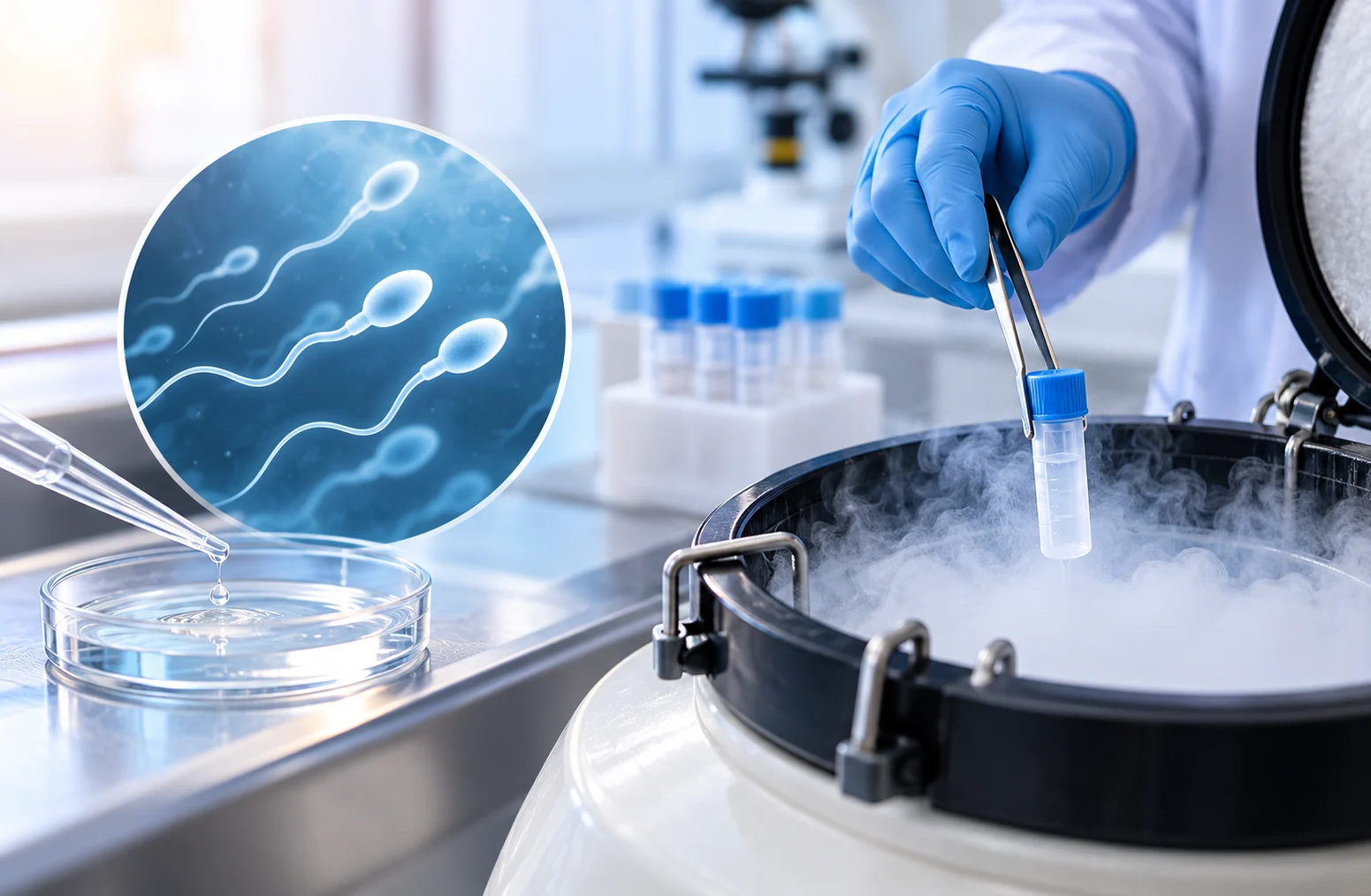
Sperm freezing, also called sperm cryopreservation, is a way to collect and store sperm so it can be used for future fertility treatment. Men may choose it before medical treatments, a vasectomy, or simply to keep their options open for later. Stored samples are kept in liquid nitrogen, where they are preserved until you are ready to use them in IUI, IVF or ICSI.

Seamless support from diagnosis to post treatment care
Sperm Freezing (Cryopreservation): Process, Storage and Cost
Sperm freezing may be considered for many reasons, from preparing for medical treatment to planning a family later in life. Also called sperm cryopreservation, it allows sperm to be collected, frozen, and stored for possible use at a later time.
If you are considering sperm freezing, you may want to know what the process involves, how long sperm can be stored, and what happens when you decide to use it. This page explains who may consider sperm freezing, how collection and storage work, and the costs involved in India.
What is Sperm Freezing (Cryopreservation)?
Sperm freezing, also called sperm cryopreservation or semen freezing, is a fertility preservation technique in which a semen sample is collected, processed and stored at very low temperatures for future use.
The sample is stored in liquid nitrogen at approximately −196°C, where biological activity is effectively suspended. This allows sperm to be preserved for future use without undergoing the usual biological changes associated with age. However, freezing does not reverse changes that may have occurred before the sample was collected.
When you are ready to use the stored sperm, the laboratory thaws the sample and assesses its suitability for treatment. Depending on the sperm quality after thawing and other fertility factors, it may be used for intrauterine insemination (IUI), in vitro fertilisation (IVF) or intracytoplasmic sperm injection (ICSI).
Sperm freezing can help preserve reproductive options for the future, particularly when fertility may be affected by medical treatment or other circumstances.
Who Should Consider Sperm Freezing and When Is It Recommended?
Sperm freezing may be considered when there is a possibility that fertility could be affected or when a man wishes to preserve sperm for future use. The decision depends on individual circumstances, medical history and fertility goals.
1. Before Cancer Treatment
Chemotherapy and radiotherapy can affect sperm production and may sometimes cause long-term or permanent infertility. Men who are planning cancer treatment should discuss fertility preservation with their treating doctor as early as possible.
When appropriate, sperm freezing before treatment can preserve the possibility of having biological children in the future. The procedure may be arranged promptly when treatment needs to begin without delay.
2. Before a Vasectomy
A vasectomy is intended to provide permanent contraception. Men who are considering the procedure but wish to preserve the possibility of biological fatherhood in the future may discuss sperm freezing beforehand.
3. When Sperm Count or Quality Is Low or Declining
Men with certain medical conditions or evidence of declining sperm production may benefit from discussing fertility preservation with a specialist. Whether sperm freezing is advisable depends on the underlying cause, semen analysis results and anticipated changes in fertility.
4. Before Fertility Treatment
Sperm freezing may be useful when a man anticipates difficulty providing a semen sample on the day of fertility treatment or when work, travel or other circumstances may prevent him from attending the clinic.
Having a stored sample may help the treatment team plan ahead. However, its suitability for treatment will depend on the quality and quantity of sperm available after thawing.
5. When Planning to Delay Fatherhood
Some men consider sperm freezing when they anticipate delaying fatherhood for personal or professional reasons.
Male age can influence sperm quality and reproductive outcomes. However, sperm freezing is not necessary for every man who plans to have children later. A fertility specialist can explain the potential benefits and limitations based on individual circumstances.
6. Before Certain Medical Treatments or Procedures
Some medical conditions, treatments or procedures may affect future sperm production or the ability to provide a semen sample. In these circumstances, a fertility specialist may recommend sperm freezing before treatment begins.
Men with specific occupational exposures that could affect reproductive health may also discuss fertility preservation when clinically appropriate.
If any of these apply to you, an early conversation with a fertility specialist helps you act in good time.
Consent and How Long Sperm Can Be Stored?
Before sperm freezing, you will be asked to provide written consent outlining how your sample may be used and the applicable storage arrangements.
The consent process should also clarify the storage period, renewal requirements, applicable fees and what happens to the sample if it is no longer required.
In India, the Assisted Reproductive Technology (Regulation) Act, 2021, governs various aspects of assisted reproductive technology, including the handling and storage of gametes and embryos. Sperm can be frozen for 5-10 years with yearly renewal.
Your clinic will explain the permitted storage period applicable to your circumstances, how renewal works and the options available when storage ends.
Preparing for Sperm Freezing: Pre-Procedure Testing and Requirements
Before sperm freezing, you will undergo a consultation and a few preliminary assessments to help determine the suitability of the sample for storage.
Consultation and Semen Analysis
You will meet a fertility specialist and provide a semen sample for analysis. The test evaluates parameters such as sperm concentration, motility and other relevant characteristics.
The results help the laboratory assess the sample and guide discussions about the number of samples or vials that may be appropriate to store.
Infection Screening
Infection screening is performed according to applicable requirements and the clinic’s protocols. This may include blood tests for HIV, hepatitis B, hepatitis C and syphilis.
These tests form part of the safety procedures followed before reproductive material is stored.
Period of Abstinence
You will usually be advised to avoid ejaculation for approximately two to five days before sample collection, although the recommended interval may vary according to the clinic’s instructions and your clinical circumstances.
Follow the instructions provided by your fertility team to help obtain a sample suitable for assessment and freezing.
Inform Your Doctor About Collection Difficulties
If you have difficulty producing a semen sample, inform your fertility specialist before your appointment. The team can discuss appropriate alternatives based on your circumstances.
Step-by-Step Sperm Freezing Process
Sperm freezing generally involves a consultation, sample collection, laboratory processing and storage. The exact procedure may vary depending on the sample and the reason for fertility preservation.
- Step 1: Consultation and Testing: The process begins with a consultation and semen analysis. Required infection screening and consent procedures are completed before storage.
- Step 2: Sample Collection: In most cases, the semen sample is collected through masturbation in a designated private room at the clinic. If you have difficulty producing a sample, inform your fertility specialist. Alternative collection arrangements or surgical sperm retrieval may be considered when clinically appropriate.
- Step 3: Laboratory Processing: The laboratory evaluates the sample and prepares it for cryopreservation using appropriate laboratory protocols. Depending on the sample volume, sperm count and laboratory requirements, the sample may be divided into multiple vials. Storing multiple vials may allow sperm to be used in separate treatment attempts.
- Step 4: Freezing: The processed sample is prepared with an appropriate cryoprotective medium and frozen using the laboratory’s validated cryopreservation protocol. The vials are then stored in liquid nitrogen at approximately −196°C.
- Step 5: Storage and Future Use: Each sample is labelled and documented, and its storage is monitored according to the laboratory’s procedures. When you are ready for fertility treatment, the laboratory thaws an appropriate vial and assesses the sample as required. The sperm may then be used for IUI, IVF or ICSI, depending on the clinical circumstances. The number of treatment attempts possible with stored sperm varies. It depends on the original sample, the number of vials stored and the amount of usable sperm available after thawing.
Side Effects, Risks and Safety of Sperm Freezing
Sperm freezing is a commonly used fertility preservation technique. However, it is important to understand its limitations.
Sperm Survivability after Freezing and Thawing
Not all sperm survive the freezing and thawing process. The proportion that remains viable varies between samples, and some men may have fewer usable sperm after thawing than before freezing.
This is one reason why the laboratory may recommend storing multiple vials when the sample allows.
Collection Difficulties
Although routine semen collection is non-invasive, some men may experience difficulty producing a sample in a clinical setting. Informing the fertility team in advance allows them to discuss suitable alternatives.
Risks Associated With Surgical Sperm Retrieval
If sperm must be collected surgically, the risks depend on the procedure used. Possible complications include pain, bruising, bleeding or infection. Your specialist will explain the relevant risks before the procedure.
Pregnancy Is Not Guaranteed
Sperm freezing preserves a sample for potential future use, but it cannot guarantee fertilisation, pregnancy or live birth.
Treatment outcomes depend on factors including sperm quality, the treatment method, egg quality, the age and fertility of the female partner and other clinical considerations.
Discussing these factors with your fertility specialist can help you understand what sperm freezing may realistically offer in your circumstances.
Success Rates, Cost and Treatment Options for Freezing Sperm
Frozen sperm is used in fertility treatments such as IUI, IVF and ICSI. The most suitable treatment depends on the quality of the sperm after thawing, the number of usable sperm and the fertility assessment of both partners.
For some couples, IUI may be an option if sufficient motile sperm are available after thawing and other clinical criteria are met. IVF or ICSI may be recommended when sperm-related factors or other fertility considerations make these treatments more appropriate.
There is no single success rate that applies to everyone who freezes sperm. Pregnancy and live-birth outcomes depend on several factors, including:
- The original sperm count, motility and other semen parameters.
- The number and quality of sperm available after thawing.
- The fertility treatment selected.
- The age and reproductive health of the female partner.
- Other medical factors affecting the couple’s fertility.
Your fertility specialist can explain the treatment options and discuss expected outcomes based on your individual circumstances.
Cost of Freezing Sperm in India
The cost of sperm freezing varies depending on the clinic, location, laboratory services, number of samples and duration of storage.
The following figures are indicative estimates and should not be considered fixed prices for every clinic.
| Item | Approximate cost in India |
|---|---|
| First year (testing, freezing and initial storage) | Around ₹15,000 to ₹30,000 |
| Annual storage after the first year | Around ₹2,000 to ₹10,000 per year, varying by clinic |
The initial fee may include consultation, semen analysis, infection screening, laboratory processing, freezing and initial storage. The services included in the package vary by provider.
Before proceeding, ask the clinic for an itemised estimate covering the initial procedure, storage charges, renewal arrangements and any additional laboratory fees.
The cost of future fertility treatment using the stored sperm is generally separate from the cost of freezing and storage.
After Sperm Freezing: Storage, Renewal and Next Steps
Once your sample has been frozen, the laboratory maintains it under the prescribed storage conditions. Your main responsibilities are to understand the storage arrangements, complete any required renewals and keep your contact information up to date.
The permitted storage period depends on the applicable regulations and the circumstances under which the sperm was stored. It is important not to assume that every sample can be stored indefinitely or that the same statutory limit applies to every type of storage.
When you decide to use your stored sperm, the clinic will review your treatment plan, thaw an appropriate vial and assess the sample as required before proceeding with treatment.
If you no longer wish to retain your sample, contact the clinic to discuss the available options. Its handling or disposal will follow the applicable regulations and the consent arrangements.
Why Choose BirthRight Fertility by Rainbow Hospitals For Sperm Freezing?
Choosing a fertility centre for sperm freezing involves more than the procedure itself. Appropriate laboratory practices, accurate documentation, secure storage and clear counselling are important parts of fertility preservation.
At BirthRight Fertility by Rainbow Hospitals, the sperm-freezing process involves the following considerations:
- Andrology laboratory support: Appropriate laboratory procedures for semen assessment, processing and cryopreservation.
- Confidentiality: Handling of personal and reproductive information in accordance with applicable privacy requirements and clinic protocols.
- Clear consent and counselling: Information about the procedure, storage arrangements, fees and future use of the sample.
- Coordinated fertility care: Assessment and guidance regarding the potential use of stored sperm in IUI, IVF or ICSI, when appropriate.
BirthRight Fertility by Rainbow Hospitals has supported more than 100,000 parenthood journeys across 15 Level II ART clinics in India. These figures should be verified against the organisation’s current approved information before publication.
If you are considering sperm freezing, book a consultation at your nearest BirthRight Fertility centre to discuss your fertility preservation needs with a specialist.
Disclaimer
This content is for general educational purposes and does not replace professional medical advice. Costs, storage rules, and success rates are indicative and can change. Consult a qualified fertility specialist for guidance based on your individual circumstances.

Find a Doctor and Book Appointment Online
Meet our specialist doctors who bring together clinical expertise, compassion, and personalised care to support your health and well-being. Choose from 1,300+ specialists across our network and book an appointment with BirthRight and Rainbow Children Hospitals, offering 24*7 support to you and your family.

Dr. Ratna Durvasula
Consultant Fertility Specialist
English,Telugu Banjara Hills, Financial District

Dr. Sudharani Bairraju
Senior Consultant Obstetrician and Gynaecologist, Laparoscopic surgeon and Infertility (IVF) Specialist
English,Telugu Banjara Hills

Dr. Lakshmi Chirumamilla
Fertility Specialist and Reproductive Endocrinologist
25 Years English,Hindi,Telugu Banjara Hills

Dr. Sai Sirisha Vandana
Consultant - Reproductive Medicine & Fertility Specialist
7 Years English,Hindi,Kannada,Telugu Banjara HillsLeading Hospitals for Fertility Care
Rainbow Children's Hospital stands as a testament to the hospital's continual pursuit of excellence and innovation, providing specialized care for women and children


















chennai
Blogs
Discover our most recent health articles provided by our reliable experts.



What Are People Saying About Us
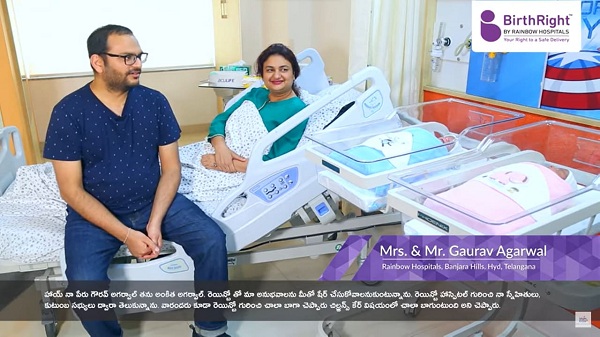
Embark on a journey of inspiration and hope with our patient success stories, complemented by informative videos from our dedicated doctors.



Media
 Dr. Preethi Reddy Article on Lifestyle Changes to Improve Fertility | BirthRight Fertility by Rainbow
 Dr. Ratna Duravasula Sr. Infertility Specialist
 Surrogacy, a Boon when Normal
 Surrogacy, a Boon when Normal Pregnancy is Medically Inadvisable
 Fertility... Modern Treatments
 A month after covid subsided....
 Can the baby's heartbeat be heard in an ectopic pregnancy?
 Doctors Exploit Loopholes in Bill
 Fertility counseling
 JCI Accreditation
 Menstrual cramps
 So Why are Men Turning into Women?
 Hysteroscopy- Procedure Of Choice For Intrauterine Problems
 Diet and Exercise in Pregnancy- Bust your Myths and Know your Facts
 Recurrent Pregnancy Loss
 Do Laptops, Excessive Heat and Tight Jeans Cause Infertility?
 In Vitro Fertilization
 Menstrual cup – are we really aware of it?
 No More Worries About Menopause
 Stretch marks in pregnancy: Embracing the scars
 Egg Freezing
 Fertility Preservation: Methods and Indications for Securing Reproductive Options
 Tips for planning a pregnancy
 Inferticity
 Here is all what you need to know about IVF, the popularly known fertility treatment
 Delayed marriage among factors for birth rate dip
 Fertility against Odds: IVF hope for women above 40 years of age
 Will Pregnancy Cure Endometriosis?
 Postpartum Depression: Expert Lists Essential Foods Prevent Depression in New Mothers
 Complications of Gestational Diabetes During Pregnancy by Dr. Triveni Arun Akkiraju
 Five Key Sexual Health Facts for Women
 Six Reasons That May Cause IVF Failure
 దంపతుల్లో ఈ మూడు లోపాలుంటే పిల్లలు పుట్టరు
 IVF and Genetic Testion - Essential Insights
 In vitro fertilization (IVF)
 About In Vitro Fertilization
 What is the IVF cost?
 What is the cost of IVF?
 Tick-Tock on Biological clock: Fertility concerns multiply in Telugu States
 Diminished Ovarian Reserve (DOR): Causes, Diagnosis, and Treatment Options by Dr. Shreeja Karan
 25 Years of Anniversary - Rainbow Children's Hospital & BirthRight
 Rising infertility: Addressing Challenges with Laparoscopy & Hysteroscopy
Dr. Preethi Reddy Article on Lifestyle Changes to Improve Fertility | BirthRight Fertility by Rainbow
Dr. Ratna Duravasula Sr. Infertility Specialist
Surrogacy, a Boon when Normal
FAQs
How long can sperm remain frozen and still be used successfully?
Is there an age limit for sperm freezing?
Does freezing sperm reduce its quality or chances of success?
Is sperm freezing painful or invasive?
Can I freeze my sperm before starting cancer treatment?
What happens to my frozen sperm if I stop paying for storage?
Can frozen sperm be used for IUI, or only IVF or ICSI?
How many sperm samples should I freeze to be safe?
Can I use frozen sperm to have children after I pass away?
Is sperm freezing confidential, and who can access my stored samples?
Can frozen sperm be donated to help someone else conceive?
Quick Links
Free Calculators to Track and Predict your Pregnancy
Explore Our Fertility Specialist Near You
- Fertility Specialist in Hyderabad
- Fertility Specialist in Bangalore
- Fertility Specialist in Chennai
- Fertility Specialist in Delhi (NCR)
- Fertility Specialist in Vijayawada
- Fertility Specialist in Vizag
- Fertility Specialist in Guwahati
- Fertility Specialist in Rajahmundry
- Fertility Specialist in Guntur