




Embryo Freezing (Cryopreservation)
Embryo Freezing is the process of freezing and storing embryos created in an IVF cycle so they can be used in a future transfer. Also called embryo Cryopreservation, it helps couples who have surplus embryos, need time to recover between cycles, or are planning the next stage of fertility treatment.

Seamless support from diagnosis to post treatment care
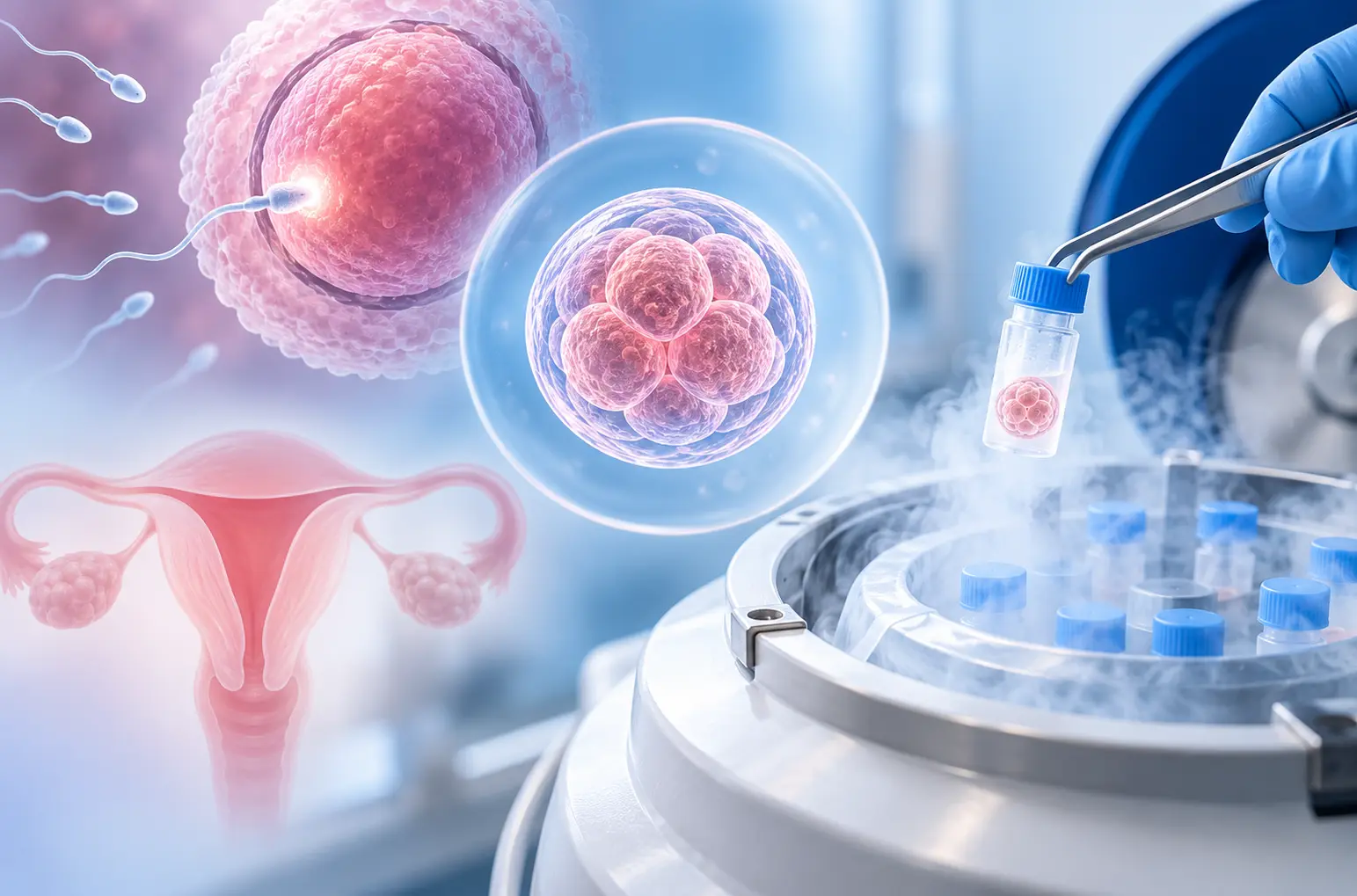
Embryo Freezing (Cryopreservation): Process, Success Rates, Cost and Benefits
Every fertility journey is different, and not every embryo needs to be transferred in the same IVF cycle. Sometimes, suitable embryos remain after an IVF procedure, or your fertility specialist may recommend delaying the transfer until the uterus is ready. Embryo freezing, also known as embryo cryopreservation, allows embryos created during IVF to be preserved for future use. It gives individuals and couples greater flexibility in planning their fertility treatment and expanding their families.
If you are considering embryo freezing, you may have questions about the procedure, storage duration, success rates, safety and cost. This guide explains everything you need to know to make an informed decision about your fertility care.
What is Embryo Freezing (Embryo Cryopreservation)?
Embryo freezing is a laboratory procedure in which embryos created through in vitro fertilisation (IVF) are preserved at extremely low temperatures for future use. The embryos are stored in liquid nitrogen at approximately −196°C, a temperature at which biological activity is effectively suspended.
With appropriate freezing and storage techniques, embryos can remain preserved for extended periods without undergoing the usual biological ageing process. Embryo freezing differs from egg freezing in one important way. Egg freezing involves preserving unfertilised eggs, whereas embryo freezing involves preserving eggs that have already been fertilised with sperm and have begun developing.
Embryos can be assessed for their developmental stage and morphological quality before freezing. This information helps embryologists determine which embryos are suitable for cryopreservation.
If you are exploring fertility preservation, understanding the differences between egg freezing and embryo freezing can help you choose the approach that best suits your circumstances.
Who Should Consider Embryo Freezing?
Embryo freezing may be recommended for several medical and personal reasons. Your fertility specialist will assess your reproductive health, treatment goals and future family plans before recommending this option.
1. Individuals and couples undergoing IVF
When multiple suitable embryos develop during an IVF cycle, those not selected for the initial transfer can be frozen for future use. This may provide additional opportunities for pregnancy without repeating ovarian stimulation and egg retrieval.
2. Patients advised to delay embryo transfer
Your doctor may recommend freezing all suitable embryos rather than proceeding with a fresh transfer. This approach may be appropriate when additional recovery time is needed, the uterine environment requires optimisation or the risk of ovarian hyperstimulation syndrome (OHSS) needs to be reduced.
3. Patients planning fertility preservation before medical treatment
Certain medical treatments, including chemotherapy, may affect reproductive function. When clinically appropriate, embryos can be created and frozen before treatment begins to preserve the possibility of having a genetically related child in the future.
4. Couples planning for future pregnancies
Embryos frozen during an earlier IVF cycle may be used when a couple is ready to have another child. This can provide an additional reproductive option without necessarily requiring another egg retrieval.
5. Patients undergoing genetic testing of embryos
When preimplantation genetic testing (PGT) is indicated, embryos are commonly frozen while the genetic analysis is completed. Once the results are available, an appropriate embryo can be selected for transfer, depending on the indication and clinical findings.
Your fertility specialist can help determine whether embryo freezing is appropriate based on your age, diagnosis, embryo development and reproductive plans.
Fertility Benefits of Embryo Freezing
Embryo cryopreservation has become an important part of modern IVF treatment. It allows suitable embryos to be preserved and used when the timing is medically and personally appropriate.
Additional opportunities for pregnancy
Freezing surplus embryos may provide further opportunities for embryo transfer from a single egg retrieval. This can reduce the need to repeat ovarian stimulation and egg collection for every subsequent attempt.
Greater flexibility in treatment timing
A frozen embryo transfer can be planned for a later cycle when your body has recovered from ovarian stimulation and the uterine lining is appropriately prepared.
Support for genetic testing
Embryo freezing allows time for genetic test results to become available before an embryo transfer is planned, when such testing is indicated.
Planning future pregnancies
Embryos preserved during an earlier IVF cycle may be available for future family-building plans, subject to applicable regulations and consent requirements.
Fertility preservation before certain medical treatments
For eligible patients who may face a risk of treatment-related infertility, embryo freezing can help preserve the possibility of a future pregnancy.
The benefits of embryo freezing vary from person to person. Your fertility team will explain how this approach fits into your treatment plan and discuss the likely benefits and limitations in your particular situation.
Preparing for Embryo Freezing: Decisions You Will Make Together
Embryo freezing generally forms part of an IVF cycle, so much of the preparation involves the usual fertility assessment, ovarian stimulation and egg retrieval. However, there are several additional considerations to discuss before your embryos are frozen.
- Consent and future use: Because embryos are created using eggs and sperm, clear consent is essential before freezing, storage and future use. Your clinic will explain the consent requirements and discuss how decisions concerning the embryos may be affected by changes in circumstances, including separation, withdrawal of consent or the death of a partner. Understanding these arrangements in advance can help avoid uncertainty later.
- Selecting embryos for freezing: Not every embryo created during IVF will necessarily be suitable for cryopreservation. Your embryologist will assess embryo development and morphological characteristics to determine which embryos meet the laboratory’s criteria for freezing. The final number depends on the number of eggs collected, fertilisation results and subsequent embryo development.
- Storage duration and fees: Embryo storage is subject to applicable Indian regulations, consent requirements and clinic procedures. Under India’s Assisted Reproductive Technology (Regulation) Act, 2021, and the applicable rules, the permitted storage period and arrangements should be confirmed with your clinic. Ask about the storage fees, renewal process, consent documentation and arrangements for continued storage well before the end of the permitted period. These details are particularly important if you intend to use the embryos several years later.
The Embryo Freezing Process, Step by Step
Embryo freezing is usually the final laboratory stage of an IVF cycle. The process involves several steps, beginning with ovarian stimulation and ending with the secure storage of suitable embryos.
- Step 1: Ovarian stimulation and egg retrieval: You will receive fertility medications to stimulate your ovaries to develop multiple follicles. Treatment generally lasts around 8–14 days, depending on your response and treatment protocol. Once the follicles are ready, the eggs are collected through a short procedure, usually performed under sedation.
- Step 2: Fertilisation: The retrieved eggs are fertilised with sperm in the embryology laboratory. This may be performed using conventional IVF or intracytoplasmic sperm injection (ICSI), depending on the clinical indication.
- Step 3: Embryo culture: Following fertilisation, the embryos are cultured under carefully controlled laboratory conditions. Depending on the treatment plan and embryo development, embryos may be frozen at the cleavage stage, usually around day three, or at the blastocyst stage, typically around day five to seven. Blastocyst culture allows the embryology team to assess further development before deciding which embryos are suitable for freezing.
- Step 4: Genetic testing, when indicated: If preimplantation genetic testing is recommended, a small sample of cells may be collected from a suitable embryo for analysis. Embryos are commonly frozen while the results are awaited. The decision to perform genetic testing depends on the medical indication and should be discussed with your fertility specialist.
- Step 5: Vitrification: Suitable embryos are usually preserved using a rapid-freezing technique called vitrification. During vitrification, embryos are exposed to carefully controlled cryoprotective solutions and cooled extremely rapidly. This minimises the formation of ice crystals that could damage cellular structures. Vitrification has substantially improved embryo survival after warming compared with older slow-freezing techniques.
- Step 6: Labelling and storage: Each embryo is identified using the laboratory’s established tracking and identification procedures before being placed in a designated storage device. The embryos are then stored in liquid nitrogen under controlled conditions, with monitoring and documentation designed to maintain their integrity and traceability. Once the freezing procedure is complete, your fertility team will inform you of the number of embryos frozen and their developmental stage and grading, where applicable.
Side Effects, Risks and Safety of Embryo Freezing
Embryo freezing itself is a laboratory procedure and does not cause physical side effects in your body. The potential side effects and risks are primarily associated with the IVF treatment required to create the embryos.
Common effects following ovarian stimulation and egg retrieval
Some patients experience temporary symptoms such as:
- Abdominal bloating or mild discomfort.
- Pelvic tenderness.
- Mild spotting after egg retrieval.
- Temporary discomfort at injection sites.
These symptoms usually improve over a few days, although recovery varies between individuals.
Ovarian hyperstimulation syndrome (OHSS)
OHSS is a complication associated with ovarian stimulation in which the ovaries become enlarged and fluid may accumulate in the body.
In selected patients, a freeze-all strategy can reduce the risk of OHSS associated with pregnancy in the same treatment cycle. However, freezing embryos does not eliminate every risk associated with ovarian stimulation.
Contact your fertility team promptly if you experience severe abdominal pain, rapidly increasing abdominal swelling, persistent vomiting, reduced urine output or breathlessness.
Recovery after egg retrieval
Many patients resume light daily activities within a day or two, depending on their symptoms and the advice provided by their doctor. Recovery time varies according to the ovarian response and whether complications occur.
Are frozen embryos safe?
Embryo vitrification is an established technique used in fertility treatment worldwide. Most embryos frozen using modern vitrification methods survive warming, although survival is not guaranteed.
Research has not established that embryo freezing itself increases the overall risk of birth defects. However, pregnancy outcomes can vary according to maternal age, underlying health conditions, infertility diagnosis and the type of embryo transfer.
Frozen embryo transfer may be associated with a different pattern of pregnancy risks compared with fresh transfer, including differences in hypertensive disorders of pregnancy and fetal growth. Your doctor can explain the relevance of these risks to your individual circumstances.
Success Rates, Thaw Survival and Cost
When evaluating embryo freezing, it is important to distinguish between three different measures:
- Embryo survival rate: The proportion of embryos that remain viable after warming.
- Pregnancy and live birth rates: The likelihood of achieving pregnancy or live birth following a frozen embryo transfer.
- Treatment cost: The expense of freezing, storage and any subsequent frozen embryo transfer.
These outcomes are influenced by different factors and should not be interpreted as interchangeable measures of success.
Frozen embryo transfer success by age
A major factor affecting IVF success is the age of the person providing the eggs when the embryos are created. Embryo quality, genetic status where tested, uterine factors and the underlying infertility diagnosis also influence outcomes.
The following figures are broad illustrative estimates rather than guaranteed or universally applicable live birth rates.
| Age when embryos were frozen | Approximate live birth rate per frozen transfer |
|---|---|
| Under 35 | Around 40 to 60 percent |
| 35 to 37 | Around 35 to 45 percent |
| 38 to 40 | Around 25 to 35 percent |
| Over 40 | Lower, and best discussed individually |
Your fertility specialist can provide a more meaningful estimate based on your age when the eggs were collected, embryo characteristics and the clinic’s relevant outcome data.
Survival rate of Embryo after Thawing
Thaw survival is the chance that an embryo survives the warming process intact and is ready to transfer. This is where modern freezing has made the biggest difference, as the comparison below shows.
| Freezing method | Approximate embryo survival after thawing |
|---|---|
| Vitrification (current method) | Around 90 to 95 percent or higher |
| Slow freezing (older method) | Around 60 percent |
In practice, this means the great majority of embryos frozen today survive thawing well. It is one reason frozen transfers have become so routine. These figures are approximate and should not be interpreted as a guarantee for an individual embryo. Survival varies with embryo stage, embryo quality, laboratory protocols and clinical circumstances.
Following warming, the embryologist assesses the embryo to determine whether it is suitable for transfer.
Embryo Freezing Cost in India
The cost of embryo freezing varies according to the fertility centre, city, laboratory procedures and storage arrangements. The fee for freezing is generally separate from the cost of the IVF cycle that creates the embryos and the later frozen embryo transfer.
The following figures are indicative estimates for budgeting purposes.
| Item | Approximate cost in India |
|---|---|
| Embryo freezing (vitrification) | Around ₹20,000 to ₹50,000 |
| Annual storage | Around ₹20,000 to ₹50,000 per year |
| Frozen embryo transfer (FET) cycle | Around ₹40,000 to ₹1,00,000 |
These are illustrative ranges, not fixed or nationally standardised prices. Actual charges may be lower or higher depending on the clinic and the services included.
When discussing costs with your fertility centre, ask whether the estimate includes:
- Embryo freezing and laboratory procedures.
- Annual storage and renewal fees.
- Medication and monitoring for the frozen transfer cycle.
- Embryo warming and transfer charges.
- Additional procedures or investigations, if required.
The original IVF cycle, including ovarian stimulation, egg retrieval and fertilisation, is generally billed separately.
Obtaining an itemised estimate will help you understand the overall financial commitment before starting treatment.
Frozen Embryo Transfer: What does the Procedure Involve?
When you decide to use your frozen embryos, your fertility specialist may recommend a frozen embryo transfer (FET).
Unlike a fresh IVF cycle, FET does not usually require another round of ovarian stimulation or egg retrieval. Instead, the focus is on preparing the uterus and transferring a previously frozen embryo.
- Step 1: Preparing the uterine lining: Your doctor will assess the uterus and determine the most appropriate method for preparing the endometrium. Depending on your menstrual cycle and medical history, preparation may follow a natural or modified natural cycle, or involve hormonal medication. The aim is to ensure that the uterine lining and embryo development are appropriately synchronised.
- Step 2: Warming the embryo: The embryologist warms the selected embryo using the laboratory’s established protocol and assesses its survival and condition before transfer.
- Step 3: Embryo transfer: The embryo is transferred into the uterus using a thin, flexible catheter passed through the cervix. The procedure usually takes only a few minutes and generally does not require anaesthesia. Some patients experience mild discomfort, although many find the procedure relatively straightforward.
- Step 4: Pregnancy testing: A blood test measuring beta-hCG is performed on the date advised by your fertility team to determine whether pregnancy has occurred. The waiting period can be emotionally challenging. Your clinic can guide you on medications, daily activities, follow-up and when to seek medical advice. Emotional support and clear communication are important parts of fertility care throughout this process.
How Long Can Embryos Be Stored?
Embryos can remain preserved for extended periods when they are stored under appropriate conditions. Their biological ageing is effectively suspended during cryogenic storage.
Consequently, the length of storage alone is not considered the principal determinant of embryo quality. Factors such as the age when the eggs were collected, embryo characteristics and survival after warming are generally more important.
However, storage duration and permitted use are also subject to applicable legal requirements.
Embryo Storage Rules in India
The Assisted Reproductive Technology (Regulation) Act, 2021, and the applicable rules govern the handling, storage and use of embryos in India.
The law provides a regulatory framework for embryo storage and future use. The precise permitted duration and applicable arrangements should be confirmed with your fertility centre in accordance with current legal requirements and the relevant consent documentation.
Before freezing embryos, clarify:
- The permitted storage period applicable to your case.
- Annual storage charges and renewal procedures.
- The consent required for continued storage and future use.
- The options available when storage can no longer continue.
- The process for updating consent or contact details.
Your clinic can explain the applicable rules and help you understand your responsibilities throughout the storage period.
What Happens to Unused Frozen Embryos?
Some patients eventually complete their families with embryos still in storage. Others may reconsider their treatment plans or decide not to pursue another pregnancy.
The available options depend on applicable law, the original consent arrangements and the circumstances of the individuals involved.
Possible arrangements may include continued storage where legally permitted, donation for research where permitted and properly consented to, or allowing the embryos to be allowed to perish in accordance with applicable requirements.
Embryos cannot be used or disposed of solely on the basis of an assumption about a patient’s intentions. Consent, legal requirements and clinic procedures must be followed.
Your fertility specialist and counsellor can explain the available options and help you understand the implications of each decision.
Why Choose BirthRight Fertility by Rainbow Hospitals for Embryo Freezing?
Choosing an embryo freezing programme involves placing considerable trust in the fertility team and embryology laboratory. Clinical expertise, laboratory standards, transparent communication and appropriate storage practices all contribute to a positive treatment experience.
At BirthRight Fertility by Rainbow Hospitals, patients can discuss embryo cryopreservation as part of an individualised fertility treatment plan.
Experienced fertility and embryology teams
Coordinated care between fertility specialists and embryologists supports decision-making throughout IVF, embryo assessment, freezing and subsequent transfer.
Modern embryo vitrification techniques
Vitrification is an established embryo preservation method. Appropriate laboratory protocols, quality assurance and monitoring are important for maintaining embryo integrity during freezing, storage and warming.
Clear counselling and informed consent
Patients receive guidance on embryo selection, storage arrangements, future use and the decisions that may arise during the storage period.
Support throughout the fertility journey
Fertility treatment involves medical, emotional and practical considerations. Clear communication and appropriate counselling help patients navigate decisions at each stage.
BirthRight Fertility by Rainbow Hospitals brings extensive experience in women’s healthcare and fertility services, with a network of fertility centres supporting patients across India.
If you are considering embryo freezing, our fertility specialists can assess your medical history, discuss your treatment options and help you understand whether cryopreservation is appropriate for your needs.
Disclaimer
This content is for general educational purposes and does not replace professional medical advice. Success rates, costs and storage rules are indicative and can change. Consult a qualified fertility specialist for guidance based on your individual circumstances.

Find a Doctor and Book Appointment Online
Meet our specialist doctors who bring together clinical expertise, compassion, and personalised care to support your health and well-being. Choose from 1,300+ specialists across our network and book an appointment with BirthRight and Rainbow Children Hospitals, offering 24*7 support to you and your family.

Dr. Ratna Durvasula
Consultant Fertility Specialist
English,Telugu Banjara Hills, Financial District

Dr. Sudharani Bairraju
Senior Consultant Obstetrician and Gynaecologist, Laparoscopic surgeon and Infertility (IVF) Specialist
English,Telugu Banjara Hills

Dr. Lakshmi Chirumamilla
Fertility Specialist and Reproductive Endocrinologist
25 Years English,Hindi,Telugu Banjara Hills

Dr. Sai Sirisha Vandana
Consultant - Reproductive Medicine & Fertility Specialist
7 Years English,Hindi,Kannada,Telugu Banjara HillsLeading Hospitals for Fertility Care
Rainbow Children's Hospital stands as a testament to the hospital's continual pursuit of excellence and innovation, providing specialized care for women and children

















chennai
Blogs
Discover our most recent health articles provided by our reliable experts.



What Are People Saying About Us
Embark on a journey of inspiration and hope with our patient success stories, complemented by informative videos from our dedicated doctors.



Media
 Dr. Preethi Reddy Article on Lifestyle Changes to Improve Fertility | BirthRight Fertility by Rainbow
 Dr. Ratna Duravasula Sr. Infertility Specialist
 Surrogacy, a Boon when Normal
 Surrogacy, a Boon when Normal Pregnancy is Medically Inadvisable
 Fertility... Modern Treatments
 A month after covid subsided....
 Can the baby's heartbeat be heard in an ectopic pregnancy?
 Doctors Exploit Loopholes in Bill
 Fertility counseling
 JCI Accreditation
 Menstrual cramps
 So Why are Men Turning into Women?
 Hysteroscopy- Procedure Of Choice For Intrauterine Problems
 Diet and Exercise in Pregnancy- Bust your Myths and Know your Facts
 Recurrent Pregnancy Loss
 Do Laptops, Excessive Heat and Tight Jeans Cause Infertility?
 In Vitro Fertilization
 Menstrual cup – are we really aware of it?
 No More Worries About Menopause
 Stretch marks in pregnancy: Embracing the scars
 Egg Freezing
 Fertility Preservation: Methods and Indications for Securing Reproductive Options
 Tips for planning a pregnancy
 Inferticity
 Here is all what you need to know about IVF, the popularly known fertility treatment
 Delayed marriage among factors for birth rate dip
 Fertility against Odds: IVF hope for women above 40 years of age
 Will Pregnancy Cure Endometriosis?
 Postpartum Depression: Expert Lists Essential Foods Prevent Depression in New Mothers
 Complications of Gestational Diabetes During Pregnancy by Dr. Triveni Arun Akkiraju
 Five Key Sexual Health Facts for Women
 Six Reasons That May Cause IVF Failure
 దంపతుల్లో ఈ మూడు లోపాలుంటే పిల్లలు పుట్టరు
 IVF and Genetic Testion - Essential Insights
 In vitro fertilization (IVF)
 About In Vitro Fertilization
 What is the IVF cost?
 What is the cost of IVF?
 Tick-Tock on Biological clock: Fertility concerns multiply in Telugu States
 Diminished Ovarian Reserve (DOR): Causes, Diagnosis, and Treatment Options by Dr. Shreeja Karan
 25 Years of Anniversary - Rainbow Children's Hospital & BirthRight
 Rising infertility: Addressing Challenges with Laparoscopy & Hysteroscopy
Dr. Preethi Reddy Article on Lifestyle Changes to Improve Fertility | BirthRight Fertility by Rainbow
Dr. Ratna Duravasula Sr. Infertility Specialist
Surrogacy, a Boon when Normal
FAQs
Can I freeze all my embryos and do a frozen transfer later?
What is the difference between a fresh and a frozen embryo transfer?
How do I know if my embryos are good quality?
How long can embryos be frozen?
What happens to frozen embryos if I do not use them?
What is the success rate of a frozen embryo transfer?
When can I do a frozen transfer after a failed fresh transfer?
How much does embryo freezing and storage cost in India?
Do babies born from frozen embryos have any differences?
What is blastocyst freezing, and is it better than day three?
Do frozen embryos survive the thaw process?
Is a frozen embryo transfer as successful as a fresh one?
Quick Links
Free Calculators to Track and Predict your Pregnancy
Explore Our Fertility Specialist Near You
- Fertility Specialist in Hyderabad
- Fertility Specialist in Bangalore
- Fertility Specialist in Chennai
- Fertility Specialist in Delhi (NCR)
- Fertility Specialist in Vijayawada
- Fertility Specialist in Vishakhapatnam
- Fertility Specialist in Guwahati
- Fertility Specialist in Rajahmundry
- Fertility Specialist in Guntur