




Forceps Delivery (Operative Vaginal Delivery)
Forceps delivery, also called operative or instrumental vaginal delivery, helps the baby’s head through the birth canal when pushing alone is not enough. It needs a trained obstetrician, pain relief and your consent, and it carries risks for both mother and baby.

Seamless support from diagnosis to post treatment care
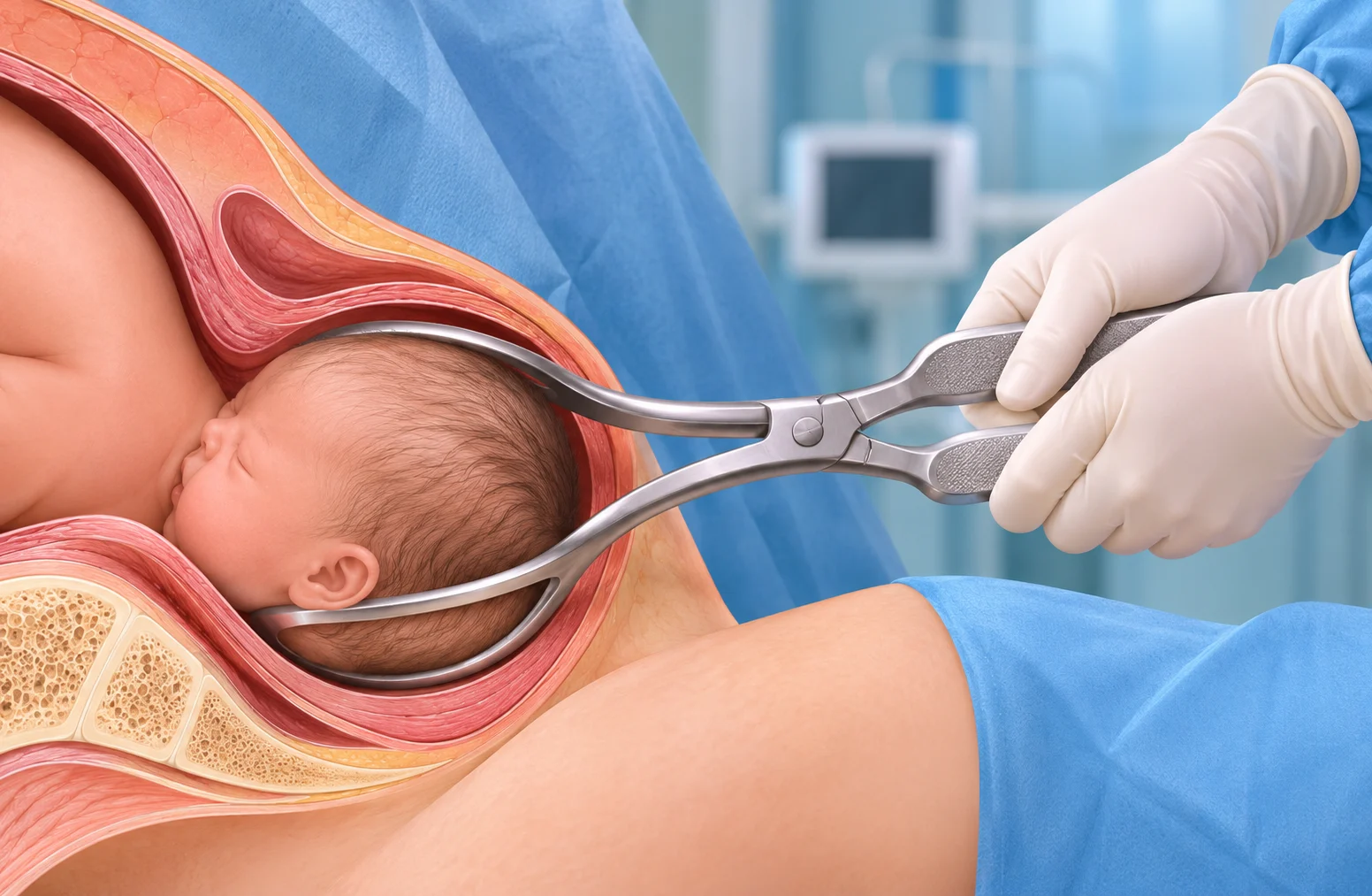
Overview
Forceps delivery is a type of operative vaginal birth in which an obstetrician uses curved instruments to help guide the baby's head through the birth canal. It may be recommended when labour is not progressing as expected or when the baby needs to be delivered more quickly.
Although forceps delivery can sometimes help avoid a caesarean section, it carries certain risks for both mother and baby. Your obstetrician will assess the circumstances, explain the procedure and discuss the available delivery options before proceeding whenever possible.
What is Forceps Delivery?
A forceps delivery is a type of assisted, or instrumental, vaginal birth. The forceps are smooth, curved metal instruments shaped like two large spoons. They are fitted gently around the baby’s head and used to guide the baby out during contractions. This is known as forceps childbirth, and the aim is often to help avoid a caesarean.
Assisted birth, by forceps or a vacuum device, is used in about 1 in 8 births. It is less common in women who have had a vaginal birth before. A forceps delivery is always carried out by a trained obstetrician, with your consent.
Who Needs Forceps Delivery & When is it Recommended?
A forceps delivery is recommended when labour needs help in its final stage. Your doctor decides during labour, based on how you and your baby are doing. The main indications for forceps delivery are below.
- Labour has stalled: Pushing is making little progress in the second stage.
- The baby needs turning: The baby’s position makes the passage difficult and gentle rotation is needed.
- Concern for the baby: The baby’s heart rate suggests it should be born sooner.
- Pushing needs to be limited: A health condition, such as very high blood pressure, means you are advised not to push hard.
In each of these, forceps offer a way to complete a vaginal birth safely. They are often chosen to avoid a caesarean where possible. Your doctor will explain why they recommend them at the time.
Situations Forceps Delivery Can Help With
Behind these decisions are a few common situations in labour. Knowing them helps explain why forceps are sometimes needed. The typical scenarios are below.
- A prolonged second stage: The pushing stage is taking a long time with little progress.
- Maternal exhaustion: You are too tired to push effectively after a long labour.
- A non-reassuring heart rate: The baby’s heart rate pattern during pushing suggests a need for a quicker birth.
- An awkward head position: The baby’s head is turned in a way that slows progress.
Preparing for Forceps Delivery: Conditions & Requirements
Before attempting forceps delivery, the obstetrician must confirm that the baby is in a suitable position and that the procedure can be performed with appropriate medical support. The following conditions are assessed:
- Fully dilated cervix: The cervix must be completely open, and the amniotic membranes must have ruptured.
- Engaged baby's head: The baby's head must have entered the pelvis, with no more than one-fifth of the head usually felt through the mother's abdomen.
- Head position and station: The obstetrician checks the baby's head position and how far it has descended. Forceps delivery is classified as outlet, low or mid-cavity based on the position and level of the head. High forceps delivery is no longer recommended.
- Adequate pelvic space: The mother's pelvis must be considered suitable for vaginal delivery, with no suspected cephalopelvic disproportion, where the baby's head is too large to pass safely through the pelvis.
- Pain relief: Appropriate anaesthesia, such as an epidural or pudendal nerve block, must be available depending on the procedure and circumstances.
- Empty bladder: The bladder is emptied before the procedure to reduce injury risk.
- Consent and specialist support: The procedure requires informed consent, a suitably trained obstetrician and access to emergency caesarean delivery if forceps assistance is unsuccessful.
These checks help determine whether assisted vaginal birth is appropriate. The obstetrician also considers the baby's wellbeing, the progress of labour and any additional risks before proceeding.
Types of Forceps Used During Delivery
Different instruments may be selected depending on the baby's position and the assistance required.
- Wrigley's forceps: Short, curved instruments generally used when the baby's head is very low in the birth canal.
- Neville-Barnes forceps: Longer instruments used for selected non-rotational deliveries when the baby's head is appropriately positioned.
- Kielland's forceps: Specialised instruments designed to rotate the baby's head when necessary. Their use requires advanced obstetric training and careful assessment of head position.
Rotational forceps delivery requires particular expertise because incorrect application or excessive force can cause serious injuries.
When Is Forceps Delivery Not Recommended?
Forceps delivery should not be attempted when essential safety conditions are absent. Important contraindications include:
- Incomplete cervical dilation or intact membranes: The cervix must be fully open, and the membranes must have ruptured.
- Unengaged baby's head: Forceps should not be used when the baby's head remains too high in the pelvis.
- Unknown head position: The obstetrician must establish the baby's exact position before applying forceps.
- Suspected cephalopelvic disproportion: Forceps are unsuitable when the baby's head is unlikely to pass safely through the pelvis.
- Certain foetal conditions: Suspected bleeding disorders or conditions that weaken the baby's bones, such as osteogenesis imperfecta, increase the risk of injury.
- Unsuitable presentation: Forceps are generally not used for brow or most face presentations. A face presentation with the chin facing forwards (mento-anterior) may be considered in selected circumstances by an experienced specialist.
If these conditions make forceps delivery unsuitable, the obstetrician will assess other delivery options, including caesarean birth.
Forceps Delivery Procedure: Step by Step
Forceps delivery involves several clinical checks to ensure the procedure is appropriate for both mother and baby. An experienced obstetrician performs the procedure using specially designed instruments to assist vaginal birth. The usual steps are outlined below.
Step 1: Assessment and consent
The obstetrician confirms that the cervix is fully dilated, the membranes have ruptured and the baby's head is engaged. The position and level of the head are assessed before the procedure is explained and consent is obtained.
Step 2: Pain relief and preparation
Adequate pain relief is provided through an existing epidural or another suitable anaesthetic technique, such as a pudendal nerve block. The bladder is emptied before the procedure.
Step 3: Forceps application
The obstetrician carefully positions the forceps blades around the baby's head and checks that they are correctly applied and securely locked before proceeding.
Step 4: Assessment of episiotomy
An episiotomy may be recommended depending on the circumstances. If needed, a mediolateral cut is made at approximately 60 degrees from the midline when the baby's head stretches the perineum. Episiotomy is not performed routinely in every forceps delivery.
Step 5: Assisted delivery
During contractions, the obstetrician applies controlled traction along the natural curve of the pelvis while the mother pushes, if possible. The baby's descent is assessed with each pull.
Step 6: Reassessment if delivery does not progress
The procedure should be stopped and reassessed if the baby's head does not descend with the initial pulls. If birth is not imminent after three pulls with correctly applied forceps, the attempt is discontinued. An emergency caesarean may be required. Using forceps and vacuum instruments sequentially is generally avoided because of the increased risk of injury.
Step 7: Examination after birth
After delivery, the newborn is examined for possible injuries or complications. The obstetrician checks the mother's birth canal for tears and repairs any episiotomy or injuries as required.
Step 8: Antibiotics and postnatal monitoring
A single dose of intravenous antibiotics is recommended after assisted vaginal birth to reduce the risk of maternal infection, with the choice guided by allergies and hospital protocols. The mother is monitored for bleeding, pain and bladder function, while the baby receives appropriate newborn assessment.
Side Effects, Risks & Safety for Forceps Delivery
A forceps delivery is generally safe, but it does carry some risks. Knowing them helps you make an informed choice. They differ for the mother and baby, as below.
Risks for the Mother
Forceps delivery can increase the likelihood of certain maternal complications, particularly injuries to the perineum and pelvic floor. Possible risks include:
- Third- or fourth-degree perineal tears: These deeper tears, known as obstetric anal sphincter injuries (OASI), affect the muscles around the anus and sometimes the rectal lining. They occur in approximately 8–12 in 100 forceps births. Severe tears usually require surgical repair in an operating theatre and follow-up care.
- Anal or faecal incontinence: Damage to the anal sphincter may cause difficulty controlling wind or bowel movements. Some women may also experience bowel urgency and require pelvic floor rehabilitation.
- Urinary incontinence or retention: Forceps delivery may increase the risk of urine leakage or temporary difficulty emptying the bladder. Some women need short-term catheterisation or pelvic floor physiotherapy.
- Postpartum haemorrhage: Heavy bleeding after childbirth may occur due to vaginal injuries, uterine atony or other delivery-related complications.
- Infection: Perineal tears, episiotomy wounds or other birth injuries may become infected. Preventive antibiotics are generally recommended after assisted vaginal birth.
- Pain during intercourse (dyspareunia): Perineal injuries and scarring may cause discomfort during sexual activity, particularly during recovery.
- Pelvic floor weakness: Stretching or injury to the pelvic floor can contribute to pelvic organ prolapse or ongoing bladder and bowel symptoms.
- Venous thromboembolism (VTE): The risk of blood clots in the legs or lungs is higher after an assisted birth than an uncomplicated vaginal delivery. Doctors assess individual risk factors and recommend preventive measures when needed.
Recovery depends on the extent of any injury. Women with severe perineal tears may need specialist follow-up, pelvic floor physiotherapy and additional support for bladder or bowel symptoms.
Risks for the Baby
Most babies delivered with forceps do not experience serious injuries. However, the instrument and circumstances of assisted delivery can increase the likelihood of certain complications.
- Facial marks or minor cuts: Temporary pressure marks, bruises or small skin injuries may appear where the forceps were applied. Marks often fade within a few days.
- Facial nerve palsy: Pressure on facial nerves may cause temporary weakness or reduced movement on one side of the baby's face. Most cases improve, although some require further assessment.
- Cephalohaematoma: Blood may collect between the skull bone and its outer covering, causing a localised swelling that generally resolves over time.
- Subgaleal haemorrhage: Rarely, bleeding can develop beneath the scalp in a space where significant blood loss is possible. This requires urgent medical assessment and treatment.
- Newborn jaundice: Bruising or blood collections may increase bilirubin levels, causing yellowing of the baby's skin and eyes. Some babies require phototherapy.
- Shoulder dystocia and brachial plexus injury: The baby's shoulder may become stuck during vaginal birth, potentially injuring nerves that control arm movement. These complications are influenced by several obstetric factors and are not caused by forceps alone.
- Retinal haemorrhage: Small areas of bleeding may develop in the baby's retina during childbirth. Many resolve without treatment, although assessment may be needed.
- Rare serious injuries: Skull fractures, bleeding inside the skull or significant neurological injuries can occur and require immediate specialist care.
- Neonatal intensive care unit (NICU) observation: Some babies may require closer monitoring or treatment after birth, particularly if breathing difficulties, injuries or other complications develop.
If forceps delivery does not progress as expected, the obstetrician will reassess the situation and may recommend a caesarean delivery. Newborn examination and appropriate postnatal monitoring help identify complications that require treatment.
Success Rates & Alternatives of Forceps Delivery
Most forceps deliveries are generally successful when the baby is appropriately positioned and the procedure is performed by a trained obstetrician. A 2025 systematic review reported a failure rate of approximately 3.3% for forceps, compared with 7.6% for vacuum extraction. However, success depends on the baby's position, labour progress, and other clinical factors.
Forceps vs Vacuum vs Caesarean Delivery
Each method has different benefits and risks. Your obstetrician will consider the circumstances of labour before recommending an appropriate option.
| Factor | Forceps delivery | Vacuum delivery | Second-stage caesarean |
|---|---|---|---|
| Success | Generally has a lower failure rate than vacuum extraction | Slightly higher chance of unsuccessful assisted birth | Surgical delivery when vaginal birth is unsuitable or unsuccessful |
| Perineal injury | Higher risk of severe tears | Lower risk of severe tears than forceps | Avoids perineal tears but involves abdominal surgery |
| Newborn risks | Facial injuries, nerve injuries and rare skull injuries | Scalp injuries, cephalohaematoma and rare bleeding complications | Possible injury or complications during difficult extraction |
| Recovery | Depends on the extent of perineal injury | Often involves less perineal trauma than forceps | Usually requires longer physical recovery following surgery |
Other Alternatives During Labour
When the mother's and baby's conditions allow, the obstetrician may consider other approaches before assisted delivery.
- Waiting for labour to progress: Additional time may allow vaginal birth without instruments if the baby is stable and labour is progressing.
- Oxytocin augmentation: Medication may help strengthen contractions when they are inadequate, provided there are no contraindications.
- Maternal repositioning: Changing positions during labour may support comfort and the baby's descent.
- Manual rotation: An experienced obstetrician may manually turn the baby's head into a more favourable position when appropriate.
- Caesarean delivery: Surgery may be recommended when assisted vaginal birth is unsuitable or unsuccessful.
These alternatives are not appropriate in every situation, particularly when the baby needs urgent delivery. The decision depends on the baby's wellbeing, position and progress of labour.
After Forceps Delivery: Recovery and Next Steps
Recovery after forceps delivery depends on the extent of any perineal injury and the mother's overall health. Some women recover within a few weeks, while others need additional care, particularly after a severe tear. The following measures can support recovery.
- Stitches and wound healing: Stitches used to repair an episiotomy or perineal tear usually dissolve on their own. Healing often takes several weeks, although deeper injuries may take longer.
- Bladder care: You should generally be able to pass urine within six hours of delivery or catheter removal. If you cannot urinate, inform your maternity team promptly. A bladder assessment and temporary catheterisation may be needed.
- Perineal care: Keep the area clean with water, change sanitary pads regularly and wash your hands before and after using the toilet. Cold packs and doctor-recommended pain relief may help reduce discomfort.
- Bowel care: Drink enough fluids and eat fibre-rich foods to prevent constipation. If you have a third- or fourth-degree tear, your doctor may prescribe laxatives to reduce straining during bowel movements.
- Pelvic floor exercises: Gentle exercises can support bladder and bowel control. Women with severe perineal tears, also called obstetric anal sphincter injuries (OASI), should receive physiotherapy guidance and appropriate follow-up.
- Emotional recovery: A difficult or unexpected birth may cause anxiety, distress or symptoms of birth-related post-traumatic stress disorder (PTSD). Speak to a healthcare professional if these feelings persist or interfere with daily life.
- Future birth planning: A vaginal birth may still be possible in a future pregnancy. If you experienced severe tearing or ongoing pelvic floor symptoms, discuss your delivery options with your obstetrician early in your next pregnancy.
When Should You Contact Your Doctor?
Seek medical advice promptly if you experience any of the following:
- Increasing perineal pain, swelling, foul-smelling discharge or a wound that opens.
- Fever or signs of infection.
- Difficulty passing urine or loss of bladder control.
- Difficulty controlling wind or bowel movements.
- Heavy or increasing vaginal bleeding.
- Pain, tenderness or swelling in one leg.
Seek emergency care for sudden heavy bleeding with faintness, chest pain or difficulty breathing.
A postnatal check-up helps assess healing, bladder and bowel function and emotional wellbeing. Women with third- or fourth-degree tears are generally offered gynecologist follow-up around 6–12 weeks after birth, with further care when needed.
Why Choose BirthRight by Rainbow Hospitals for Your Delivery?
BirthRight by Rainbow Hospitals provides obstetric care supported by anaesthesia, emergency maternity and newborn services. When assisted vaginal delivery is considered, the obstetrician assesses the baby's position, progress of labour and any potential complications before recommending an appropriate delivery approach.
- Specialist Obstetric Care: Consultant obstetricians assess whether forceps delivery is suitable, considering maternal health, fetal position and the progress of labour.
- Anaesthesia and Newborn Support: BirthRight's maternity services include anaesthesia and neonatal care to support mothers and babies during delivery.
- Emergency Caesarean Facilities: BirthRight centres provide emergency obstetric services and access to operative delivery when a caesarean is clinically necessary.
- Neonatal Intensive Care: Selected BirthRight centres have Level III neonatal intensive care units (NICUs) for babies requiring advanced monitoring or treatment.
- Patient-Centred Delivery Planning: Obstetricians explain the benefits, limitations and potential risks of assisted vaginal birth to support informed decisions.
If forceps delivery has been discussed as part of your birth plan, book a consultation with a BirthRight obstetrician to review your delivery options and the facilities available at your preferred hospital.

Find a Doctor and Book Appointment Online
Meet our specialist doctors who bring together clinical expertise, compassion, and personalised care to support your health and well-being. Choose from 1,300+ specialists across our network and book an appointment with BirthRight and Rainbow Children Hospitals, offering 24*7 support to you and your family.

Dr. Pranathi Reddy A
Clinical Director – Obstetrics & Gynecology.
English,Hindi,Telugu Banjara Hills

Dr. Gauri Vinayak Dhamangaonkar
Senior Consultant - Fetal Medicine
15 Years English,Hindi,Marathi,Telugu Kondapur OP, Banjara Hills

Dr. Shruthi Reddy Poddutoor
Consultant Obstetrician, Gynecologist & Laparoscopic Surgeon
English,Telugu Banjara Hills

Dr. Himabindu Veerla
Consultant Obstetrician, Gynecologist & Laparoscopic Surgeon
English,Telugu Banjara Hills

Dr. Bhargavi Reddy K
Consultant - Obstetrics and Gynecology
10 Years English,Hindi,Telugu Banjara Hills, Attapur Clinic

Dr. Annie Pranutha P
Consultant Obstetrics and Gynecology
9 Years English,Hindi,Telugu Banjara Hills, Attapur Clinic

Dr. Sasikala Kola
Consultant Obstetrician & Gynecologist
English,Hindi,Telugu Banjara Hills

Dr. Atigadda Vijaya
Consultant - Obstetrics & Gynecology
Hindi,Telugu Banjara Hills, Himayatnagar, Attapur Clinic

Dr. Nishanth Reddy Inavolu
Visiting Consultant Physician and Diabetologist & Internal Medicine
English,Hindi,Telugu Banjara Hills, Himayatnagar

Dr. Tulika Tayal
Consultant - Fetal Medicine
English,Telugu Banjara Hills

Dr. M Prathyusha Reddy
Consultant Obstetrics & Gynecology
English,Telugu Banjara Hills

Dr. Nithya Narasimha Murthy
Consultant -Psychiatrist
English,Hindi,Telugu Kondapur OP, Banjara Hills, Child Development Centre - Banjarahills Rd No 10

Dr. Brundavani
Consultant - Nutritionist
English,Hindi,Telugu Kondapur OP, Hydernagar, Banjara Hills, Child Development Centre - Banjarahills Rd No 10

Dr. Niveditha Chalmeda
Consultant
English,Telugu Banjara Hills

Dr. Kirti Reddy Patlolla
Consultant Obstetrics and Gynaecology
English,Telugu Banjara Hills, Attapur Clinic

Dr. Tuheena Sharma
Consultant - Perinatal Physiotherapy
10 Years English,Telugu Banjara Hills

Dr. Aditi Shah
Consultant - Fetal Medicine
English,Telugu Banjara Hills

Dr. Swathi Naga Tulasi Rayapureddy
Lactation Consultant
8 Years English,Telugu Banjara Hills

Dr. Swetha Reddy. S
CONSULTANT PERINATAL PSYCHIATRIST AND WOMEN MENTAL HEALTH SPECIALIST
13 Years English,Hindi,Telugu Banjara Hills

Dr. Addu Kiranmayi
Chief Clinical Nutritionist and Lifestyle Medicine Consultant
15 Years English,Hindi,Telugu Himayatnagar, Banjara Hills

Dr. Palle Nalini Kumari
Lactation Consultant
17+ Years English,Hindi,Telugu Banjara Hills
Dr. Nazia Tabassum
Consultant - Breast, Plastic & Reconstructive Surgeon
9 Years English,Hindi,Telugu,Urdu Banjara Hills

Dr. Sruthi Cheera
Consultant Breast Surgeon
5 Years English,Hindi,Kannada,Telugu Banjara Hills

Dr. Supriya Reddy
Lactation Consultant
5 Years English,Hindi,Telugu Banjara Hills

Dr. Niraj Krishnamurthy Yanamandra
Senior Consultant Obstetrician & Gynaecologist, Laparoscopy & Hysteroscopy Surgeon
English,Hindi,Marathi,Telugu Hydernagar, Banjara Hills, Financial District

Dr. B. Rao Bahadur
Consultant – Obstetrician & Gynecologist, Laparoscopic ,& Hysteroscopic Surgeon
22 Years English,Hindi,Konkani,Marathi,Telugu Banjara Hills, Kondapur OP

Dr. Sneha Kulkarni
Consultant - Child, Adolescent & Adult Psychiatrist
10 Years English,Hindi,Kannada,Telugu Secunderabad, Banjara Hills, Child Development Centre - Banjarahills Rd No 10

Dr. Lavanya Janagama
Consultant – Obstetrics & Gynecology
10+ Years English Banjara HillsLeading Hospitals for Women Care
Rainbow Children's Hospital stands as a testament to the hospital's continual pursuit of excellence and innovation, providing specialized care for women and children


















chennai
Blogs
Discover our most recent health articles provided by our reliable experts.




What Are People Saying About Us
Embark on a journey of inspiration and hope with our patient success stories, complemented by informative videos from our dedicated doctors.


Media
 Common Gynaecological Surgeries to Fix Female Reproductive Issues
 Healthy Woman - Healthy World
 Healthier Women For a Healthier Future...
 Rainbow Children’s Hospital & BirthRight by Rainbow Launch Video Consultation Facilities
 Dr.Pranthi Reddy
 What is the use of that?
 Can you try this time?
 Pregnant Women are Not Unfit
 Declining Age of Menarche - A Matter of Concern
 Important Facts about Cervical Cancer
 Be careful before preempting
 Flu every month!
 Menstrual cramps
 Premature delivery
 Whether laughing or coughing...why?
 Multi - Tasking may be Cool but it's not Healthy
 Pregnant and Worried about COVID-19? Here's Everything you Need to know
 Video Consultation in Pandamic Situation for Pregnancy Women's
 Women.. Various types of cysts
 Recurrent Pregnancy Loss in Women
 Early Onset of Puberty: Causes, Symptoms and Treatment Options
Common Gynaecological Surgeries to Fix Female Reproductive Issues
Healthy Woman - Healthy World
Healthier Women For a Healthier Future...
FAQs
How common are serious injuries to babies from forceps delivery?
What is the difference between forceps delivery and vacuum extraction?
Will I need an episiotomy if forceps are used?
Does forceps delivery hurt more than a normal vaginal birth?
Can forceps delivery cause urinary leakage or pelvic floor problems later?
Can I refuse forceps during my delivery?
How long does a forceps delivery take compared to a normal delivery?
Will I need a C-section in my next pregnancy if I had a forceps delivery?
Can I breastfeed and bond with my baby normally after a forceps delivery?
Can forceps delivery cause emotional trauma or birth anxiety, and how do I cope?
If I have had a forceps delivery, how soon can I resume sex, exercise and pelvic floor exercises?
Quick Links
Free Calculators to Track and Predict your Pregnancy
Gynecologist in Other Locations
Women's Health Conditions We Treat
- Mastitis (Breast Infection)
- PCOS (Polycystic Ovary Syndrome)
- Uterine Fibroids (Leiomyomas)
- Recurrent Pregnancy Loss
- Blocked Fallopian Tubes (Fallopian Tube Obstruction)
- Gestational Diabetes in Pregnancy
- Incompetent Cervix (Cervical Insufficiency)
- COVID-19 in Pregnancy
- Cytomegalovirus (CMV) in Pregnancy
- HELLP Syndrome
- Luteal Phase Defect
- Vasa Previa
- Listeria in Pregnancy
- Placenta Previa
- Endometrial Polyps (Uterine Polyps)
- Congenital Heart Disease in Pregnancy
- Hyperemesis Gravidarum (Severe Morning Sickness)
- Preeclampsia (toxemia)
- Fetal Distress (Non-Reassuring Fetal Status)
- Postpartum Haemorrhage (PPH)
- Placental Abruption (Abruptio Placentae)
- Placenta Accreta
- Postpartum Depression (PPD)
- Rhesus (Rh) Incompatibility
- Syphilis in Women
- Thalassemia in Pregnancy
- Gestational Thrombocytopenia
- Diabetes in Pregnancy
- Uterine Rupture
- Migraine in Pregnancy
- Eclampsia
- Uterine Inversion (Inverted Uterus)
- Rubella in Pregnancy
- Pulmonary Hypertension in Pregnancy
- Hydrops Fetalis (Fetal Hydrops)
- Iron-Deficiency Anaemia in Pregnancy
- Hypothyroidism in Pregnancy
- Pregnancy Constipation
- Retained Placenta
- Antiphospholipid Syndrome (APS)
- Subchorionic Hemorrhage
- Asthma in Pregnancy
- Amniotic Fluid Embolism (AFE)
- Placenta Increta