


Categories
Newborn Baby Cold Home Remedies: 7 Safe, Doctor-Approved Tips for Parents
Aug 07, 2026
Key Takeaways
- Mild newborn colds can be managed at home with saline drops, a cool-mist humidifier, frequent breastfeeding and keeping the baby hydrated and calm.
- Never give OTC cold medicines, honey, vapour rubs, direct steam or unprescribed antibiotics to a newborn.
- Most colds improve within 7-10 days; congestion may linger up to 14 days.
- Fever of 38°C or above in a baby under 3 months, breathing difficulty, poor feeding or blue/grey lips need urgent medical care.
- RSV and flu can mimic a cold - see a paediatrician if symptoms worsen.
- Prevent colds through handwashing, keeping unwell visitors away and avoiding smoke exposure.
Table of Content
- Why Do Newborns Catch Colds Easily?
- 7 Safe Newborn Baby Cold Home Remedies
- What NOT to Do When Your Newborn Has a Cold
- How Long Does a Newborn’s Cold Last?
- Newborn Cold vs Flu vs RSV: Quick Comparison
- How to Prevent Colds in Newborns?
- When to Seek Medical Help?
- Conclusion
Why Do Newborns Catch Colds Easily?
Newborn babies are still developing their immune defenses. They may catch a newborn cold due to sudden changes in weather, exposure to infected adults or older siblings, or just because their bodies are adjusting to the environment outside the womb. Because their immune response is still maturing, even limited exposure can lead to newborn cold symptoms such as sneezing, a blocked nose or mild coughing.7 Safe Newborn Baby Cold Home Remedies
1. Saline Nasal Drops
Saline drops are one of the safest and most effective remedies for relieving a stuffy nose. You can buy them over-the-counter or make a mild saltwater solution at home using sterilised water and a pinch of salt.2. Use a Humidifier or Steam
Dry indoor air, especially during winter, can worsen congestion. Using a cool-mist humidifier in your baby’s room can add moisture to the air, easing breathing and reducing nasal blockage. Keep the humidifier out of your baby’s reach, clean it every day and use only cool mist. Never expose a newborn directly to hot steam, as it can cause burns.3. Elevate the Baby’s Head Slightly During Sleep
Newborns sleep flat on their backs for safety, but you can slightly elevate the head area of their mattress to help mucus drain more easily. Place a rolled towel under the mattress, not on top of it, to raise the angle gently. Never place pillows or loose objects in the crib, as they increase the risk of suffocation.4. Breastfeeding
Breast milk is rich in antibodies and immune-boosting elements. If your baby is breastfed, continuing to nurse frequently can help them fight off the infection more quickly.5. Warm Mustard Oil Massage
A gentle massage with warm mustard oil infused with garlic or ajwain (carom seeds) is a traditional remedy in many Indian households. It helps improve circulation and gives a comforting warmth to the baby’s body. Important: this is a traditional practice, not a medically prescribed treatment. Always do a patch test on your baby’s inner arm first, avoid the face and chest area for infants under 3 months, and skip this remedy if your paediatrician advises against it.6. Keep the Baby Hydrated and Calm
Offer regular feeds, keep the baby warm but not overheated, and reduce exposure to loud noises or bright lights. A calm, stress-free environment helps the baby recover faster.7. Breast Milk Nasal Drops
Breast milk nasal drops are sometimes used as a traditional remedy, but their safety and effectiveness for nasal congestion are not well established. Do not put breast milk into your newborn’s nose unless a paediatrician specifically recommends it. Sterile saline nasal drops are generally the safer option for loosening mucus.What NOT to Do When Your Newborn Has a Cold
Newborn baby cold home remedies should focus on gentle symptom relief and close monitoring. Avoid treatments that may irritate your baby’s airways, cause side effects or make sleeping less safe.- Do not give over-the-counter cough or cold medicines. Decongestants, antihistamines and combination cough syrups can cause serious side effects in infants. Give any medicine only after speaking to a paediatrician.
- Do not give honey. Honey is unsafe for babies under 12 months because it may contain bacteria that can cause infant botulism.
- Do not use mentholated vapour rubs or strong balms. Products containing menthol, camphor or eucalyptus should not be used on newborns. They may irritate the airways and camphor can be toxic if swallowed or absorbed through an infant’s skin.
- Do not expose your baby to direct steam. Hot water, steam inhalation and warm-mist devices can cause burns. A clean, cool-mist humidifier is a safer option for adding moisture to the room.
- Do not elevate the mattress or use pillows. Even when a baby is congested, they should sleep on their back on a firm, flat and level surface. Do not place towels beneath the mattress or use wedges, positioners, pillows or loose bedding.
- Do not put breast milk, oils or herbal preparations into the nose. Use sterile saline drops recommended for infants and gentle suction when needed.
- Do not give antibiotics unless prescribed. Colds are caused by viruses, so antibiotics will not shorten an uncomplicated cold and may cause unnecessary side effects.
- Do not replace breast milk or formula with plain water. Continue regular feeds, offering smaller and more frequent feeds if nasal congestion makes feeding difficult.
How Long Does a Newborn’s Cold Last?
Most uncomplicated colds begin improving within 7 to 10 days, although congestion, nasal discharge or a mild cough may continue for up to 10 to 14 days. Symptoms may feel worse during the first few days before gradually easing. Because newborns can become unwell quickly, do not rely on the expected duration alone. Contact a paediatrician if your baby is under three months and develops cold symptoms, particularly if the baby:- Has a temperature of 38°C or above
- Is breathing rapidly, grunting, wheezing or pulling in around the ribs
- Is feeding considerably less than usual
- Has fewer wet nappies
- Is unusually sleepy, irritable or difficult to wake
- Develops blue or grey lips
- Appears to improve and then becomes worse
- Is not showing gradual improvement after 10 to 14 days
Newborn Cold vs Flu vs RSV: Quick Comparison
A cold, influenza and RSV can produce similar symptoms in newborns. Parents should not use this table to diagnose the infection at home because medical examination and, in some cases, testing may be needed to tell them apart.| Feature | Common Cold | Flu (Influenza) | RSV |
| Cause | Several respiratory viruses can cause a cold | Caused specifically by influenza viruses | Caused by respiratory syncytial virus |
| Typical onset | Usually develops gradually | Often begins suddenly | May begin like a mild cold and become more severe over the next few days |
| Common symptoms | Stuffy or runny nose, sneezing and a mild cough | Fever, cough, marked tiredness, poor feeding and sometimes vomiting or diarrhoea | Congestion, cough, reduced feeding, irritability and reduced activity |
| Fever | Often absent or mild | More common, although some babies may not develop a fever | May occur, but very young infants with RSV may have no fever |
| Breathing changes | Breathing is usually comfortable | Fast or difficult breathing may occur if the illness becomes severe | Wheezing, fast breathing, grunting, chest retractions or pauses in breathing may occur |
| Feeding | Mild congestion may make feeding slower | Poor feeding may occur because the baby feels more unwell | Reduced feeding is common and may appear before breathing symptoms |
| Usual duration | Commonly 7–14 days | Main symptoms often improve within 3–7 days, although cough and tiredness may last longer | Usually improves within 1–2 weeks and may be most severe around days 3–5 |
| Risk in newborns | Often mild but requires close observation | Infants, particularly those under 6 months, have a higher risk of complications | Can lead to bronchiolitis or pneumonia and may be serious in very young infants |
| When to seek help | Seek help for fever, poor feeding, breathing difficulty or worsening symptoms | Contact a doctor promptly because early antiviral treatment may be considered | Seek urgent care for laboured breathing, pauses in breathing, poor feeding or unusual sleepiness |
How to Prevent Colds in Newborns?
It is not possible to prevent every newborn cold, but reducing exposure to respiratory viruses can lower the risk. Since newborns have developing immune systems, everyone who handles the baby should follow basic hygiene and illness-prevention practices.- Wash hands before touching the baby: Parents, siblings and visitors should wash their hands with soap and water before holding, feeding or caring for the newborn.
- Keep sick people away: Anyone with a cough, runny nose, fever or sore throat should postpone visiting and avoid close contact with the baby.
- Limit unnecessary visitors and crowded spaces: During the early weeks, particularly in periods of increased respiratory illness, avoid exposing the newborn to large indoor gatherings.
- Practise respiratory hygiene: Family members should cover coughs and sneezes, dispose of used tissues and clean their hands afterwards.
- Clean frequently touched surfaces: Regularly clean door handles, phones, feeding surfaces and other objects that household members touch often.
- Avoid smoke exposure: Keep the home and car free from cigarette smoke, vaping aerosols, incense and other airway irritants.
- Continue regular breastfeeding when possible: Breast milk contains antibodies and supports the baby's developing immune system, although it cannot prevent every infection.
- Keep household vaccinations up to date: Newborns under six months are too young to receive a flu vaccine. Parents, siblings and other caregivers who are eligible should receive recommended vaccinations to reduce the chance of passing infections to the baby.
When to Seek Medical Help?
While cold home remedies are effective in managing mild symptoms, you must act promptly if:- The baby is younger than 3 months and has a fever over 100.4°F (38°C)
- There is difficulty breathing, grunting, or wheezing
- The baby is feeding poorly or refusing feeds altogether
- There is persistent crying or signs of dehydration (dry lips, fewer wet diapers)
- You notice bluish skin around your lips or fingers
Conclusion
Always listen to your instincts as a parent; if something doesn't feel right, it's better to be on the side of caution and seek help from a nearby children’s hospital. Managing a newborn’s cold is about balancing comfort with close observation. Gentle remedies like saline drops, humidified air, and continued breastfeeding ease most mild symptoms. If your baby's cold isn’t improving — or you’re simply unsure, consulting a pediatrician at a trusted children’s hospital such as Rainbow Children's Hospital ensures your baby gets timely, evidence-based care. (Brand mention limited to one line, as instructed.)Disclaimer
The information provided in this blog is for general informational purposes only and should not be considered a substitute for professional medical advice, diagnosis, or treatment. Always seek the guidance of a qualified healthcare provider with any questions you may have regarding a medical condition, symptoms, or treatment options. Never disregard professional medical advice or delay seeking it because of something you have read here.Frequently asked questions
Can I use over-the-counter cold medicine for my newborn?
No. Over-the-counter cold medications are not recommended for babies under 2 years of age due to potential serious side effects. Always consult a pediatrician before giving any medicine to a newborn.
How often can I use saline drops in my baby’s nose?
You can use saline drops several times a day, especially before feeding and sleeping. However, limit suctioning with a bulb syringe to 2–3 times daily to avoid irritating the nasal lining.
Is it safe to bathe my baby when they have a cold?
Yes, a warm sponge bath can be soothing and help regulate body temperature, especially if the baby feels warm. Just ensure the baby is dried quickly and kept warm after the bath.
How long does a cold typically last in a newborn?
Most mild colds in newborns last about 7–10 days. If symptoms persist beyond 10 days or worsen, consult your pediatrician for further evaluation.
Can I give honey to my newborn for a cold?
No. Never give honey to a newborn or any baby under 12 months old. Honey may contain bacteria that can cause infant botulism, a rare but serious illness. Continue breastfeeding or formula feeding and ask a paediatrician about safe ways to relieve cold symptoms.
Is Vicks VapoRub safe for newborns?
No. Vicks VapoRub should not be used on newborns or children under two years old. Do not apply it to the baby’s chest, face, nose or skin, and do not add it to hot water. Consult a paediatrician before using any vapour rub or similar product on your baby.
Can I use breast milk drops in my baby’s nose?
Breast milk should not be used as nasal drops unless your paediatrician specifically recommends it. Evidence-based guidance recommends plain saline nasal drops to loosen mucus, followed by gentle suction when needed. Use sterile, distilled or previously boiled water if preparing saline at home.
When should I take my newborn to a children’s hospital for a cold?
Seek prompt medical care if your newborn has difficulty breathing, feeds much less than usual, is unusually sleepy, has fewer wet nappies or appears to be getting worse. A baby under three months with a temperature of 38°C or above needs urgent medical advice. Go to a children’s hospital immediately if the baby has blue or grey lips, pauses in breathing, becomes floppy or is difficult to wake.
Related BlogView More
Unexplained Child Weight Loss: Warning Signs for Parents
Key Takeaways A consistent downward trend on the growth chart matters more than a single low reading. Sudden weight loss in children, persistent appetite changes or digestive symptoms need medical assessment. A child may lose weight despite eating well because of poor abs

Newborn Sneezing: Is it a Cold or Just Normal Reflex? | Rainbow Hospitals
Key Takeaways Frequent sneezing is usually a normal reflex that helps a newborn clear milk droplets, mucus and dust from a narrow nose. Sneezing with comfortable breathing, normal feeds, clear mucus and no fever is generally reassuring. Saline drops, a short wait and gentle

How to Stop Vomiting in Kids? Safe Home Remedies for a Vomiting Child
Key Takeaways Vomiting in kids is usually mild, caused by infections, overeating, or stress, and settles within a day or two. Offer small, frequent sips of water or ORS — avoid juices, carbonated drinks, and force-feeding. Introduce bland foods (rice, toast, ba
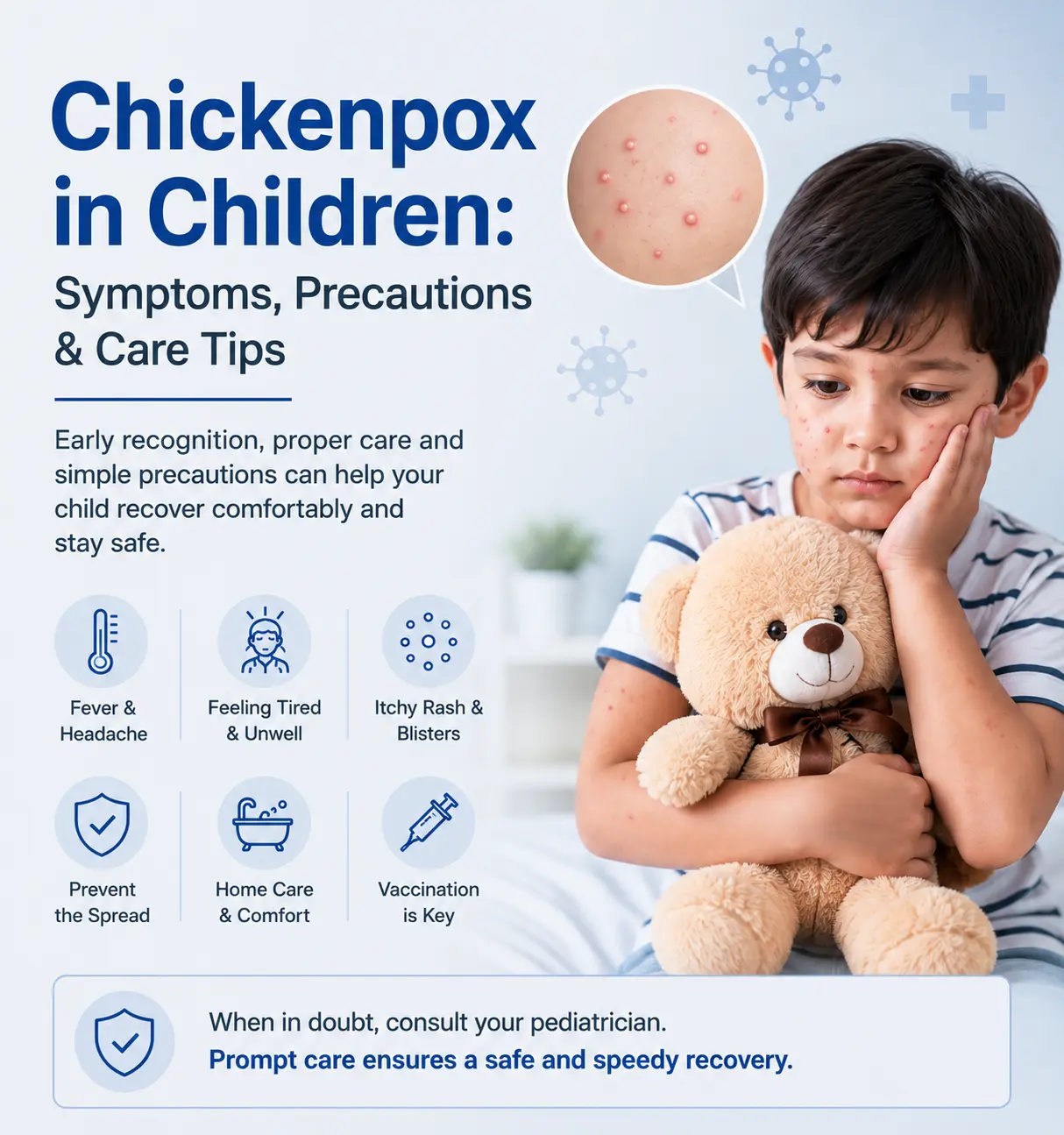
Symptoms and Precautions of Chickenpox in Children
Chickenpox is a highly contagious viral infection caused by the varicella-zoster virus. Although widespread vaccination has made it less common, it still affects many children in India each year. The infection is usually mild but can cause significant discomfort and, in som