




Categories
How to Stop Vomiting in Kids? Safe Home Remedies for a Vomiting Child
Aug 07, 2026
Key Takeaways
- Vomiting in kids is usually mild, caused by infections, overeating, or stress, and settles within a day or two.
- Offer small, frequent sips of water or ORS — avoid juices, carbonated drinks, and force-feeding.
- Introduce bland foods (rice, toast, banana) only after fluids stay down.
- Watch for dehydration signs — dry lips, sunken eyes, reduced urination, unusual drowsiness.
- See a doctor if vomiting is frequent, contains blood/bile, or if a baby under 6 months vomits repeatedly.
- Never give anti-vomiting medicine without medical advice.
Table of Contents
- What Causes Vomiting in Kids?
- Safe and Soothing Home Remedies for a Vomiting Child
- How Much Fluid Should You Give? (Age-Wise Guide)
- Signs of Dehydration in Kids: Mild vs Serious
- How to Prevent Vomiting Episodes in Children?
- When Should You See a Doctor?
What Causes Vomiting in Kids?
Vomiting is the body's natural way of expelling unwanted substances. In children, the most common causes include:- Viral infections like gastroenteritis (stomach flu)
- Food poisoning or allergies
- Motion sickness during travel
- Overeating or eating too quickly
- High fever or persistent coughing
- Stress or anxiety in children, especially before school or events
- Underlying conditions such as acid reflux or migraines (less common)
Safe and Soothing Home Remedies for a Vomiting Child
Here are some home remedies and tips you can try when your child begins to vomit:Start With Small Sips of Hydration
Vomiting leads to rapid fluid loss, so replenishing fluids is crucial. Begin with small sips of water, an oral rehydration solution (ORS), or clear broths. Avoid fruit juices and carbonated drinks; they may worsen nausea. Tip: Offer a teaspoon of fluid every 5–10 minutes initially. Once vomiting settles, gradually increase the amount.Try a Bland Diet
After your child has kept fluids down for several hours, you can introduce bland foods like:- Plain rice or toast
- Mashed banana
- Applesauce
- Steamed carrots or boiled potatoes
Ginger and Mint for Mild Nausea
A few sips of ginger tea or sucking on a mint leaf can help older children who are feeling nauseated and provide symptomatic relief. These are traditional remedies known to soothe the stomach, but they should not be given to infants or toddlers without a doctor's guidance.Rest Is the Best Medicine
Remember, rest is the best medicine. Vomiting can drain a child's energy. Let them lie down in a comfortable, slightly elevated position. A calm, quiet environment helps their system settle. This simple act of providing a peaceful environment can reassure you that you're doing everything you can to help your child recover.Don't Force Food - Let Appetite Return
Never rush to feed a vomiting child. Let their appetite return naturally. Force-feeding can trigger another bout of nausea.Monitor Warning Signs and Comfort your Kids
As a parent, staying alert to warning signs is important when managing vomiting in kids. Check for symptoms of dehydration, such as dry lips, sunken eyes, infrequent urination or unusual drowsiness. Vomiting accompanied by fever may indicate an infection. Keep your child comfortable, offer reassurance and note how often they vomit and pass urine, as this information can help the best paediatrician assess their condition. Contact a trusted children's clinic if the symptoms continue or your child appears increasingly unwell.How Much Fluid Should You Give? (Age-Wise Guide)
| Age | What to do |
| Under 6 months | Continue breastfeeding with shorter, more frequent feeds. For a formula-fed baby, offer smaller feeds. If vomiting continues, give 5–10 mL of commercially prepared ORS every 5–10 minutes using a spoon or syringe while seeking prompt advice from a paediatrician. Do not give plain water as the main rehydration fluid. |
| 6–12 months | Offer 5–10 mL of breast milk, formula or ORS every 5–10 minutes. Continue regular milk feeds as tolerated. If your baby keeps the fluid down, gradually increase the quantity. |
| 1–5 years | Give 15–30 mL of ORS every 20 minutes for the first few hours. A spoon, cup or syringe may help. Increase the amount slowly as vomiting settles. |
| 6 years and above | Encourage slow, frequent sips of ORS rather than a full glass at once. Start with approximately 15–30 mL every 20 minutes, then allow larger amounts when the child can drink without vomiting. |
Signs of Dehydration in Kids: Mild vs Serious
Vomiting in kids can cause dehydration, particularly when a child is also experiencing diarrhoea or fever. The following signs can help parents understand when careful home monitoring may be appropriate and when medical attention is needed.| Usually manageable at home | See a doctor now |
| The child is alert, responsive and reasonably active | The child is unusually sleepy, difficult to wake, confused or extremely irritable |
| The mouth or lips are slightly dry | The mouth and tongue are very dry, or the child cries without tears |
| Urination is slightly less frequent, but the child is still passing urine | The child has not passed urine for around eight hours, has very dark urine or has considerably fewer wet nappies |
| The child feels thirsty and is willing to drink | The child refuses to drink or cannot keep even small amounts of fluid down |
| There are fewer tears than usual, but the child otherwise appears well | The eyes appear sunken, or a baby’s soft spot looks sunken |
| The child can keep small, frequent sips of ORS or other recommended fluids down | The child appears weak, dizzy, floppy or too weak to stand |
| Symptoms begin to improve after fluids are given | Symptoms continue to worsen despite frequent attempts at rehydration |
How to Prevent Vomiting Episodes in Children?
Not every episode of vomiting in kids can be prevented, particularly when it is caused by a viral infection. However, a few everyday precautions can reduce the risk of stomach infections, food poisoning and avoidable triggers.- Encourage proper handwashing: Teach children to wash their hands with soap and water after using the toilet, after playing outdoors and before eating. Hand sanitiser may not work effectively against some stomach viruses, including norovirus.
- Follow safe food practices: Wash fruits and vegetables, cook food thoroughly, keep raw and cooked foods separate and refrigerate perishable items promptly.
- Avoid sharing personal items: Do not let children share cups, cutlery, towels or food with someone who has vomiting or diarrhoea.
- Keep sick children at home: This helps prevent stomach infections from spreading to classmates and other family members.
- Manage travel-related nausea: Children prone to motion sickness may benefit from looking outside the vehicle, avoiding reading or screen use during travel and having a light meal beforehand.
- Recognise individual triggers: Note whether vomiting repeatedly follows certain foods, medicines, migraines, coughing or stressful situations.
When Should You See a Doctor?
Though most vomiting in children resolves on its own, call a paediatrician right away if:- Vomiting is frequent (more than 3–4 times in a few hours)
- You see signs of dehydration in infants
- The child cannot keep even fluids down
- Vomit contains blood or bile (greenish fluid)
- The child has a high fever, severe abdominal pain, or rash
- Your baby is under 6 months old and vomiting more than once
Medical Disclaimer
This content is intended for general informational and educational purposes only. It should not be considered a substitute for professional medical advice, diagnosis or treatment. Home remedies may not be suitable for every child, particularly infants or children with underlying health conditions. Always consult a qualified paediatrician before giving medicines or trying any remedy. Seek urgent medical care if your child shows signs of severe dehydration, persistent vomiting, unusual drowsiness, severe pain, breathing difficulty, blood in the vomit or green vomit.Frequently asked questions
What are some effective child vomiting remedies I can try at home?
Some of the most effective child vomiting remedies include offering small sips of water or ORS, introducing bland foods like plain rice or toast once the vomiting stops, and letting your child rest in a calm environment. Avoid sugary drinks and solid foods until they feel better.
When should I consult a paediatrician if my child is vomiting?
If your child vomits frequently, shows signs of dehydration, can't keep fluids down, or the vomit contains blood or bile, see a paediatrician promptly — visit your nearest children's clinic or emergency department if symptoms are severe. Early attention prevents complications and helps your child recover safely.
Is it okay to give my child over-the-counter medicine to stop vomiting?
No. You should never give anti-vomiting medication without medical supervision. Always speak to a paediatrician or child specialist first, especially for infants and toddlers.
How do I know if vomiting is serious or just a mild issue?
Vomiting is usually mild and caused by infections or overeating. However, if your child becomes lethargic, has a high fever, or vomits continuously for more than 12 hours, consult a paediatrician to rule out serious conditions.
How long does vomiting last in kids?
Vomiting in kids caused by a common stomach infection often improves within one or two days, although the duration can vary depending on the cause. Speak to a paediatrician if the vomiting is persistent, becomes more frequent or is accompanied by warning signs such as dehydration, severe pain or unusual drowsiness.
What should I give my child to eat after vomiting stops?
Begin with small amounts of light, familiar food once your child can keep fluids down and feels ready to eat. Options may include plain rice, toast, bananas, potatoes or simple soups. Do not force your child to eat. Continue offering fluids and gradually return to their usual diet as they recover.
What are the signs of dehydration in a vomiting child?
Signs of dehydration include a dry mouth or lips, fewer tears while crying, dark urine, reduced urination, sunken eyes, unusual tiredness and reduced activity. In babies, fewer wet nappies or a sunken soft spot may also be warning signs. Seek prompt medical advice if your child is not drinking, cannot retain fluids or shows signs of worsening dehydration.
Related BlogView More

Hip Pain in Children: Causes, Symptoms & Treatment
Hip Pain in Children: Causes, Symptoms & When to See a Specialist When most people think of hip problems, they picture an elderly relative or acquaintance recovering from a hip replacement. Few realize that most hip problems in children start de

Fever in a Newborn: Infection Risks in the First Month
A parent of a two-week-old baby notices that the baby feels warmer than usual and is feeding less than normal. A temperature check shows 38°C (100.4°F). At this age, it is reasonable to wonder whether the baby is simply too warm or whethe
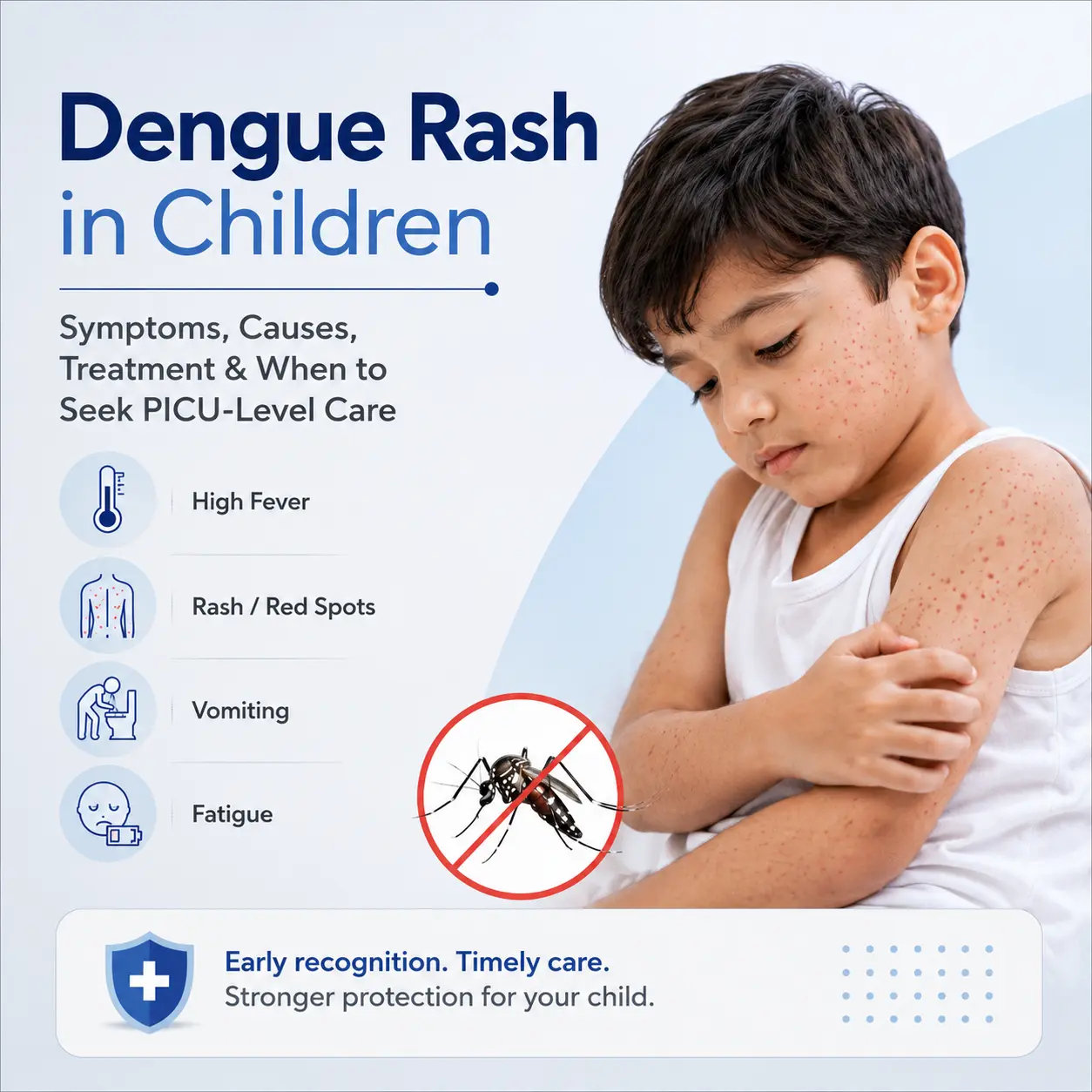
When is a Dengue Rash Serious in Children? Critical Warning Signs Every Parent Should Know
If your child develops a high fever followed by red spots or a skin rash, it's natural to be concerned about dengue. During the monsoon and post-monsoon season in India, dengue is one of the most common mosquito-borne viral infections affecting children. Thi

Newborn Sneezing: Is it a Cold or Just Normal Reflex? | Rainbow Hospitals
Key Takeaways Frequent sneezing is usually a normal reflex that helps a newborn clear milk droplets, mucus and dust from a narrow nose. Sneezing with comfortable breathing, normal feeds, clear mucus and no fever is generally reassuring. Saline drops, a short wait and gentle