




Categories
Can Poor Sleep Affect Fertility? Sleep, Hormones & Conception Explained
Aug 04, 2026
Sleep also plays a vital role in fertility by regulating the hormones that control ovulation, egg quality, sperm production, and reproductive health. Poor sleep or chronic sleep deprivation may disrupt these hormonal processes, reducing the chances of natural conception as well as fertility treatment success.
Sleep deprivation is increasingly common in India. Surveys and sleep research suggest that many Indian adults do not consistently achieve the recommended 7–9 hours of sleep because of demanding work schedules, stress, shift work, long commuting hours, and increased screen time. Since sleep plays an important role in hormone regulation, these lifestyle factors may also influence reproductive health and fertility. Prioritising healthy sleep habits is therefore an important part of overall preconception care.
Many couples ask, does sleep affect fertility? Are sleep and fertility connected?
Yes, sleep and fertility are closely connected. Adequate sleep (7–9 hours nightly) supports the hormones responsible for ovulation, egg quality, sperm production, and overall reproductive health. Both chronically short sleep (under 6 hours) and long sleep (over 9 hours) have been associated with reduced conception rates in research studies.In India, sleep health has become a growing concern year on year, driven by demanding job schedules, rising stress levels, and an always-on workplace culture. Several surveys and peer-reviewed studies have found India to be the second most sleep-deprived nation in the world, behind only Japan - with Indians averaging just over 7 hours of sleep a night and recording some of the lowest levels of REM sleep among the countries studied.
This matters for fertility because infertility itself is a significant and growing concern in India. Studies estimate that around 10–15% of Indian couples experience infertility, with rates running higher in urban areas - where longer work hours, night shifts, and irregular sleep schedules are also more common. While lifestyle factors like sleep are only one piece of this picture, the overlap between India's sleep health trends and its rising infertility rates is a pattern worth paying attention to.
When people think about improving fertility, sleep rarely makes the list - diet, supplements, and stress usually come first. But sleep sits underneath all of it, regulating the very hormones that control ovulation, egg quality, and sperm health. It's not a minor lifestyle detail; it's one of the more overlooked, evidence-backed factors your fertility specialist may ask about before anything else.
This guide explains how poor sleep and fertility are connected - the hormones involved, what the research shows for both women and men, and practical steps you can take if better sleep is one of the levers you have control over on your fertility journey.
How Does Sleep Affect Fertility?
Sleep affects fertility through three main interacting mechanisms:- Hormonal regulation - sleep governs the release of melatonin, luteinizing hormone (LH), follicle-stimulating hormone (FSH), and testosterone.
- Oxidative stress - poor sleep increases oxidative damage to developing eggs and sperm.
- Stress physiology - sleep deprivation activates the body's stress response, raising cortisol and indirectly suppressing reproductive hormone signaling.
Research suggests that both short sleep (less than 6 hours) and long sleep (more than 9 hours) are associated with a reduced probability of pregnancy. Maintaining 7–9 hours of quality sleep each night supports hormonal balance and may improve reproductive health.
Why is Sleep Important for Fertility
Global health authorities treat sleep as a foundational pillar of health, not a lifestyle luxury. The U.S. Centers for Disease Control and Prevention (CDC), together with the American Academy of Sleep Medicine, recommends that adults aged 18–60 get at least 7 hours of sleep per night, with most healthy adults needing 7–9 hours. Sleep is also widely recognized by global health bodies, including the WHO, as being as foundational to overall wellbeing as nutrition and physical activity.For fertility specifically, sleep matters because it directly affects the hormonal systems responsible for ovulation, sperm production, and egg quality - not through a vague "wellness" connection, but through measurable, well-studied biological pathways.
How Sleep Regulates Fertility Hormones
- Melatonin - The Antioxidant Sleep Hormone: Melatonin is often called the "sleep hormone," but its role in fertility goes further. It's present in high concentrations in ovarian follicular fluid, where it acts as a powerful antioxidant, protecting developing eggs from oxidative stress. Poor or insufficient sleep suppresses natural melatonin production, and research has linked lower melatonin levels to reduced egg quality and, in some studies, lower IVF success rates.
- LH, FSH, and the Menstrual Cycle: Luteinizing hormone (LH) - the hormone responsible for triggering ovulation - is released in pulses closely tied to sleep, with a large share of the daily LH surge occurring during sleep itself. Disrupted or insufficient sleep can blunt or delay this surge, which may lead to irregular cycles or missed ovulation. Follicle-stimulating hormone (FSH), which supports the growth of ovarian follicles in women and sperm production in men, is similarly linked to the sleep-wake cycle.
- Testosterone and Male Hormonal Health: Sleep is equally important for male reproductive hormones. Most testosterone production happens during deep, restorative sleep. In a widely cited clinical study published in JAMA (2011), healthy young men who slept only 5 hours per night for one week experienced a 10–15% reduction in daytime testosterone levels compared with when they were well-rested, highlighting how even one week of insufficient sleep can temporarily affect reproductive hormone levels. However, a more recent systematic review published in Sleep Medicine Reviews (2022) suggests that while total sleep deprivation consistently lowers testosterone, the effects of short-term partial sleep restriction are less consistent across studies. Overall, maintaining adequate, good-quality sleep remains important for healthy reproductive hormone function.
Why Good Sleep Is Essential for Reproductive Health
Good, consistent sleep supports reproductive health by maintaining stable hormone rhythms, protecting egg and sperm quality from oxidative damage, and keeping the stress-response system from interfering with reproductive signaling. It also supports healthy body weight and insulin sensitivity - both of which independently affect fertility - since chronic sleep deprivation is strongly linked to weight gain and insulin resistance in the medical literature.How Poor Sleep Affects Female Fertility
The link between poor sleep and fertility is particularly evident in women, showing up as disrupted ovulation, irregular menstrual cycles, and reduced egg quality.- Ovulation and Cycle Irregularities: Because LH release is so closely tied to sleep, women who consistently sleep fewer than 7 hours a night, or whose sleep timing is highly inconsistent (such as with shift work), may experience irregular cycles or disrupted ovulation patterns. This doesn't mean occasional poor sleep will derail a cycle - but a sustained pattern of short or fragmented sleep is worth addressing as part of a broader fertility plan.
- Egg Quality and Oxidative Stress: Lower melatonin levels from poor sleep reduce the antioxidant protection available to developing eggs, potentially increasing oxidative stress and affecting egg quality over time. This is particularly relevant for women undergoing IVF, where egg quality has a direct bearing on fertilization and embryo development.
- Sleep Apnea and PCOS: Women with polycystic ovary syndrome (PCOS) have a higher prevalence of disrupted sleep and sleep apnea than the general population. This poor sleep can, in turn, worsen the insulin resistance that is already common in PCOS, creating a cycle where poor sleep and hormonal imbalance reinforce one another.
- Weight and Ovulation: Sleep deprivation disrupts the hormones ghrelin and leptin, which regulate hunger and satiety. This disruption is linked to weight gain over time, and excess weight can, in turn, interfere with regular ovulation - making sleep an indirect but meaningful factor in weight-related fertility challenges.
How Poor Sleep Affects Male Fertility and Sperm Health
The connection between lack of sleep and fertility is also evident in men, where inadequate sleep may reduce testosterone levels and negatively affect sperm count and sperm quality.- Testosterone and sperm production: Since most testosterone is produced during deep sleep, insufficient or poor-quality sleep can lower testosterone levels, which in turn can affect sperm production over time.
- Sperm quality and oxidative stress: Emerging research points to a connection between chronic sleep disruption and increased oxidative stress markers affecting sperm, along with disrupted secretion of GnRH, LH, and FSH - the same hormonal chain involved in female fertility, just supporting a different reproductive process.
- Stress and the hormone pathway: Poor sleep raises cortisol through activation of the body's stress-response system (the HPA axis). Elevated cortisol can suppress the reproductive hormone pathway (the HPG axis) that testosterone and sperm production depend on - meaning chronic stress and poor sleep often compound one another's effects on male fertility.
Warning Signs That Sleep May Be Affecting Fertility
If sleep problems persist for several weeks or months, they may begin to affect fertility in both women and men.
In Women
- Irregular menstrual cycles – Cycles that become shorter, longer, or unpredictable.
- Persistent fatigue – Feeling tired even after adequate rest.
- Reduced sexual desire – A noticeable decrease in libido.
- Mood disturbances or increased stress – Anxiety, irritability, or emotional changes related to poor sleep.
- Difficulty conceiving – Inability to become pregnant despite regular unprotected intercourse.
In Men
- Low energy levels – Constant tiredness and reduced physical stamina.
- Reduced sexual desire – Decreased interest in sexual activity.
- Erectile difficulties – Trouble achieving or maintaining an erection.
- Poor concentration and memory – Difficulty focusing, which may indicate chronic sleep deprivation.
- Abnormal semen parameters – Low sperm count, reduced sperm motility, or poor sperm quality identified during fertility evaluation.
Talk to a specialist. If sleep issues are coinciding with fertility concerns, don't wait to figure it out alone. Call BirthRight Fertility by Rainbow Hospitals at 1800 2122 to speak with a specialist.
Can Better Sleep Improve Your Chances of Pregnancy?
Better sleep isn't a guaranteed fix for infertility, and no fertility specialist would suggest it replaces medical evaluation or treatment where one is needed. But because sleep directly influences the hormones and biological processes involved in conception, improving sleep quality and consistency is a low-risk, evidence-informed step that may modestly support your overall chances - particularly when combined with other healthy lifestyle habits and, where needed, medical treatment.Does Sleep Affect IVF Success?
Since sleep affects fertility and hormone regulation, maintaining healthy sleep habits during IVF or IUI may support overall treatment outcomes. Stimulation medications, frequent monitoring appointments, and the emotional weight of treatment can all disrupt normal sleep patterns at exactly the time your body benefits most from stable rest.Some research has associated both very short sleep (under 6 hours) and unusually long sleep (over 9 hours) with somewhat lower IVF success rates compared to a consistent 7–9-hour window - though sleep is just one factor among many influencing outcomes. Maintaining a steady sleep schedule during treatment - going to bed and waking at consistent times - is a simple, practical step many fertility specialists recommend alongside the medical protocol itself.
Is Shift Work Bad for Fertility?
Shift work and irregular sleep schedules disrupt the circadian rhythm that governs reproductive hormone release. This is why shift work is often flagged as a lifestyle factor worth discussing with a fertility specialist if you're facing challenges conceiving - particularly for rotating or night-shift schedules, which make it harder for the body to maintain the consistent hormone timing that supports ovulation and sperm production.This is especially relevant in India, where large numbers of people work in IT, BPO, pharma, healthcare, and other round-the-clock industries that rely on night and rotating shifts. A cross-sectional study of IT professionals working night shifts in Puducherry, published in the International Journal of Community Medicine and Public Health, found that every single participant scored in the "poor sleep quality" range on the Pittsburgh Sleep Quality Index, underscoring just how disruptive irregular shift schedules can be to sleep, even in otherwise healthy young adults. Separately, the SNORE study - a hospital-based observational study on Indian healthcare staff working rotational night shifts, published in a peer-reviewed journal (Indian Journal of Psychiatry) indexed on PubMed Central - found that over 80% of participants slept fewer than 7 hours per shift cycle, with a meaningful share also reporting excessive daytime sleepiness.
For fertility specifically, the concern with shift work isn't the occasional late night - it's the sustained, repeated disruption to sleep timing. Because LH release, melatonin production, and testosterone synthesis are all tied to specific phases of the sleep cycle, a schedule that keeps shifting your sleep window can blunt these hormonal signals more than short sleep duration alone. Night-shift and rotating-shift workers trying to conceive may benefit from:
Keeping sleep and wake times as consistent as possible, even across shift rotations, rather than sleeping at a different time each day. Using blackout curtains or an eye mask to simulate darkness during daytime sleep, since light exposure is one of the strongest disruptors of melatonin release
Requesting fixed (rather than rapidly rotating) shifts where possible, since the body adapts more easily to a stable - even if unconventional - schedule than to one that keeps changing. Discussing shift patterns with a fertility specialist if conception is taking longer than expected, since this is a modifiable factor worth factoring into a broader fertility evaluation.
Best Sleep Habits to Improve Fertility Naturally
Improving sleep quality and fertility starts with maintaining a regular sleep schedule, reducing screen time before bed, and aiming for 7–9 hours of restful sleep each night.- Aim for 7–9 hours of sleep per night, consistently - not just occasionally
- Keep a fixed sleep and wake time, even on weekends
- Keep your bedroom dark, quiet, and cool, since melatonin production is highly sensitive to light exposure
- Get natural daylight exposure earlier in the day to support healthy circadian rhythm timing
- Limit caffeine intake in the afternoon and evening.
What to Avoid Before Bed
- Screens and bright artificial light in the hour before sleep, which can suppress melatonin release.
- Heavy meals, alcohol, or intense exercise close to bedtime.
- Irregular or rotating shift-work schedules were avoidable, since these are particularly disruptive to circadian-linked hormone release.
- Using bed for anything other than sleep (work, prolonged phone use), which can weaken the brain's sleep association with that space.
When Should You Consult a Fertility Specialist?
Sleep is one piece of the fertility picture, not the whole picture. It's worth speaking to a fertility specialist if:- You are under 35 and haven't conceived after 12 months of trying.
- You are over 35 and haven't conceived after 6 months to a year of trying.
- Your menstrual cycles are irregular or absent.
- You have ongoing sleep issues (such as insomnia or diagnosed sleep apnea) alongside fertility concerns.
- You've made lifestyle changes, including improving sleep, without noticeable improvement over several cycles.
Why Choose BirthRight Fertility by Rainbow Hospitals?
BirthRight Fertility by Rainbow Hospitals is a trusted name in women's healthcare in India, offering comprehensive fertility services. Every woman who walks in for her journey toward motherhood is cared for by an experienced, multidisciplinary team - from fertility evaluation and treatment through childbirth and newborn care, all under one roof. Our approach considers the full picture of reproductive health, including lifestyle factors like sleep, nutrition, and stress, alongside advanced fertility treatments and personalized care.Conclusion
The connection between sleep and fertility is supported by growing scientific evidence. While improving sleep alone may not treat infertility, understanding how sleep affects fertility and adopting healthy sleep habits can support natural conception, reproductive health, and fertility treatment outcomes. Good sleep quality is closely linked to fertility through hormonal balance, ovulation, egg quality, sperm health, and overall reproductive function.Major health organizations, including the CDC and the American Academy of Sleep Medicine, recognize the importance of healthy sleep in maintaining overall health and regulating biological processes that influence fertility. Emerging evidence also highlights the relationship between infertility and sleep, emphasizing that chronic sleep deprivation, disrupted circadian rhythms, and poor sleep quality may affect reproductive hormones in both women and men.
Although sleep alone does not determine your chances of pregnancy, it is an important lifestyle factor that works alongside balanced nutrition, regular physical activity, stress management, and appropriate medical care. Every fertility journey is unique, and the best outcomes often come from a personalized approach that combines healthy lifestyle habits with expert fertility evaluation and evidence-based treatment.
If you're planning a pregnancy or experiencing difficulty conceiving, consult a fertility specialist to assess all factors that may influence your reproductive health-including your sleep patterns.
Take the first step toward your new beginning. For expert fertility consultation, connect with BirthRight Fertility today at 1800 2122.
Frequently asked questions
Does sleep affect fertility?
How many hours of sleep are best for fertility?
Can poor sleep affect fertility?
How does sleep affect female fertility specifically?
Does lack of sleep affect male fertility?
What is the connection between melatonin and fertility?
Can improving sleep quality improve fertility?
Can improving sleep improve IVF outcomes?
Is shift work bad for fertility?
What are good sleep habits while trying to conceive?
Related BlogView More

Egg Freezing in India: What Career-Focused Women Really Need to Know
In this episode of Birth Vibes by BirthRight Rainbow, Dr. Ratna Durvasula, Fertility specialist from BirthRight Fertility by Rainbow Hospitals, sits down with Ms. Aparna Reddy, an HR leader at a leading MNC and a doctorate holder in Business Administ

Fertile Window & Ovulation: How to Calculate Your Most Fertile Days
If you're trying to conceive, spacing your pregnancies, or simply trying to understand your body better, two terms come up again and again: fertile window and ovulation. They're related, but they're not the same thing — and mixing them up is one of the most common reasons

Can a Varicocele Impact Your Fertility? Signs, Symptoms & Causes
For a man in his early 30s, a fertility workup may unexpectedly reveal a varicocele, even when he has never noticed pain or swelling. The immediate question is often, can varicocele cause infertility? Varicoceles are common findings during male fer
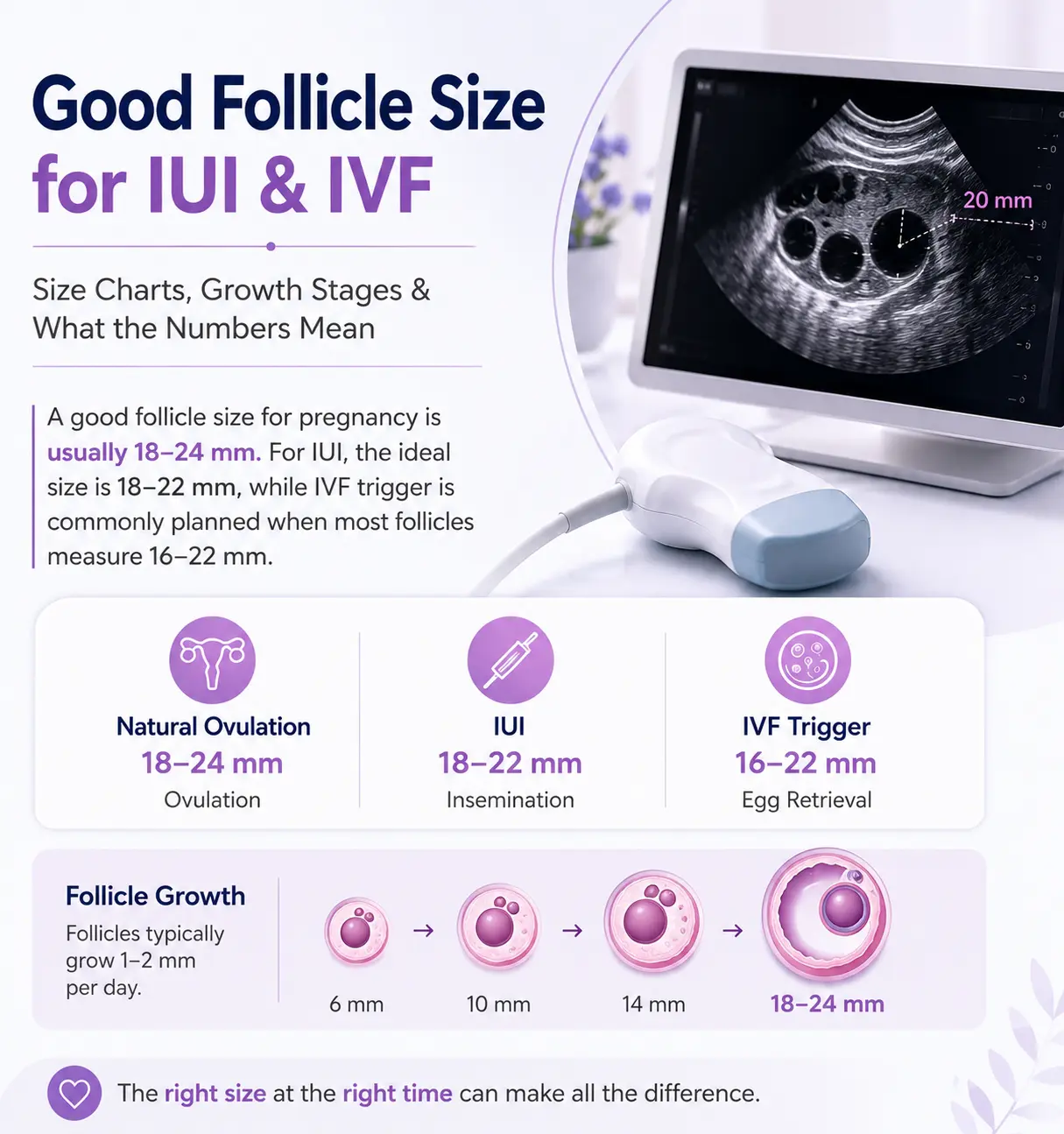
Good Follicle Size for IUI & IVF: Size Charts, Growth Stages & What the Numbers Mean
If you're trying to conceive naturally or undergoing IUI or IVF, you've likely wondered whether your follicle size is ideal. Follicle size isn't just a number on an ultrasound or on your report—it is one of the most trusted indicators fertility specialists use to as