




Categories
Fertility Treatment After 40: Realistic Options Beyond Conventional IVF
Jul 07, 2026
Pregnancy After 40: Understanding Your Fertility Options, Success Chances & Next Steps
Many women today are choosing to start or grow their families in their late thirties or even forties. Whether due to career aspirations, personal circumstances, or finding the right partner later in life, pregnancy after 40 is no longer uncommon. Questions like “Am I too late?”, “Will IVF work for me?”, or “What are my options if my egg reserve is low?” are common concerns among women seeking fertility care after 40. While fertility naturally declines after 40, getting pregnant at 40 is still possible for many women. Although conception may be more challenging, advances in fertility treatment offer new opportunities and hope for women who wish to become mothers later in life.Understanding Fertility After 40
Women are born with a finite number of eggs. As age increases, both the number and quality of eggs gradually decline. After 40, the chances of natural conception decrease significantly, while the risks of miscarriage and chromosomal abnormalities increase. However, age is only one piece of the fertility puzzle. Factors such as ovarian reserve, egg quality, uterine health, hormonal balance, lifestyle, and male fertility also influence the chances of conception. This is why fertility specialists recommend an early fertility evaluation rather than relying solely on age-based assumptions.Can You Get Pregnant Naturally After 40?
Yes, natural conception is still possible after 40. However, monthly fertility rates decline significantly with age, and many women may require fertility assistance sooner than younger couples. Experts generally advise women over 40 not to wait long before seeking fertility evaluation if pregnancy is desired.What Matters More Than Age Alone?
A common misconception is that turning 40 automatically means infertility. In reality, fertility outcomes depend on:- Ovarian reserve
- Egg quality
- Uterine health
- Overall medical fitness
- Lifestyle factors
- Male partner fertility
The First Step: Know Your Fertility Status
Before discussing fertility treatment after 40, it is important to understand your reproductive health. A fertility assessment may include:- AMH (Anti-Müllerian Hormone) levels (Ovarian reserve)
- Antral Follicle Count (AFC)
- Hormonal profile
- Uterine health through ultrasound assessment of uterus and ovaries
- Fallopian tube evaluation
- Male fertility factors including Semen analysis
Why Conventional IVF May Not Always Be Enough
Standard IVF remains one of the most effective fertility treatments, but success rates tend to decline after 40 because fewer embryos may develop from age-related eggs. Fortunately, modern fertility care goes beyond simply performing IVF. Today's approach focuses on improving embryo quality, selecting the healthiest embryos, and personalizing treatment to each patient's needs. Depending on your fertility assessment results, your specialist may recommend one or a combination of the following advanced fertility treatment options in India.Fertility Treatment After 40: Advanced Options Beyond Conventional IVF
1. Personalized IVF Protocols
Many women assume IVF follows the same protocol for everyone. In fact, fertility specialists increasingly customize ovarian stimulation protocols based on age, ovarian reserve, and previous treatment responses. The goal is not simply to retrieve more eggs, but to obtain the best-quality eggs possible.2. IVF with Genetic Testing (PGT)
One of the most significant advances in fertility treatment is Preimplantation Genetic Testing (PGT), which allows embryos to be screened before transfer. PGT helps identify embryos with the correct number of chromosomes. This can improve embryo selection and reduce the risk of miscarriage associated with chromosomal abnormalities, which become more common after 40.3. Embryo Banking
For women with a low ovarian reserve, specialists may recommend embryo banking. This involves collecting embryos over multiple IVF cycles and freezing them before selecting the healthiest embryo for transfer. This strategy may increase the likelihood of achieving a successful pregnancy in women with reduced egg numbers.4. Donor Egg IVF
For women with severely diminished ovarian reserve or repeated IVF failures, donor egg IVF may be considered. Because egg quality is one of the most important factors affecting pregnancy outcomes, donor egg treatment often offers significantly higher success rates for women in their forties. While this option requires careful consideration, it has helped many women achieve successful pregnancies when other treatments were unlikely to succeed.5. Fertility Preservation for Future Family Planning
Some women in their late thirties and early forties choose egg freezing to preserve reproductive potential for future pregnancies. Discussing fertility preservation early can help expand future reproductive options.6. Lifestyle and Medical Optimization
Small improvements can make a meaningful difference. Fertility specialists often recommend:- Maintaining a healthy weight
- Maintaining optimal thyroid levels
- Controlling diabetes and hypertension
- Improving sleep quality
- Reducing stress
- Taking appropriate supplements when indicated
Success Is About Realistic Expectations
One of the biggest misconceptions about fertility treatment after 40 is that technology can completely overcome age-related changes. While modern reproductive medicine has achieved remarkable advances, success rates vary from person to person. Honest counseling and individualized treatment planning are essential. The goal is not simply achieving pregnancy—but achieving a healthy pregnancy and a healthy baby.When Should You Seek Help?
If you are over 40 and trying to conceive, experts recommend consulting a fertility specialist as early as possible rather than waiting for a year. With early evaluation, personalized treatment, and expert fertility care, a healthy pregnancy after 40 may be more achievable than you think. While fertility declines with age, many women are successfully achieving pregnancy after 40 through personalized fertility care and advanced reproductive treatments. Understanding your fertility status early can help you make informed decisions and choose the path that is right for you. At BirthRight Fertility by Rainbow Hospitals, our fertility specialists provide personalized evaluations and evidence-based treatment plans to help couples choose the most suitable path toward pregnancy.Do you have any questions about getting pregnant at 40?
Why wait? Take the next step. Schedule a consultation with our fertility specialists to understand your options and receive a personalized treatment plan tailored to your needs. Call us on 1800 2122 Visit our Official Website: BirthRight Fertility by Rainbow HospitalsFAQs
Is pregnancy after 40 possible naturally?
Yes. Natural conception is possible after 40, although fertility declines with age. An early fertility evaluation can help assess your individual chances and guide timely treatment if needed.How soon should I seek fertility treatment after 40 in India?
Experts recommend consulting a fertility specialist as soon as you begin trying to conceive or if you are planning a pregnancy in the near future.What is the best fertility treatment for women over 40?
The best treatment depends on individual fertility factors. Options may include IVF, IVF with genetic testing, embryo banking, or donor egg IVF.Is IVF successful after 40?
Many women achieve successful IVF pregnancies after 40, especially when treatment is tailored to their specific fertility profile.Is fertility testing required for both partners?
Yes. Fertility assessment for both partners helps identify possible causes and guide treatment planning.What fertility tests are recommended for women over 40?
Women over 40 may be advised to undergo fertility tests such as AMH levels, Antral Follicle Count (AFC), hormone evaluation, ultrasound assessment of the uterus and ovaries, and semen analysis for the male partner. These tests help fertility specialists recommend the most appropriate treatment plan.Can IVF improve pregnancy chances after 40?
Yes. IVF can improve the chances of conception for many women over 40, particularly when combined with advanced techniques such as genetic testing and personalized treatment protocols.Related BlogView More

Egg Freezing in India: What Career-Focused Women Really Need to Know
In this episode of Birth Vibes by BirthRight Rainbow, Dr. Ratna Durvasula, Fertility specialist from BirthRight Fertility by Rainbow Hospitals, sits down with Ms. Aparna Reddy, an HR leader at a leading MNC and a doctorate holder in Business Administ

Fertile Window & Ovulation: How to Calculate Your Most Fertile Days
If you're trying to conceive, spacing your pregnancies, or simply trying to understand your body better, two terms come up again and again: fertile window and ovulation. They're related, but they're not the same thing — and mixing them up is one of the most common reasons

Can a Varicocele Impact Your Fertility? Signs, Symptoms & Causes
For a man in his early 30s, a fertility workup may unexpectedly reveal a varicocele, even when he has never noticed pain or swelling. The immediate question is often, can varicocele cause infertility? Varicoceles are common findings during male fer
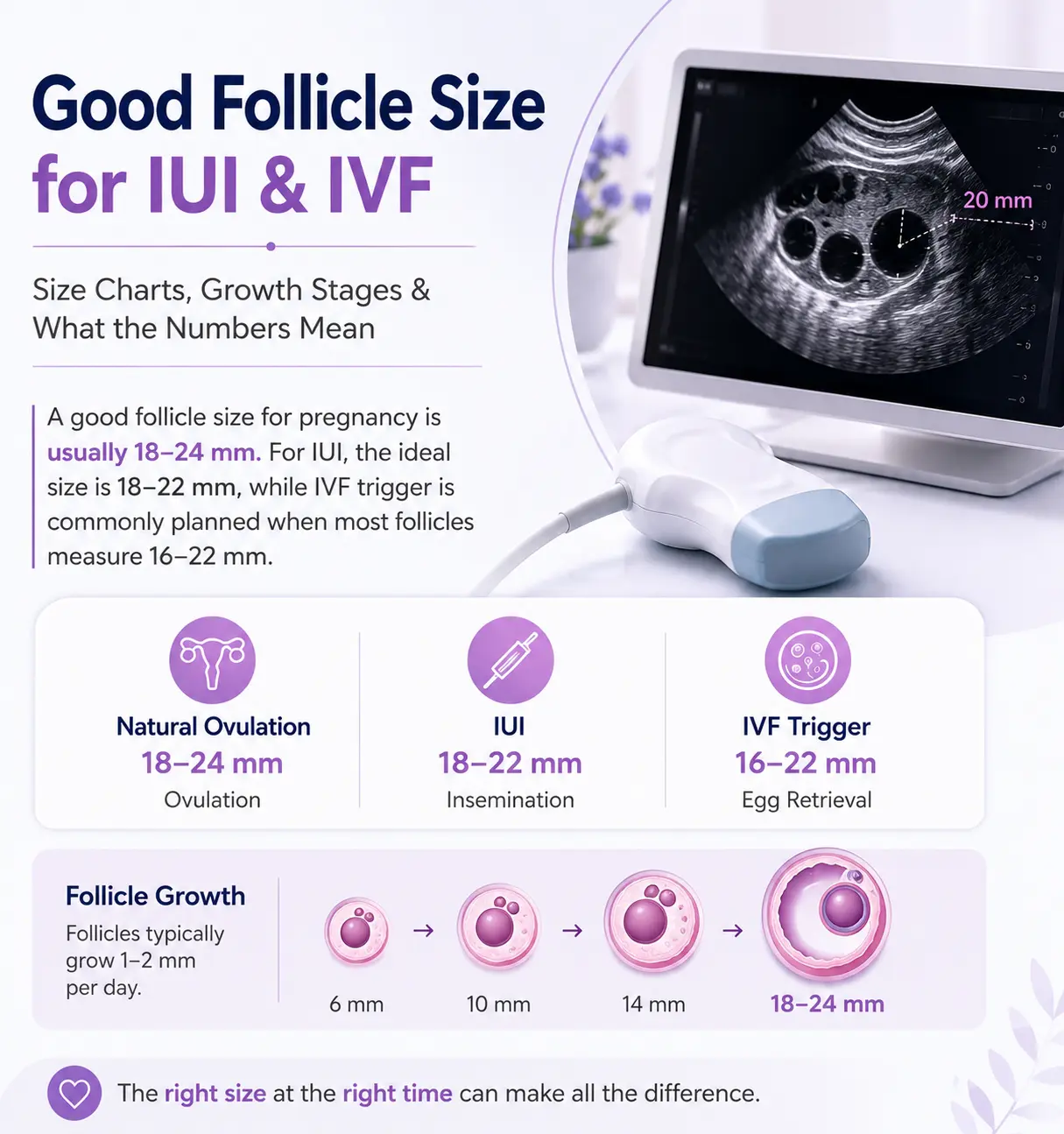
Good Follicle Size for IUI & IVF: Size Charts, Growth Stages & What the Numbers Mean
If you're trying to conceive naturally or undergoing IUI or IVF, you've likely wondered whether your follicle size is ideal. Follicle size isn't just a number on an ultrasound or on your report—it is one of the most trusted indicators fertility specialists use to as